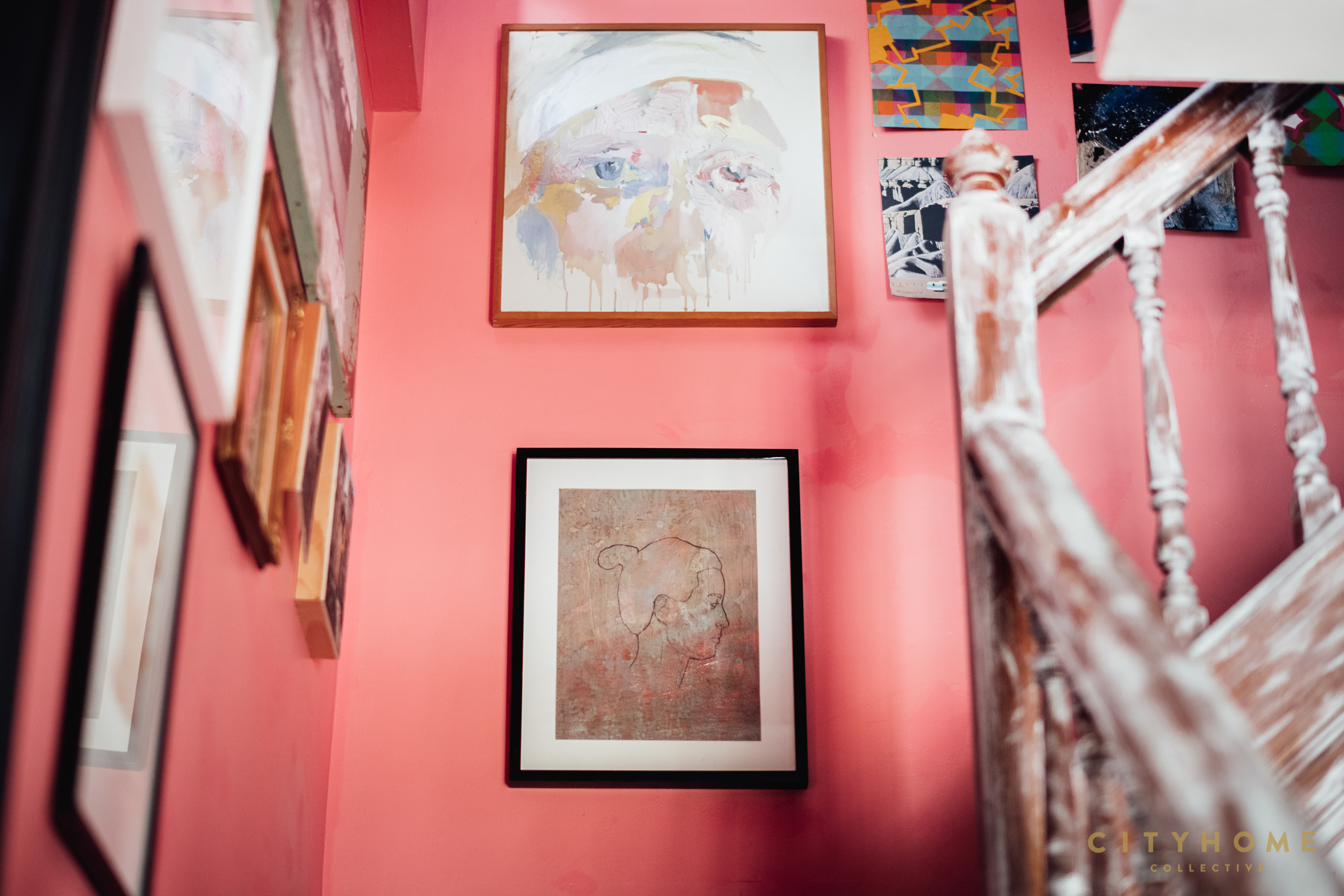
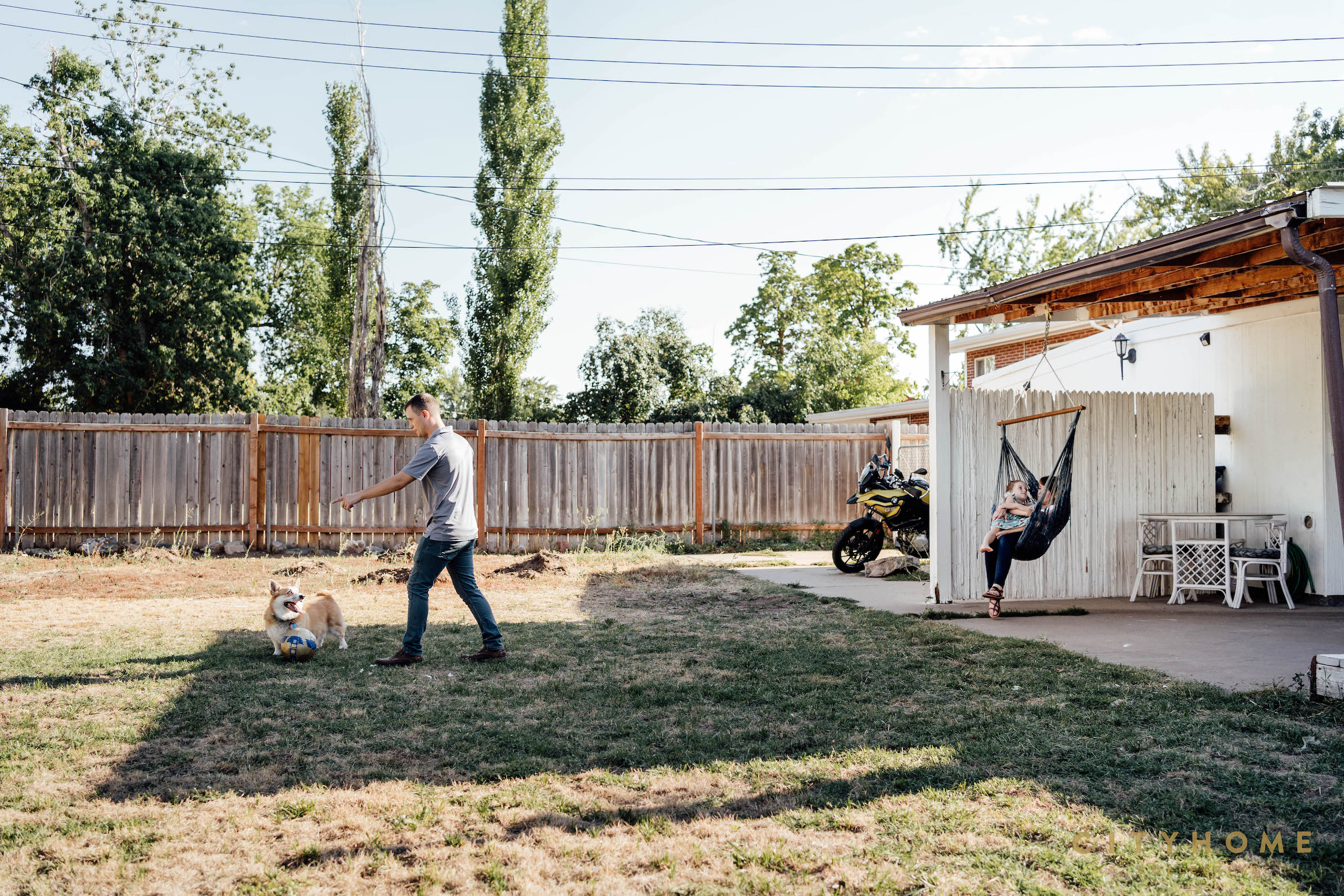
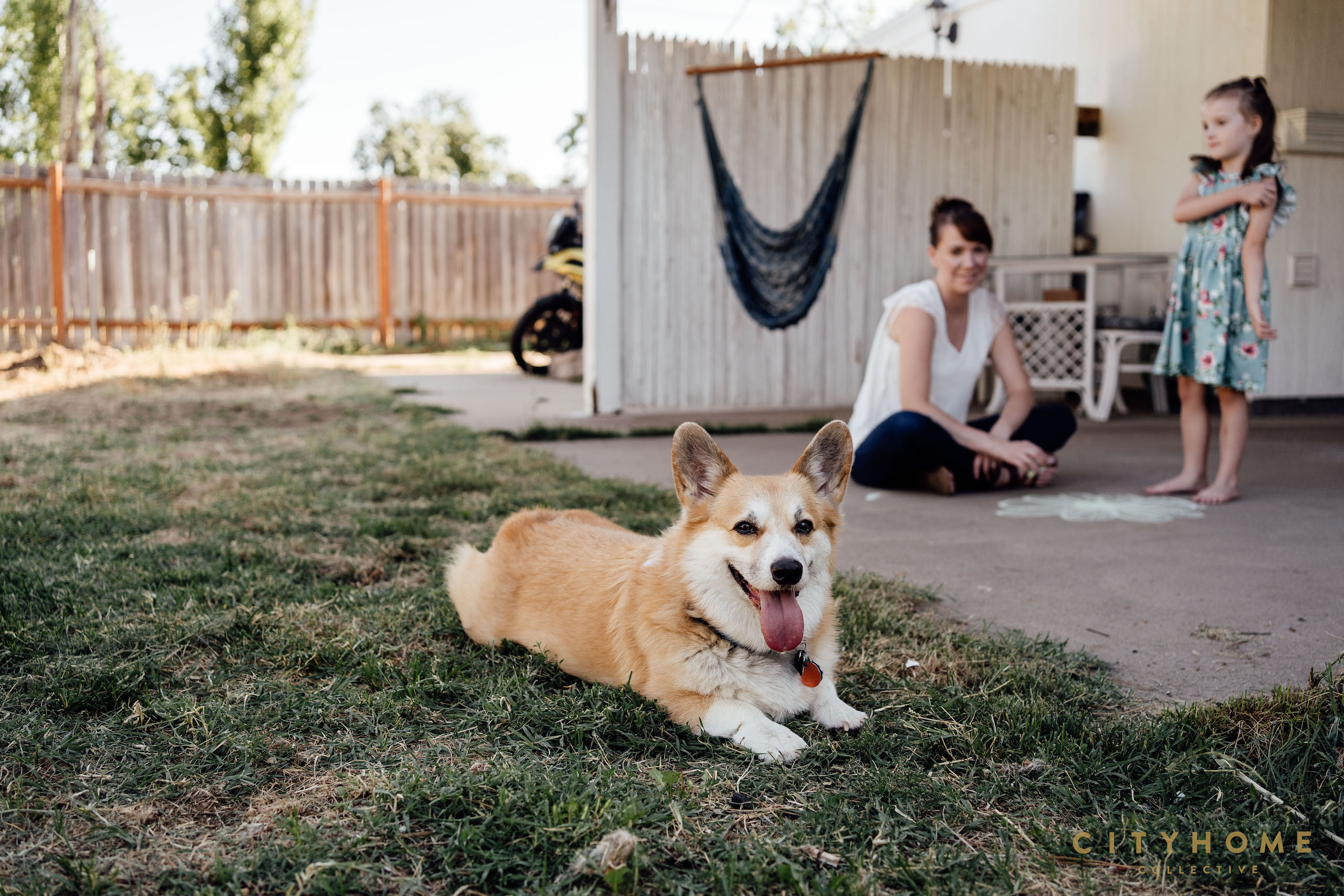
The first home for a new family is a special one, and this sweet South Ogden rambler sure has received lots of love from its departing owners. They’ve made this house a home with an adorable remodeled laundry room, new flooring and fixtures, pleasing paint and a backyard worth spending (lots of) time in. It’s always bittersweet when selling a space that holds cherished family memories like first steps, milestone birthdays and holiday gatherings, but also exciting to know that new adventures await this mobile military family.
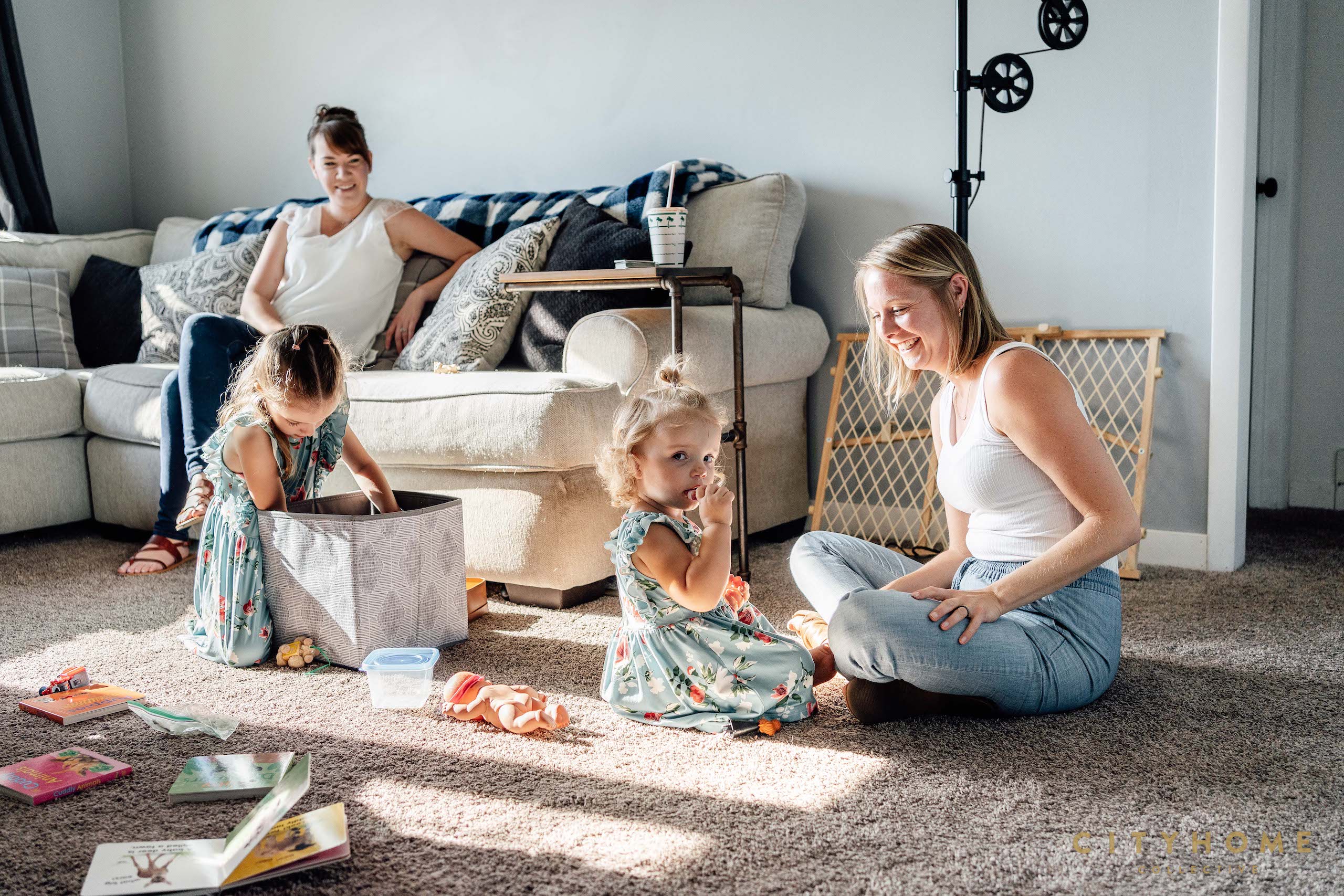
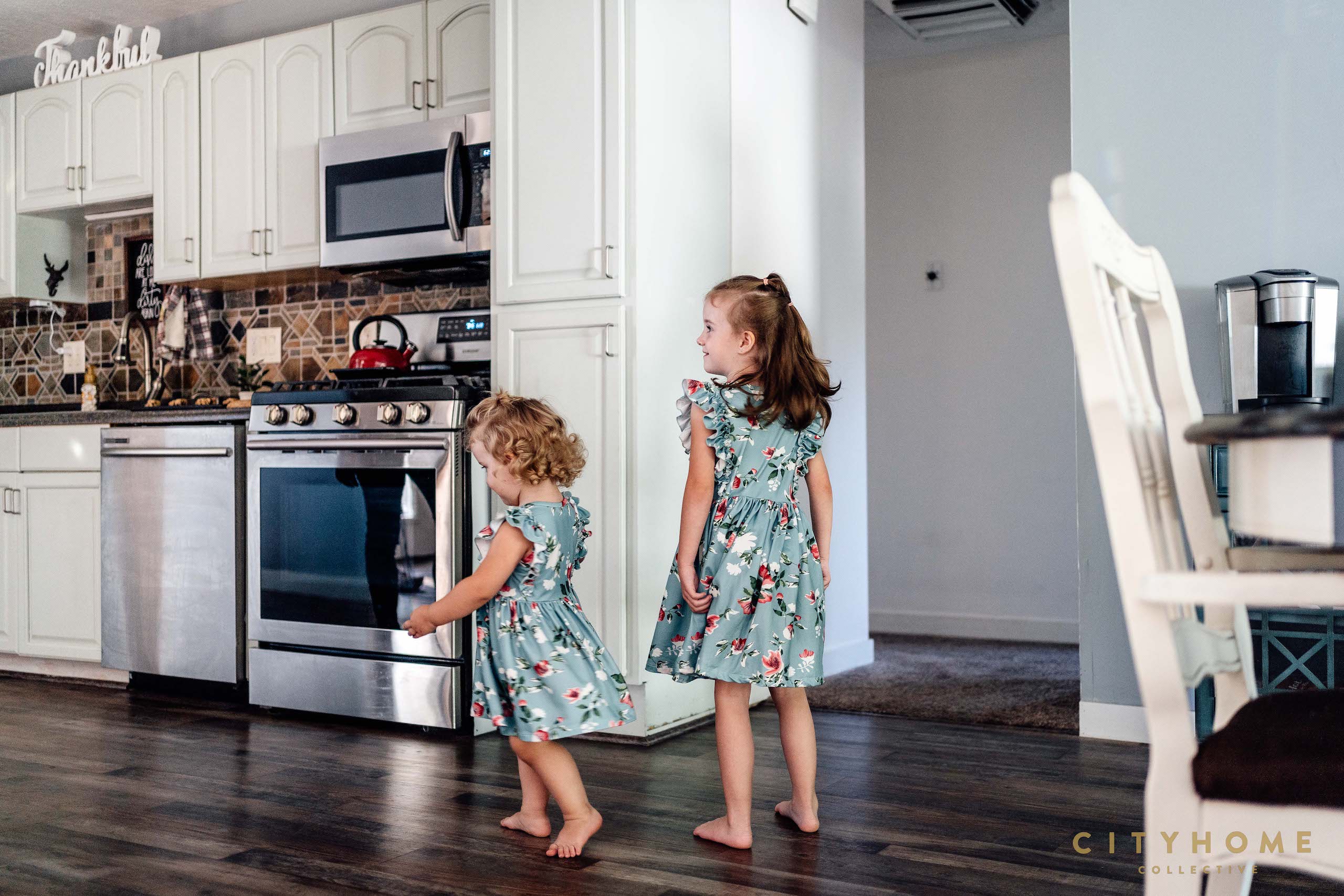
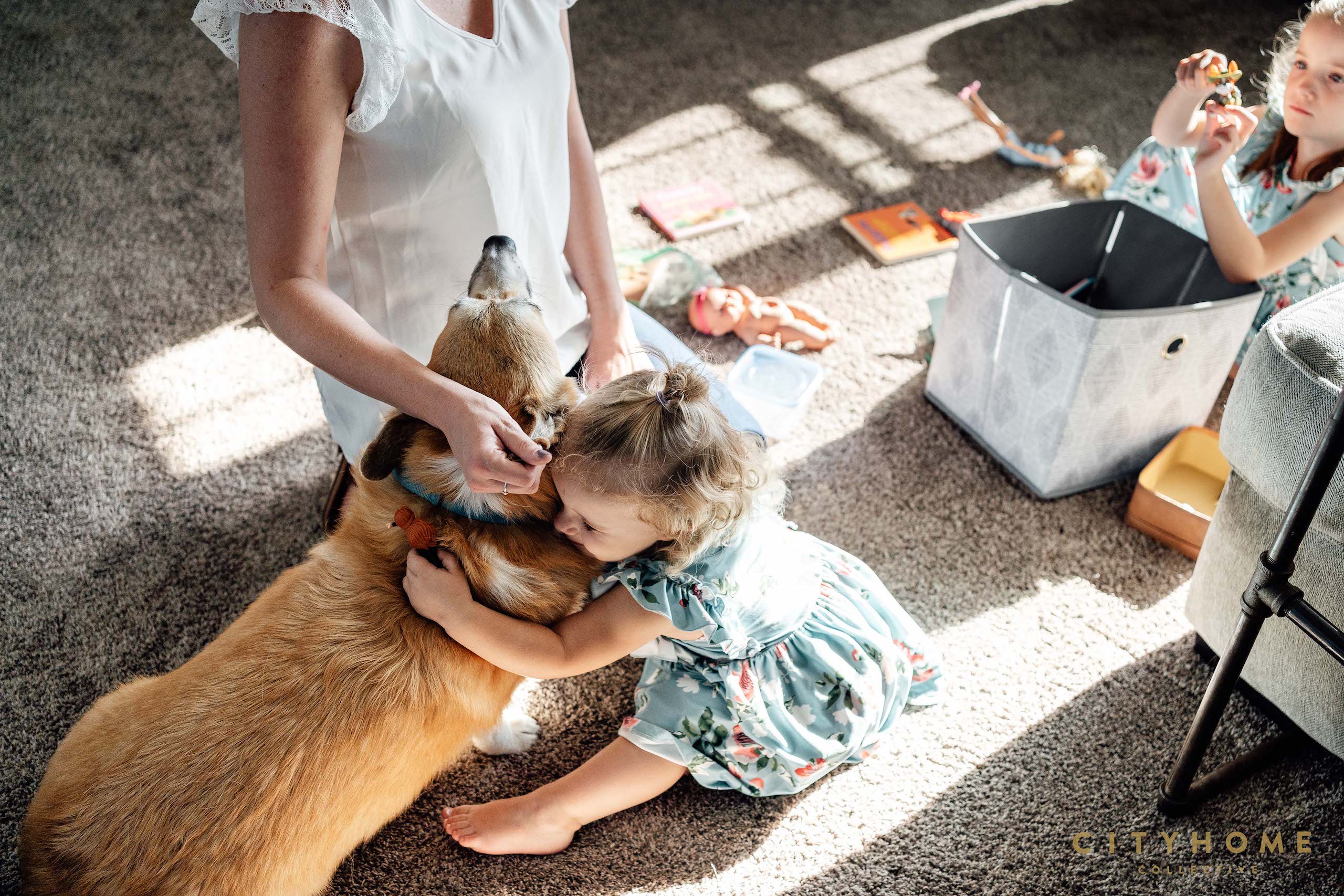
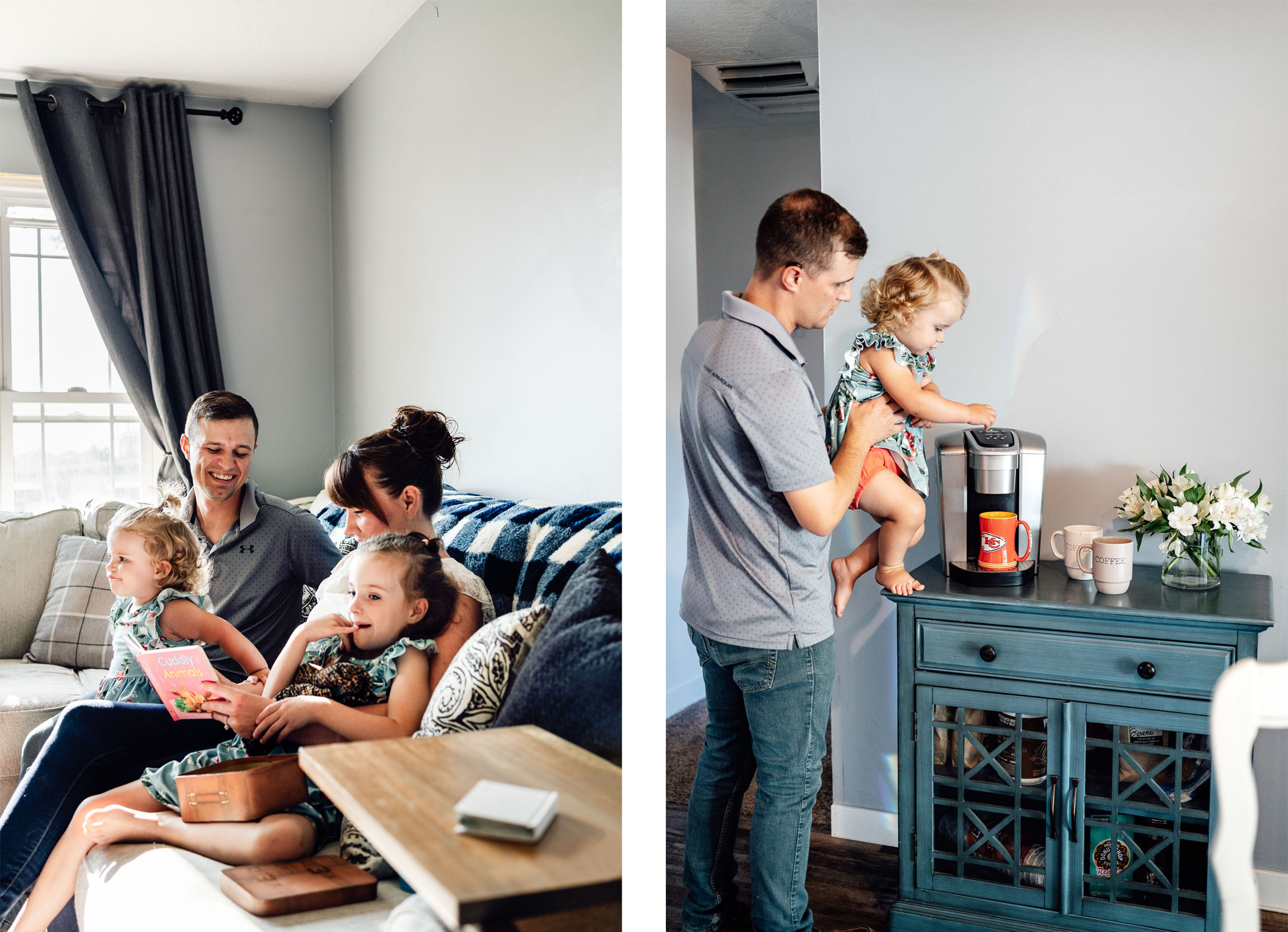
 We were lucky enough to spend some time in their space as they baked cookies, read books, played soccer with Mr. Diggles the corgi, and shared some of the things they loved most about their home…
How would you describe your home in one word?
Quaint.
What’s the best time of day in your home? And where should you be sitting for it?
In the morning – between 7 and 11 in the living room light.
Tell me about the best party you’ve ever thrown here.
Birthday parties for the kids! There’s enough room inside and out for 20+ guests.
What do you think you’ll miss the most about this place?
It’s such a great little first-time home on a great sized lot. The location is phenomenal! It’s close to a city park, the air force base, every kind of shopping, several ski resorts and is a low crime neighborhood. And it has a great yard.

Looking for a place to put down roots? This is your spot.
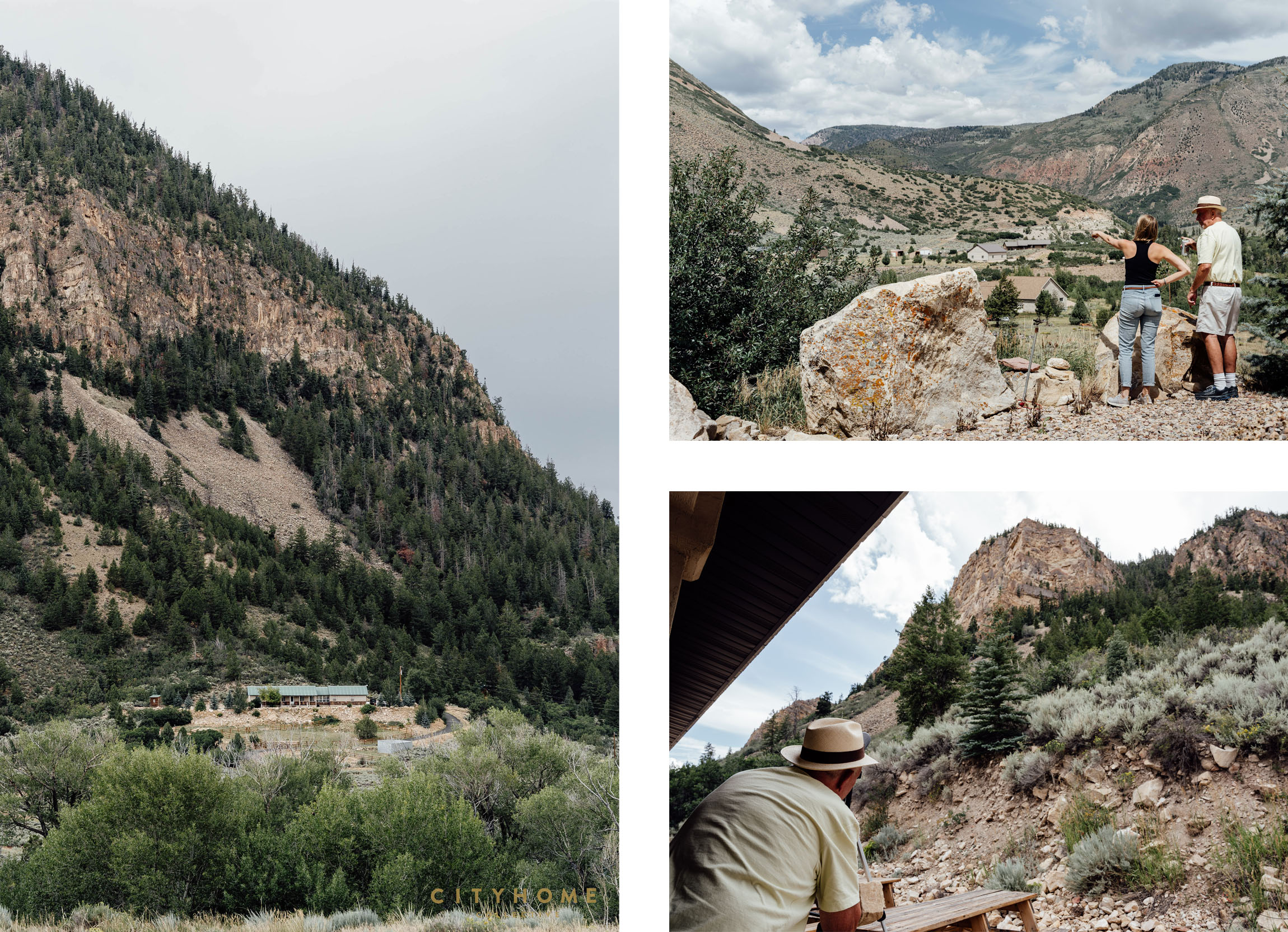
Hanna, Utah, is quickly becoming one of my favorite mountain escapes. The drive is just an hour and a half from Salt Lake City and takes you along the scenic Wolf Creek Highway with hills of aspen groves and Uinta Mountain views. Continue along the Duchesne River and you’ll reach this special property, whose mountainside perch is viewable from Highway 35.
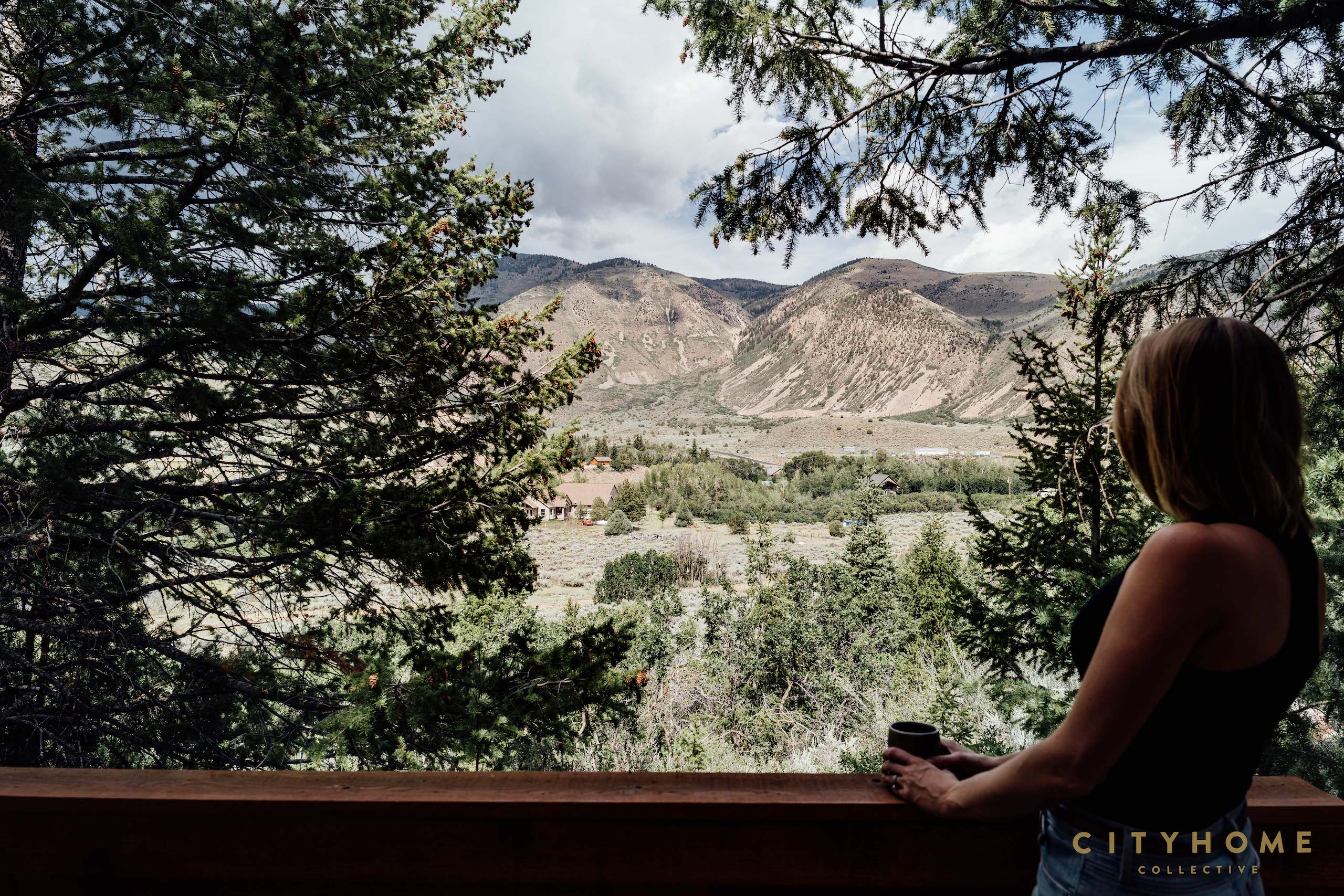
Sitting higher up the mountain than most properties in the area means this home boasts some of the best views around.
While the front porch (with beverage in hand) is the ideal spot to take it all in, these striking vistas also fill the windows from inside the clean and cared-for home. Even so, you won’t be interested in spending too much time indoors with the spectacular fishing, hiking, hunting, ATV riding, biking, and more that’s right at your doorstep, not to mention the nearly 19 acres of your own land awaiting exploration (see also: the additional 5 acre building lot available next door). You’ll quickly experience why Hanna is a favorite spot for outdoor enthusiasts and local fisherman – the Duchesne River, which is viewable from the property and quickly accessible, is an official Blue Ribbon Trout Stream and home to an abundance of native Colorado River cutthroat trout and wild brown trout.
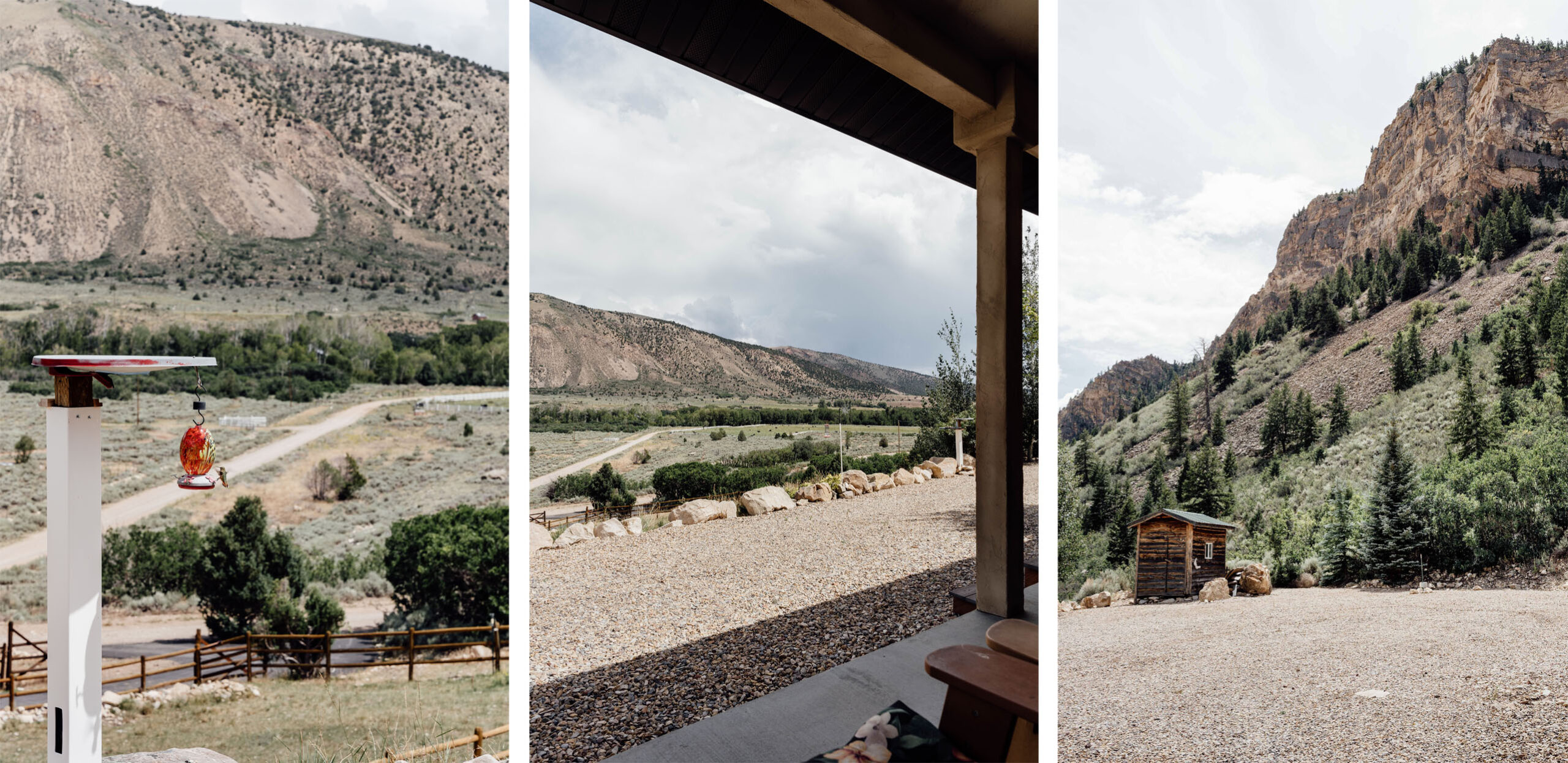
With this property as your home base, you can also host friends and family with the RV hook ups and parking just outside. Plus, a wooded path off the driveway leads you to one of my favorite parts about this property –
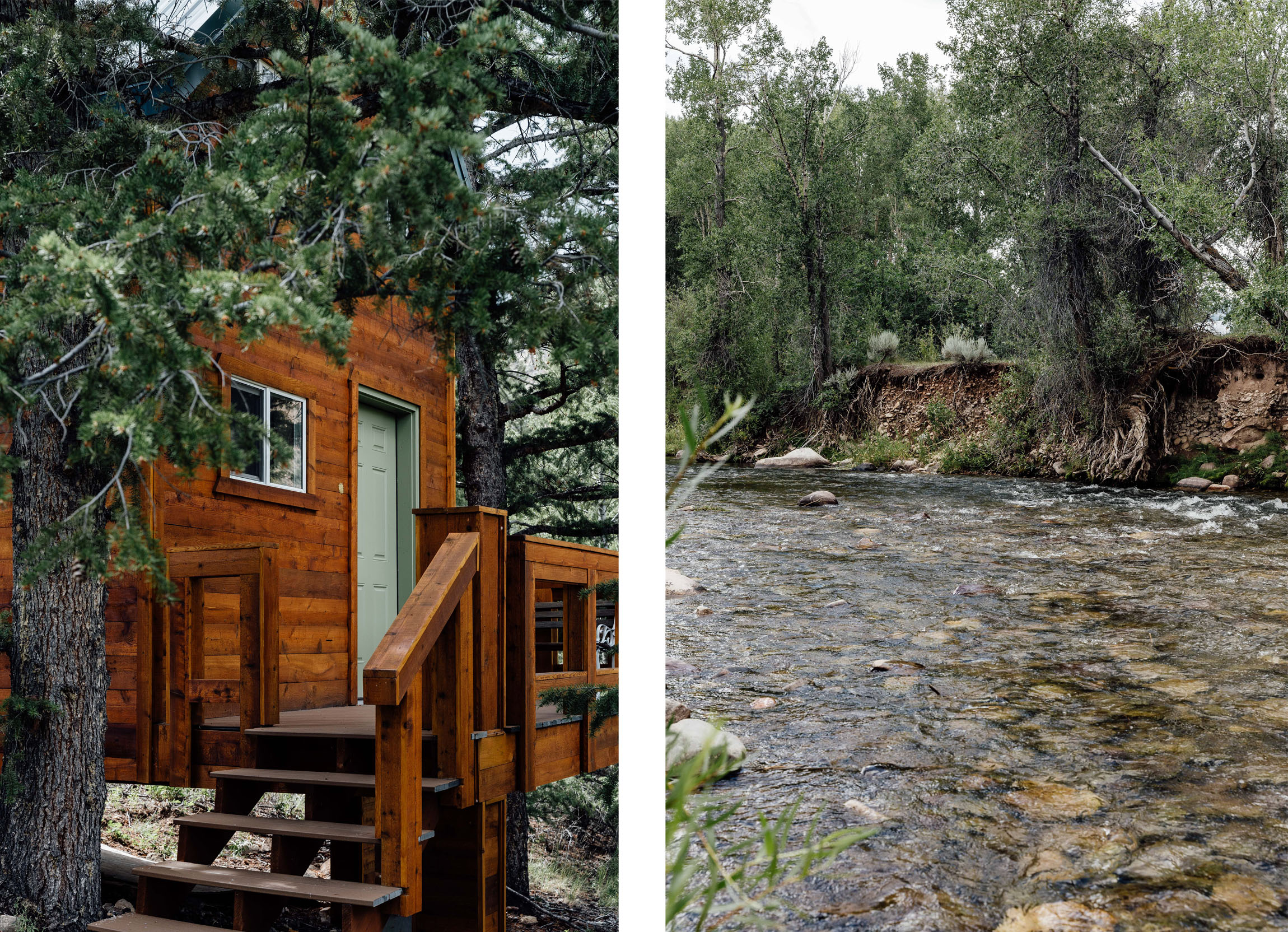
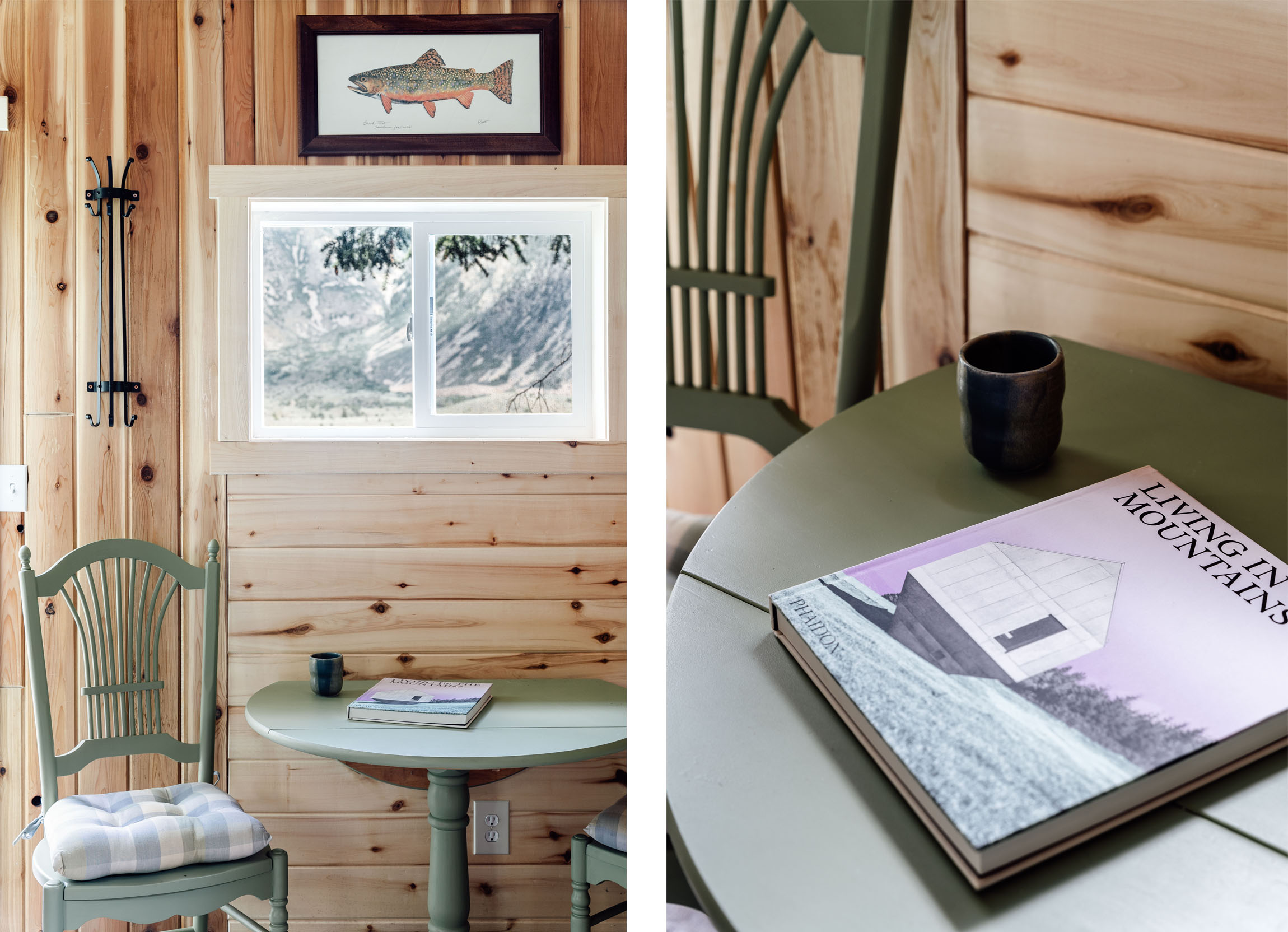
a tiny, A-frame cabin hidden in the woods.
Artistically built with aspen, cedar and blue pine, it’s nicknamed the “Tree House” and was constructed by the owner for his grandchildren. For the next buyer, it could take the form of an art studio, office, yoga space, or extra accommodations for special guests. The views are equally breathtaking if not a little more private, with the front porch flanked by the pines.
Join us for a visit to this property and you’ll see why we’re so enamored.
Call Listing Agent Kelly Carper at 540-290-4930 to schedule a showing.
Click here for full listing.
Federal Heights is like The Avenues’ big sister that just came home from college — more polished, more sophisticated, and a bit of a smarty-pants. The tree-lined streets provide this classic ‘hood with a Rockwellian feel, and we’re betting you’ll fall head over heels come Autumn. Slap on a cable-knit and color us smitten.


Homes here are generally larger and more recently renovated than those in The Aves, and the residents a bit more settled in. The winding streets here are quiet and clean, and much of the real-estate in this area also comes with an unparalleled southwest-facing view of the city. The streets of Federal Heights are dotted with lampposts and homes ranging from classic colonial and cottage to Spanish-style and staggering modern.
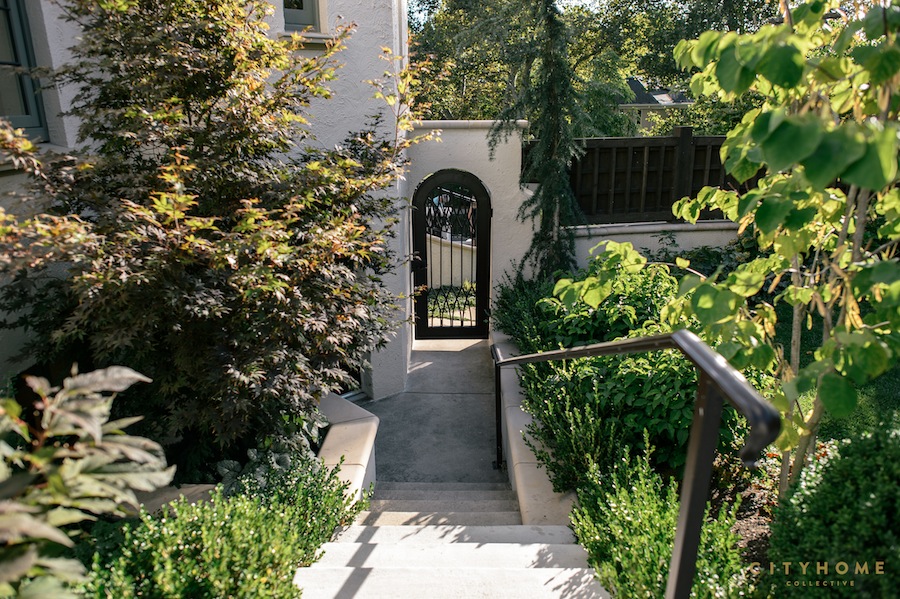
10 minutes to downtown and we’re betting this is one of the best spots for neighborhood walks or sunset views in all of Salt Lake City.


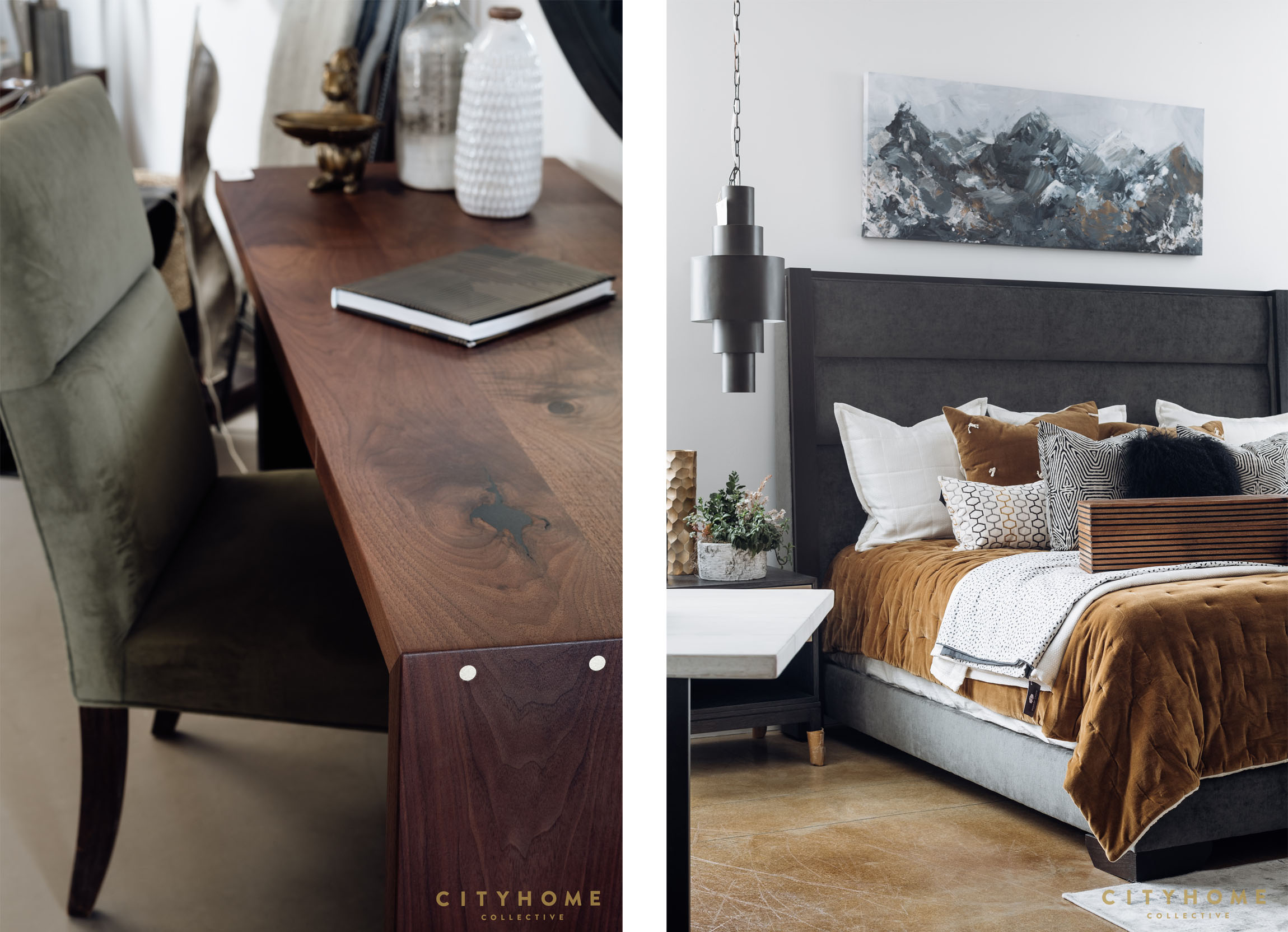
It was for the love of mid-century modern architecture, style, and design that cityhomeCOLLECTIVE was founded, along with a commitment to uplift and advocate for the unique, diverse, and eclectic individuals of our community. For us, those things easily go hand in hand. Our approach, when it comes to creating a mid-century aesthetic, isn’t necessarily about replicating an earlier era, but instead hinges on capturing the mood and rebellious nature of the movement. We love it when spaces are created with respect to an architectural style, but what really excites us is when they authentically and eclectically reflect the people who inhabit them.
cityhomeCOLLECTIVE founder + designer Cody Derrick and residential realtor + art curator Kelly Carper sat down to talk about what it means to design or curate a home in the mid-century aesthetic. The conversation is in preparation for the pair’s upcoming project with the Springville Museum of Art, where they’re curating a mid-century modern home environment with sourced furniture and artwork from the Museum’s collection as part of the exhibition, Mixed Reviews: Utah Art at Mid-Century, opening August 24th. More about that, soon!
Cody – Is there a time when you became fond of mid-century art as an aesthetic – or are you fond of mid-century art?
Kelly – I love a lot of different styles of art, but most of my favorite artists from history came from that time period (1950s-60s-70s) and the modernists are who I loved studying the most in college. The abstract expressionists from New York – Mark Rothko is a favorite, but I particularly love the women artists from that movement like Joan Mitchell and Helen Frankenthaler. After I moved west I became really excited about the Bay Area Figurative painters in California like Diebenkorn and Thiebaud – and also the movement happening in the Southwest with the Taos Moderns; I love the simplicity of Agnes Martin’s work especially. Georgia O’Keeffe is obviously a big one for me from my time in New Mexico. Her house in Abiquiu is the epitome of mid-century style and she totally embodies the mood of that movement.
So I guess the styles of all these artists look a little different, but they all based their work on feeling and emotion rather than academic structures. The rebellious sentiment and breaking away from previously established “rules” around painting and art is what they have in common. And that’s really the root of the mid-century aesthetic, I think.
Cody – As a curator, do you think that filling a mid-century house with art is a different ask than filling a house that is either turn of the century or more current?
Kelly – Yes and no. I think more about energy and mood when placing art than trying to make it look period-correct to the style of the home, especially since I work with living artists rather than sourcing vintage pieces (which is cool, too! I just like the idea of supporting working artists.) So I guess I would consider artists whose work has a similar aesthetic, noting the lines of the architecture and composition of the house to make sure it’s all cohesive, but putting more emphasis on the mood and energy of the artist’s work and how that compliments the feeling in the home. In a residential setting it’s all about feeling for me – considering how the homeowners live in the space and what they’re doing or feeling in certain areas of the home. Do they want excitement and a statement piece, or do they want to feel calm and relaxed with something quiet and minimal? Do they want something that has a specific narrative or do they want it to be more interpretative so it starts conversations? These are the things I think about. So when it comes to mid-century I’d probably look at current artists who embody the same mood as the time period, architecture and design, because that’s what’s present in the house and probably what the homeowner loves about it too. When you base it off mood and feeling, a cohesive aesthetic naturally follows.
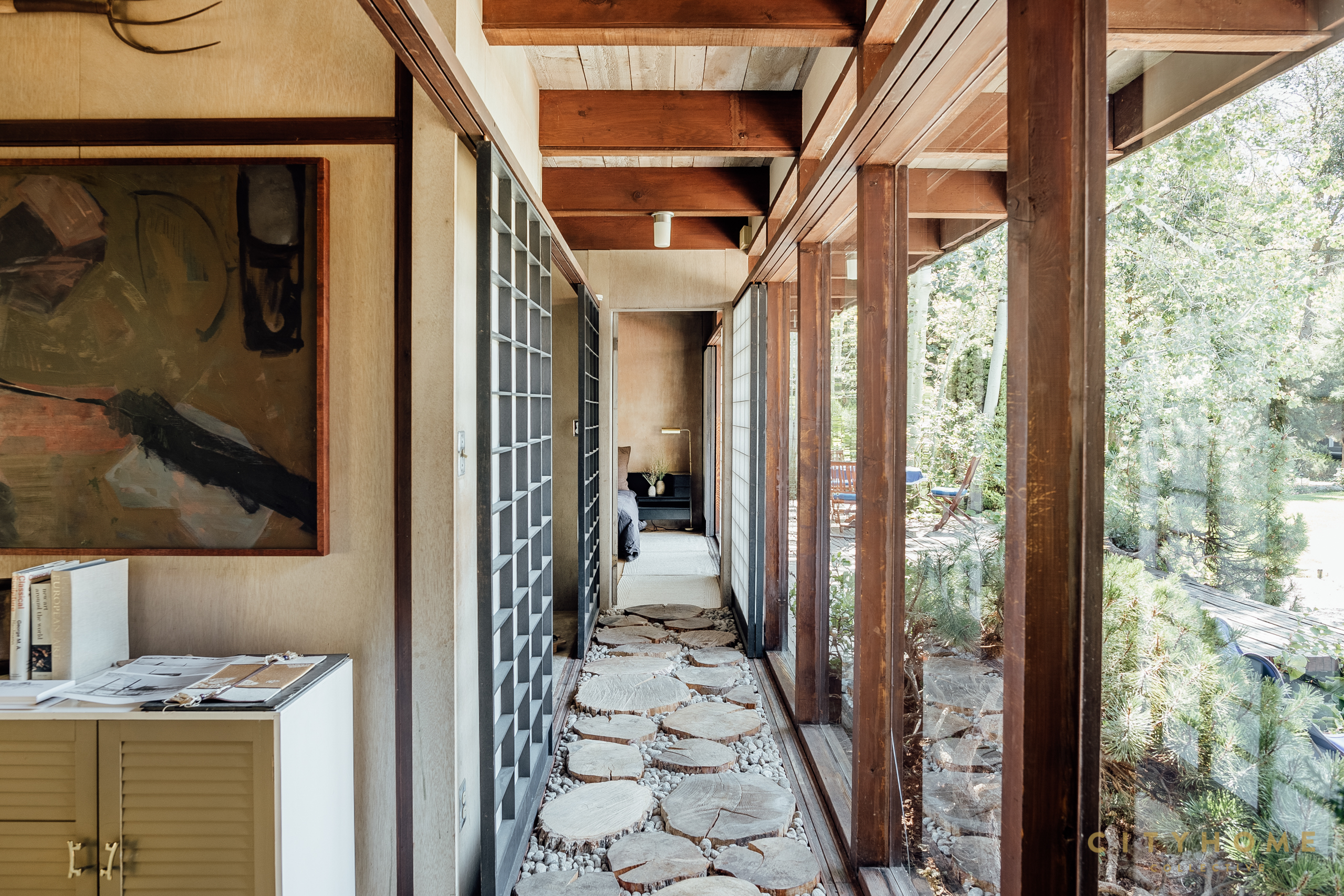
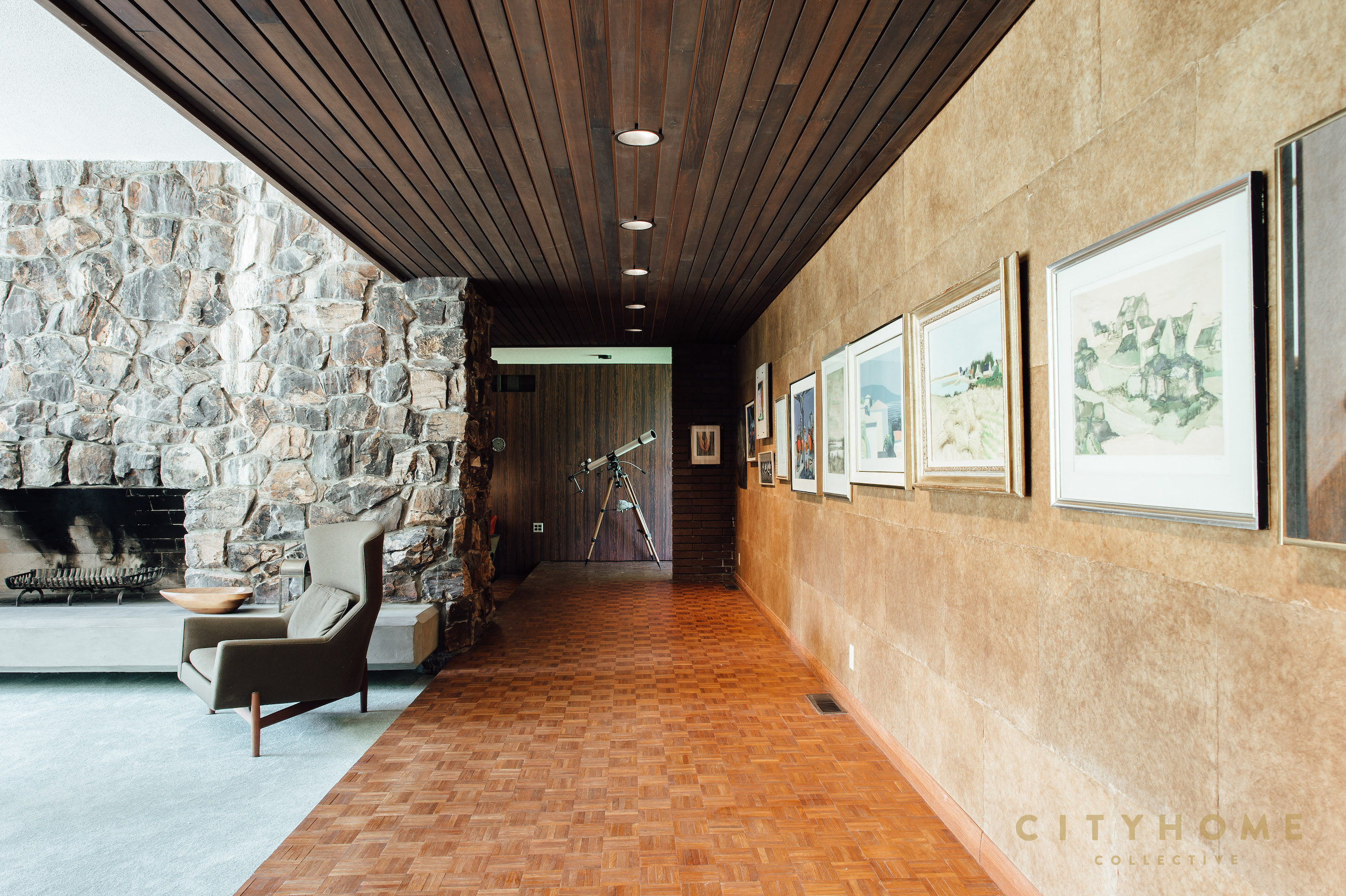
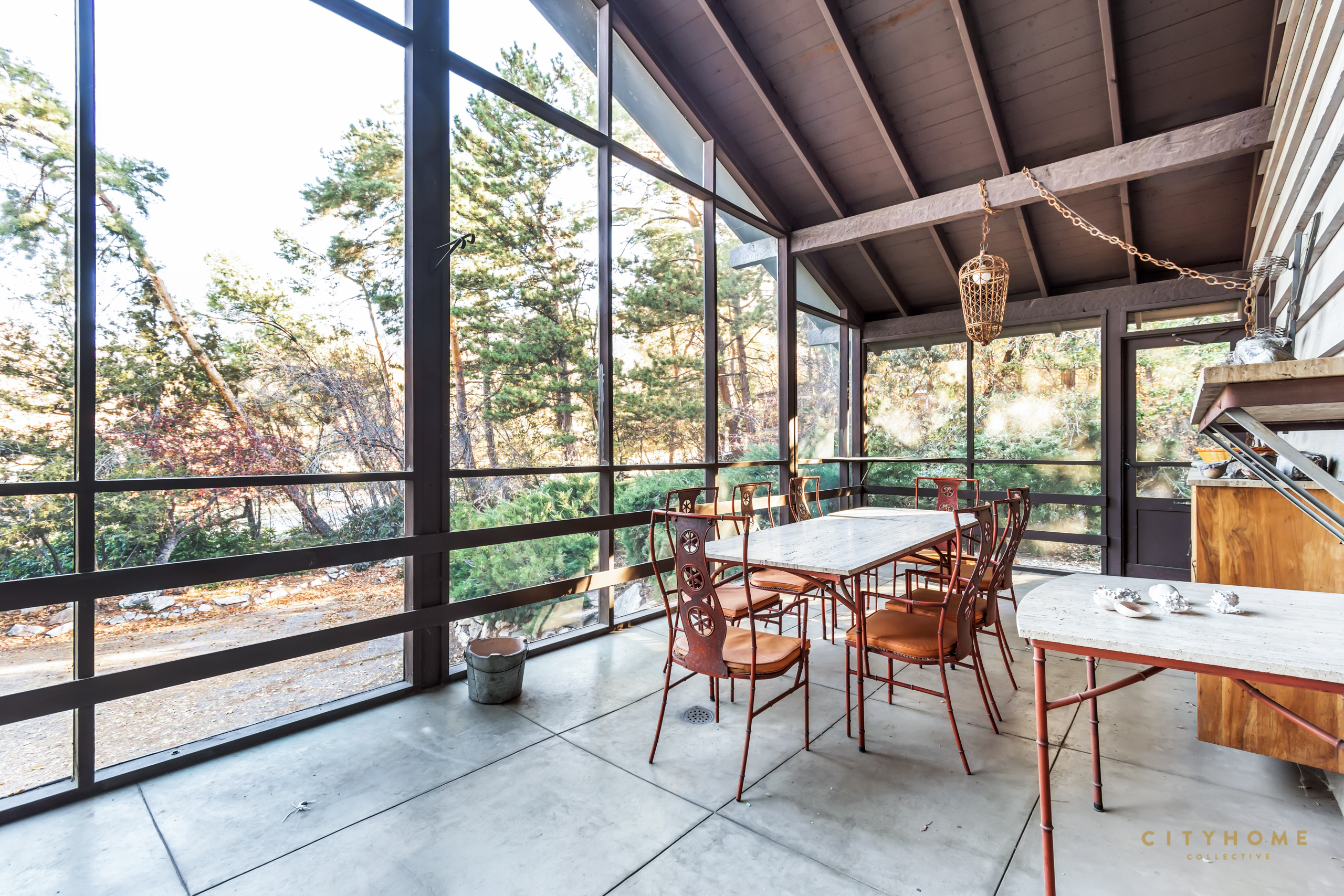
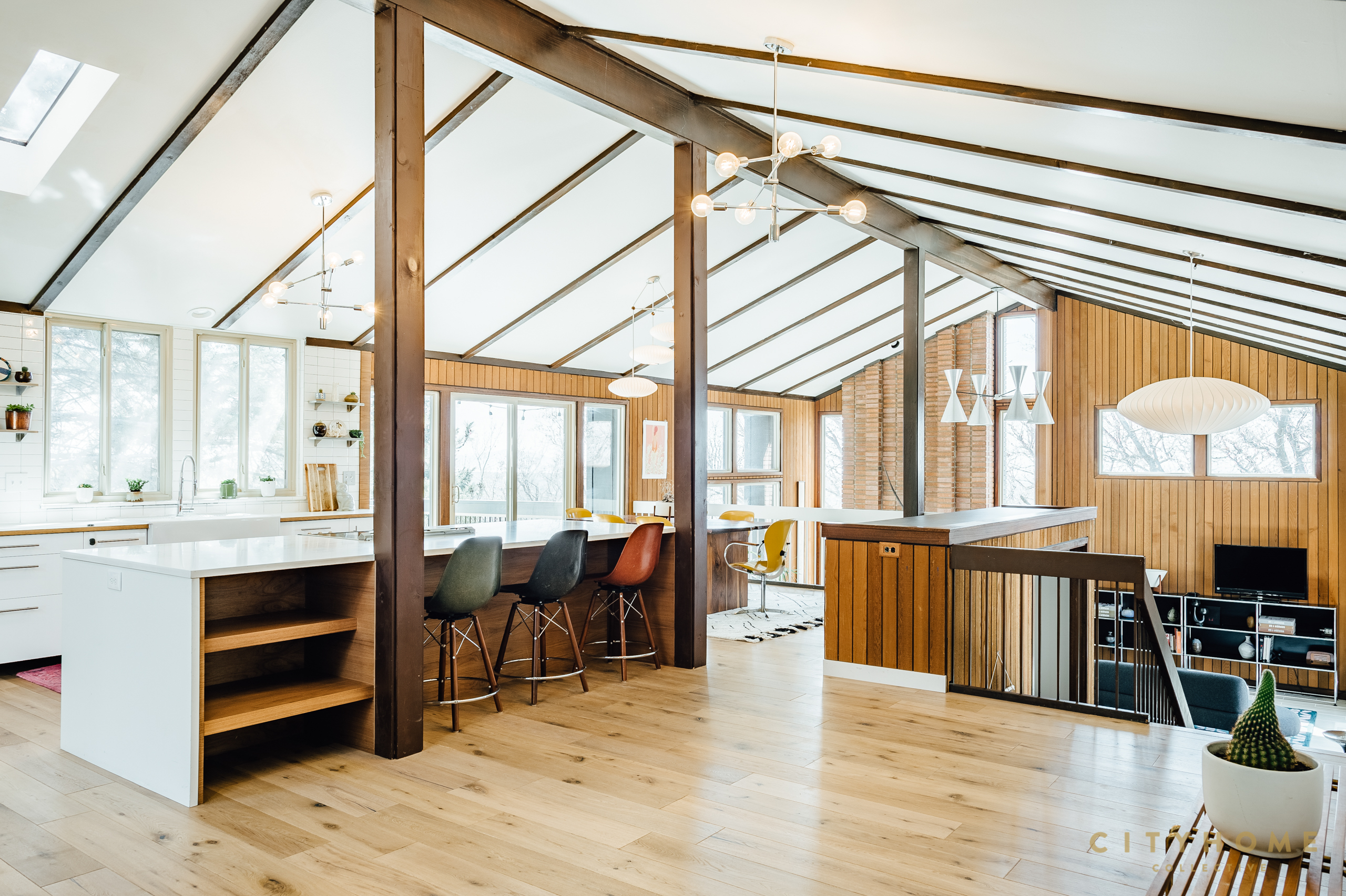
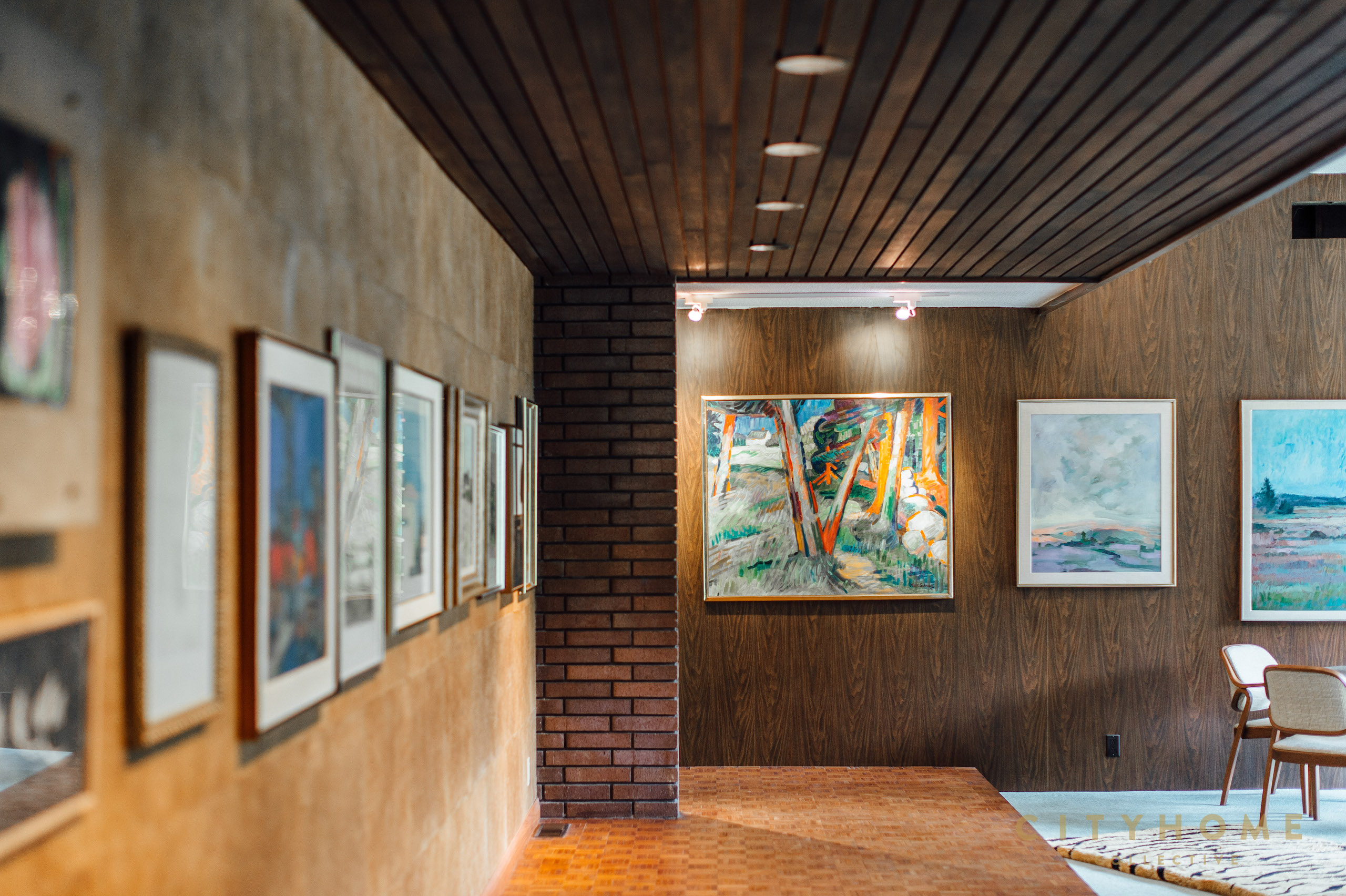
Your Cottonwood Lane listing comes to mind as an example – Paul Reynold’s work was hanging in that home, which was designed by Stephan McDonald and is a classic example of mid-century modern architecture. Paul’s paintings are obviously not from that time period, but they felt right in that house because of their organic nature and feel – the same reason we brought one of his paintings into the cityhome office.
Kelly – What about when it comes to designing a space – what do you consider when furnishing or staging a mid-century modern home?
Cody – It’s interesting that you bring up mood, because what I think is interesting about designing and curating mid-century modern houses is that there is this mood of mid-century that is so organic. That’s why Paul’s art worked so well in the Cottonwood Lane home. Because he was actually raised in that house, it was his family’s home. So his art doesn’t have to be done in the 50s or 60s to be complementary to the feel of a mid-century modern house – he embodies the essence of that space. I think people can get pigeon-holed when it comes to designing and curating in that they think a contemporary house means contemporary art and furniture, or a traditional house means traditional art and furniture, but I think the most interesting homes stem from a clear mood. When I see a mid-century remodel that’s giving you Palm Springs on a platter I think, where’s all the original soul? Where’s the woodwork and the sculpture and the art?
So for me, when it comes to designing a mid-century modern house, the most important thing is to honor the mood regardless of the era or style. The mood of mid-century in my opinion is rebellious, sexy, organic, welcoming, and intimate. I bring in pieces that are in harmony with the space, but that still feel current and interesting and fresh, because I don’t ever want to design something that’s a single note. And that comes back to the idea that if the design is done well, it sets the mood for a lot of very different types of people to feel at home. So if I fill a room that is very diverse – different artists, eras, makers and materials, they all still make sense because they’re held by the same structure. They’re held by that vision of mid-century architecture and style, which was very inclusive and inviting.
Kelly – What about when it comes to architectural preservation? How do you make it feel fresh and current while still maintaining the integrity of the style?
Cody – When I was on the board for Salt Lake Modern, we attended a conference in Los Angeles about modern conservancy. I listened to a preservationist speak there and he basically said that the best way to preserve a property is to do whatever we can to make it habitable enough to prevent somebody from tearing it down. So that doesn’t necessarily mean keeping it pristine and perfect based on traditional standards, because if we actually want it to move from generation to generation and for people to keep it, it has to be livable to current standards. So you may have to change the kitchen or update the tile to meet today’s needs, because ultimately what you don’t want to happen is for the structure to be demolished. So really it’s about honoring the integrity with landscaping, furnishings and artwork in ways that still feels true to what it was, while allowing it to be new enough that it won’t be destroyed and replaced with a new build.
Think about this space (the cityhomeCOLLECTIVE office); this is a mid-century modern building but from my perspective, there was no real commitment to furnish it with mid-century modern pieces, however there was a commitment to honoring its mid-century integrity. For example – I designed these tables in a way that highlights the natural wood in the space that’s been here since the 50s, because I wasn’t willing to get rid of the original wood. And over here are pieces that are probably 1910-1920, so not mid-century, and were originally from a museum in Europe used as display cases. They’re from a totally different era but still flow with the space. And then we brought in some glam by placing the disco balls inside them, and then of course added pops of color in the furnishings with this orange velvet mid-century couch. And the lighting is Jonathan Adler, a current designer with a mid-century aesthetic. It’s a bunch of things mixed in but that together create an interesting environment while honoring the mood of the entire space.
Kelly – So for folks who already know that we at cityhome have our finger on the pulse when it comes to mid-century real estate and design, what else do you want to communicate to them about our perspective and what we do?
Cody – That our love for mid-century architecture, style, and design comes from an authentic passion and sense of place, and isn’t just following the trend. Because our place is here – we don’t need Palm Springs pools and pink and yellow sundresses – because we have pine trees and mountains, stone and wood, and cabin life with a mid-century aesthetic that feels a lot more authentic. I would want people to know that if they’re asking us to design or curate their space that they’re not going to get Palm Springs on a platter, they’re going to get themselves expressed within a home.
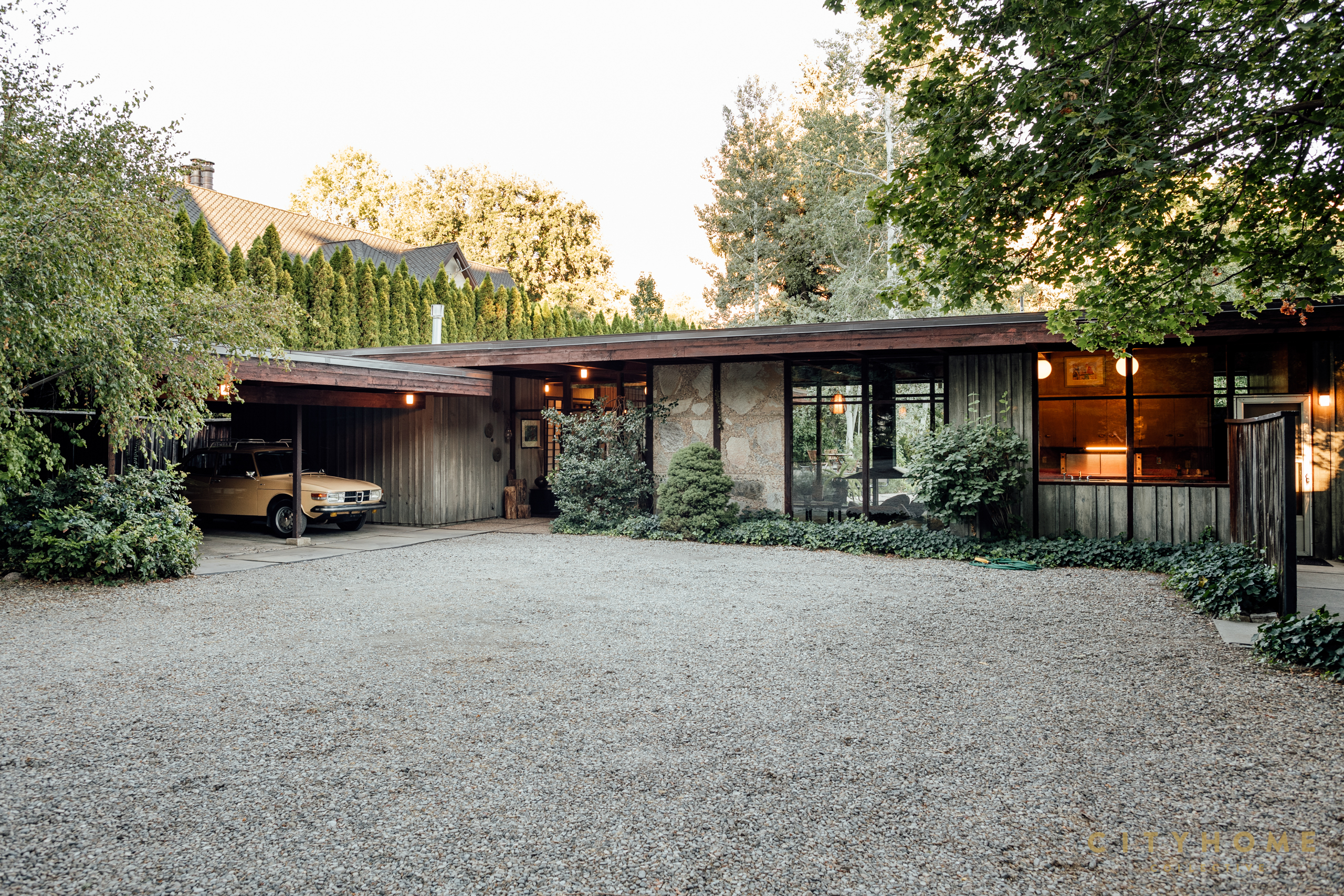
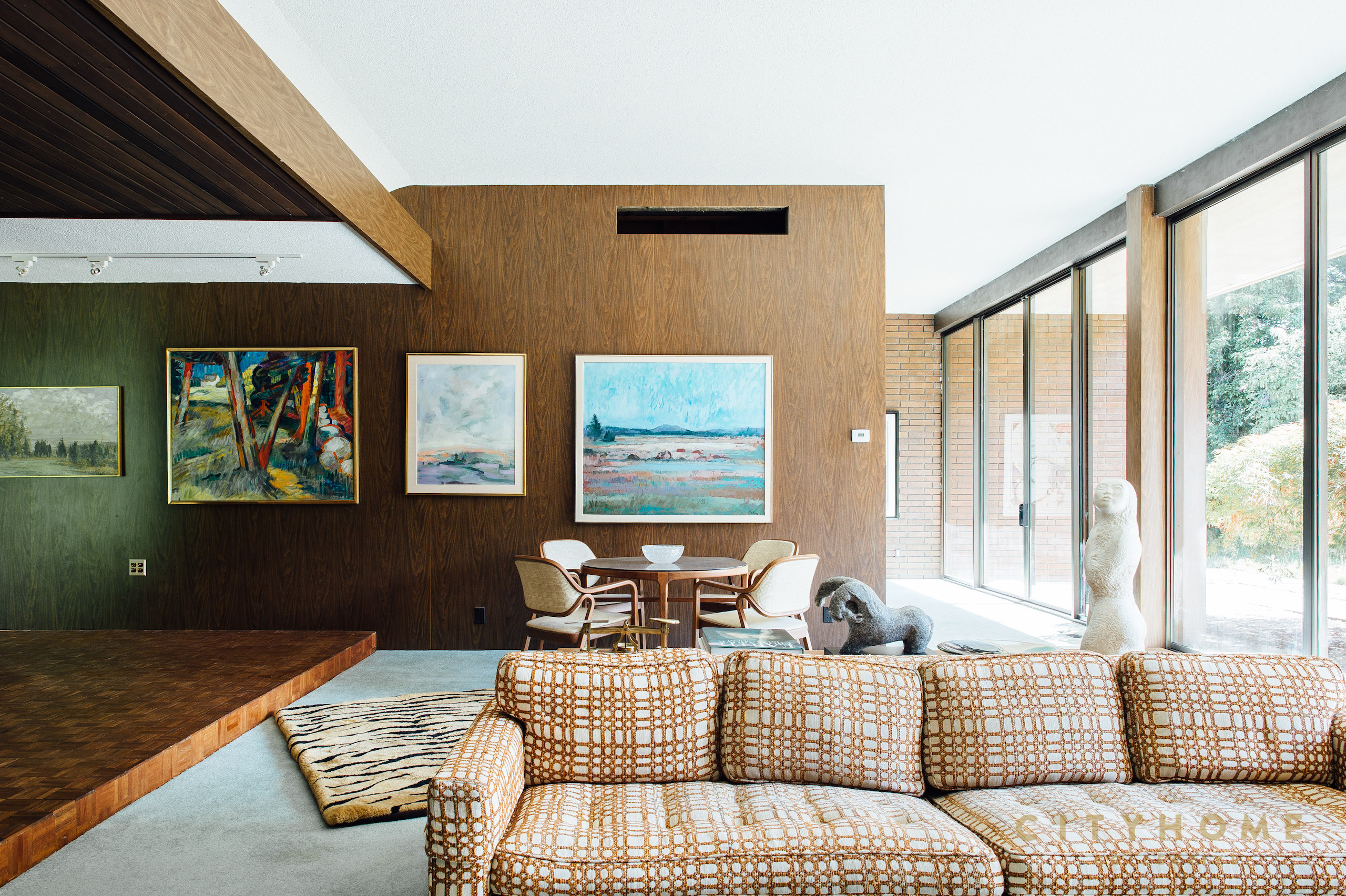
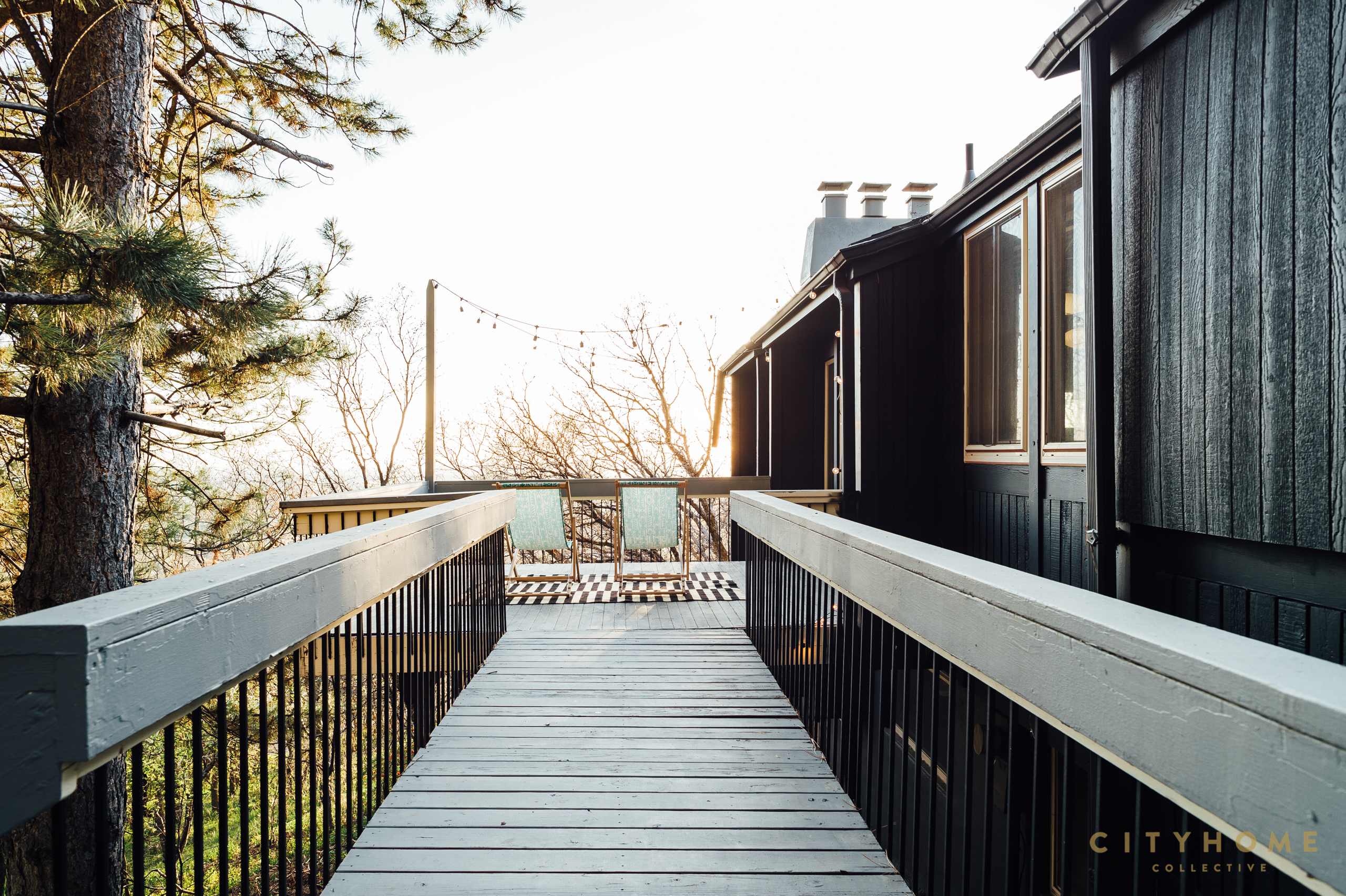
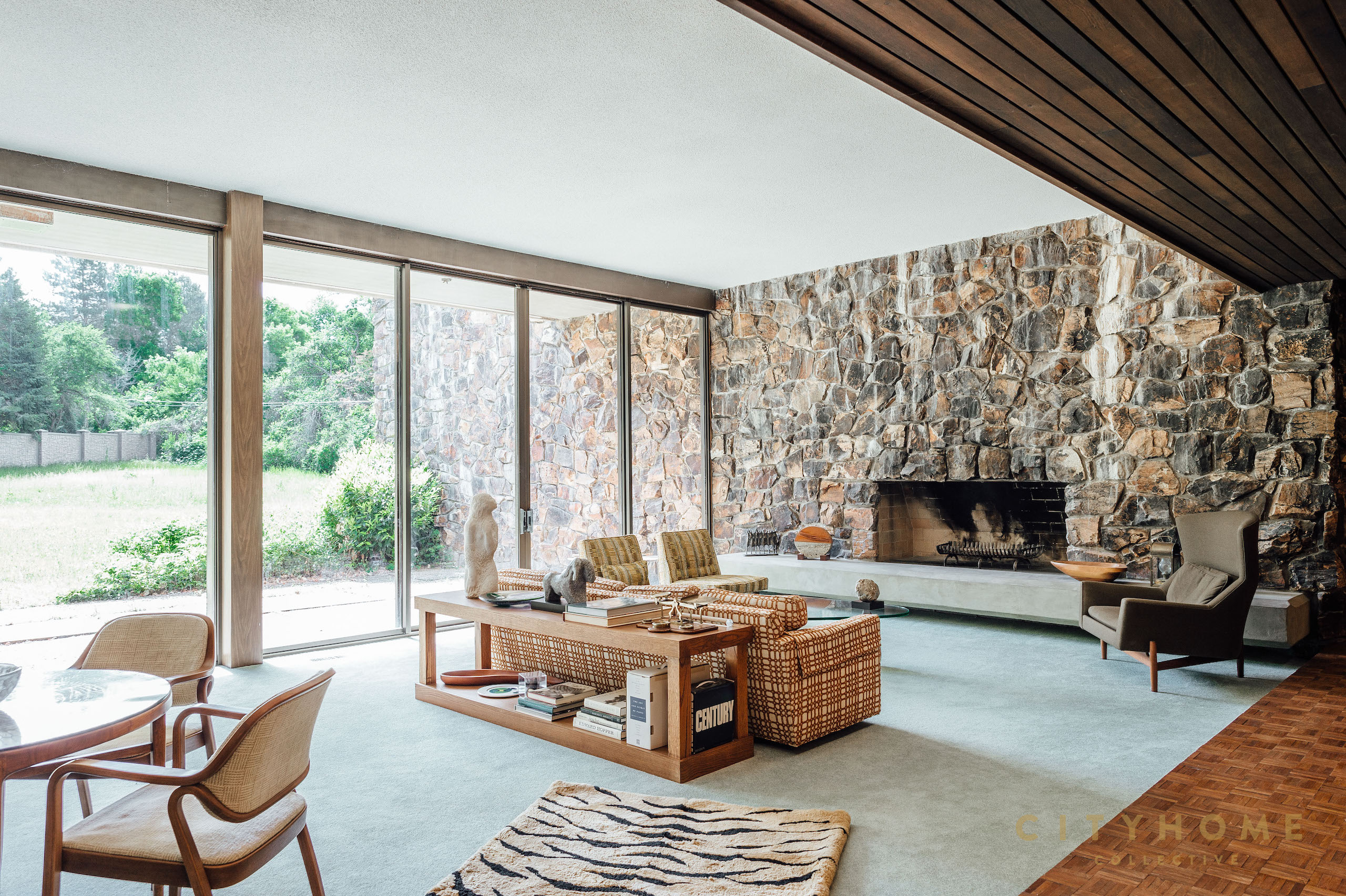
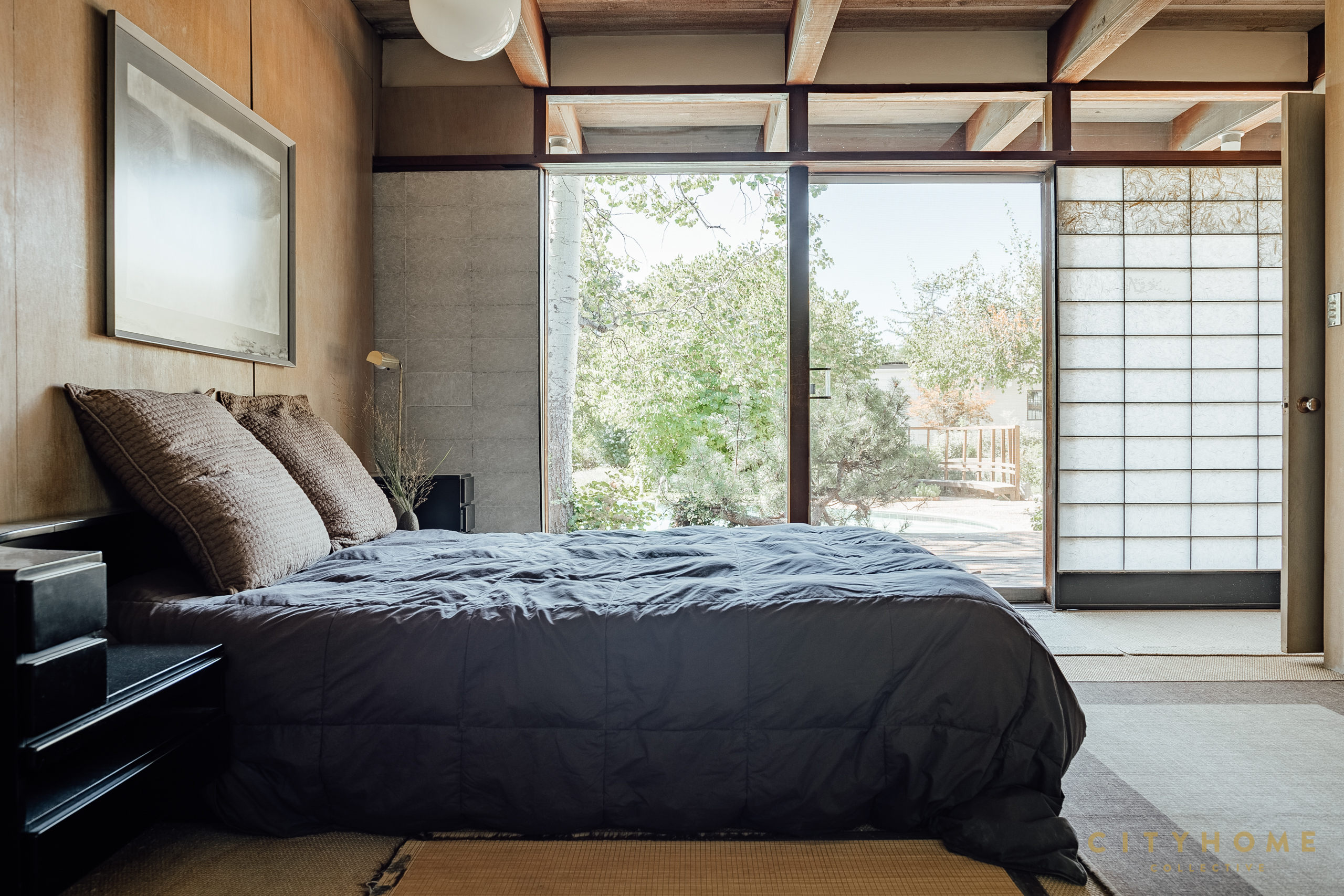
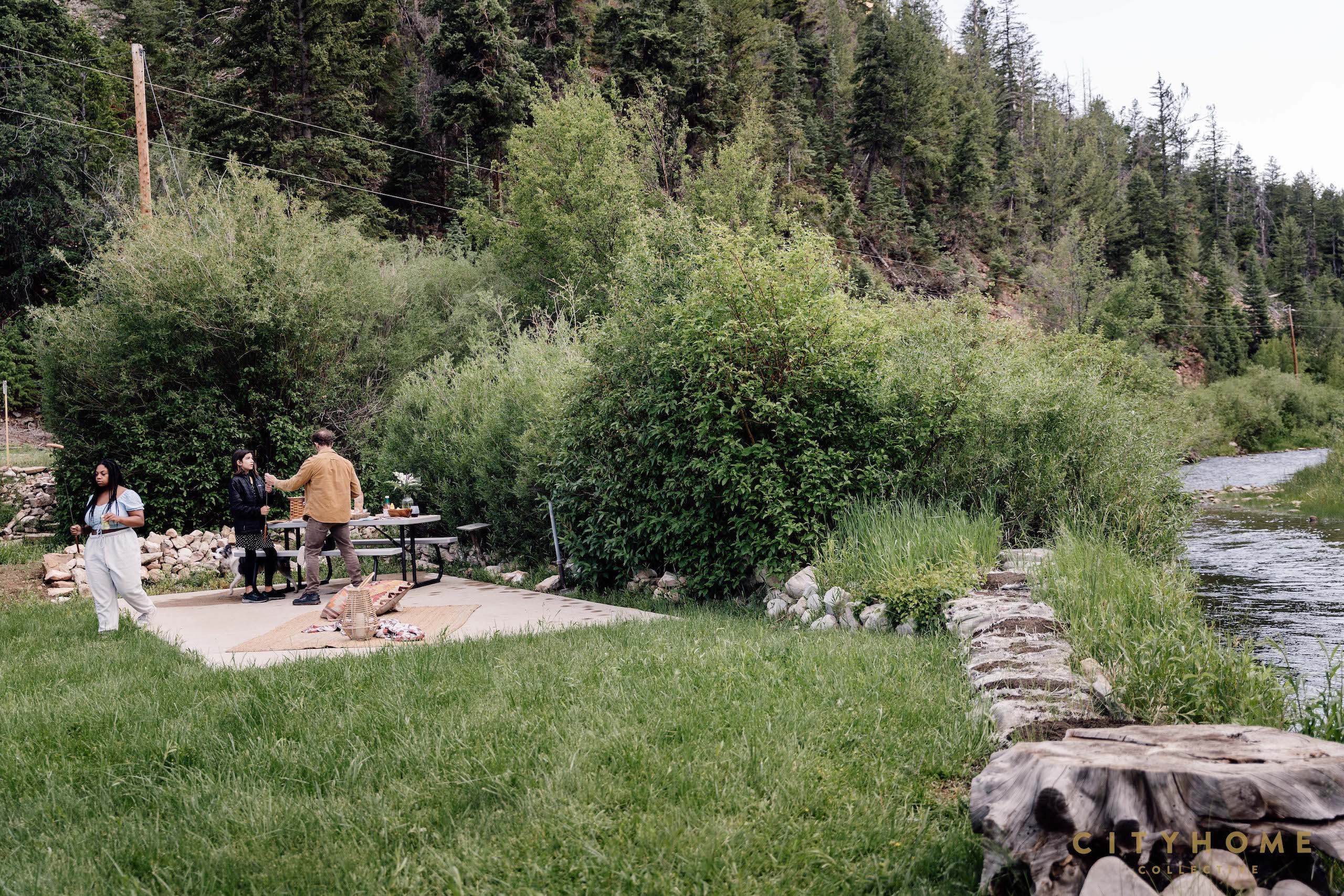
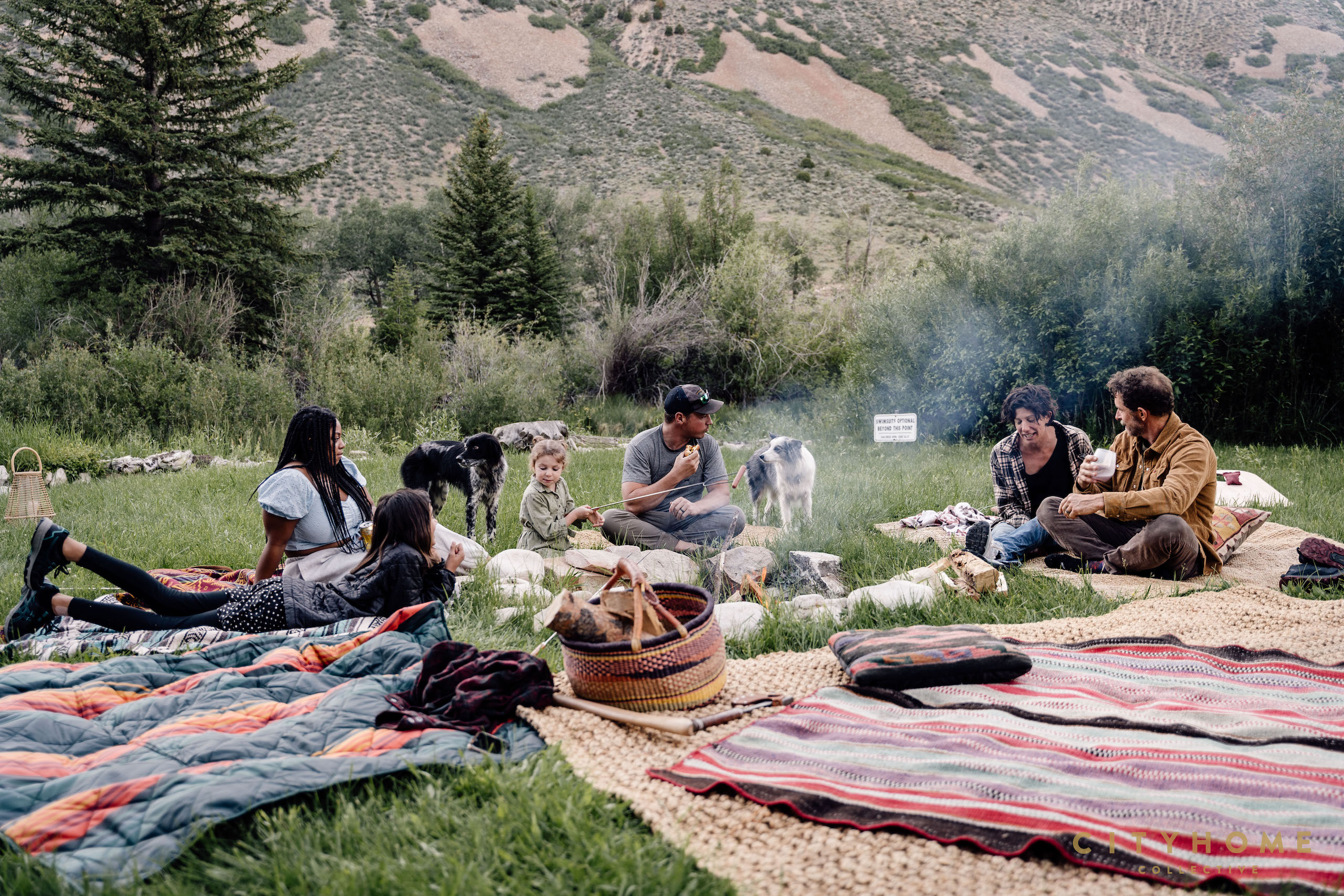
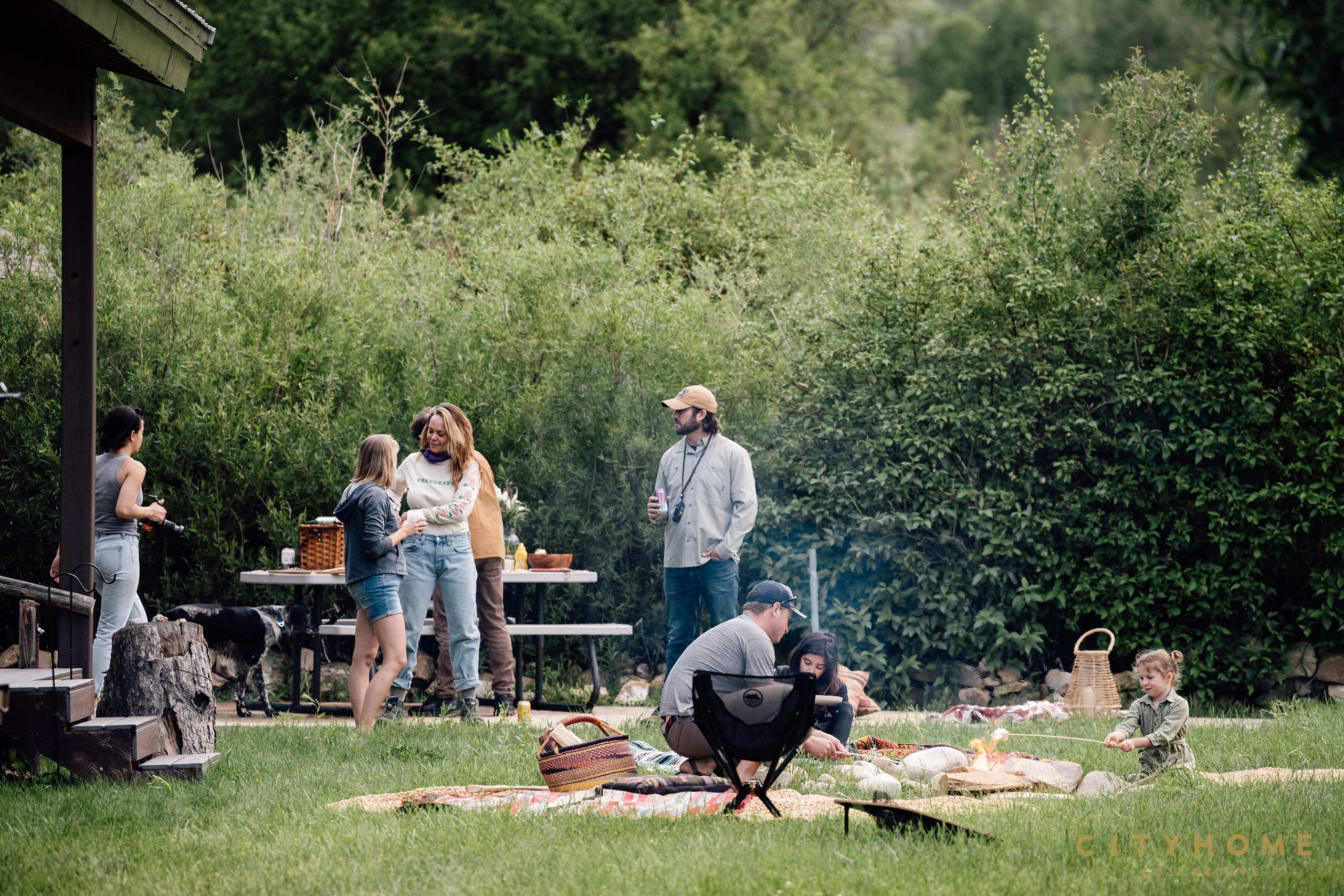
We’re all in need of a mountain escape from time to time and luckily we live in a place where hiking, fishing, camping, and other outdoor adventures are easily accessible. We recently had the opportunity to gather with friends and family (fur babies included) at a special property neatly nestled in the rugged Uinta Mountains, just over an hour from Salt Lake City in Duchesne County.
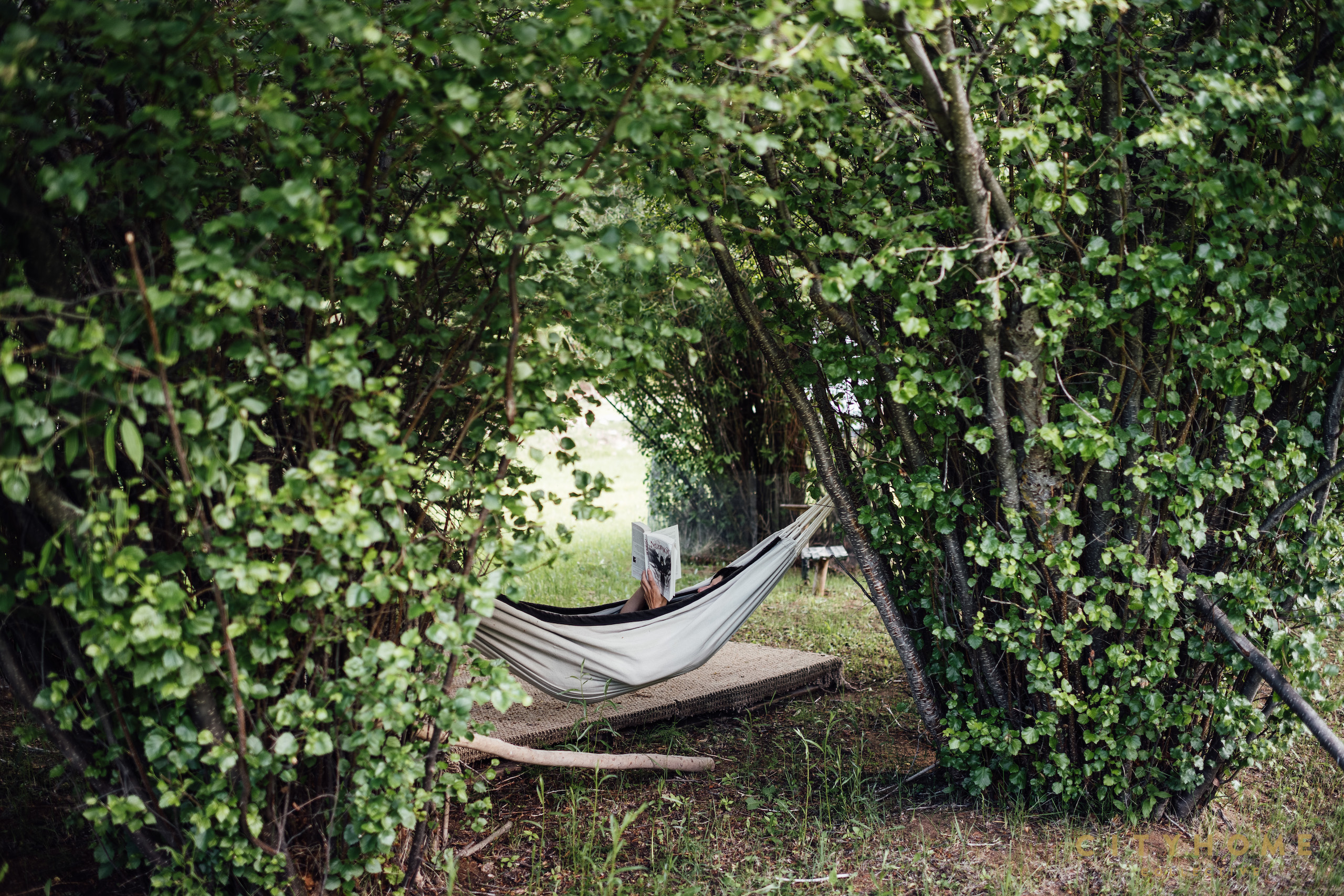
Unofficially dubbed “The Beaver Ranch,” this scenic property features a Blue Ribbon Trout stream, secluded ponds, towering trees, mountain views and open grassy areas suitable for tents and campers alike. It comes with everything needed for your off-grid getaway, yet conveniently has cell service so that you can still – quite literally – work remotely if need be.
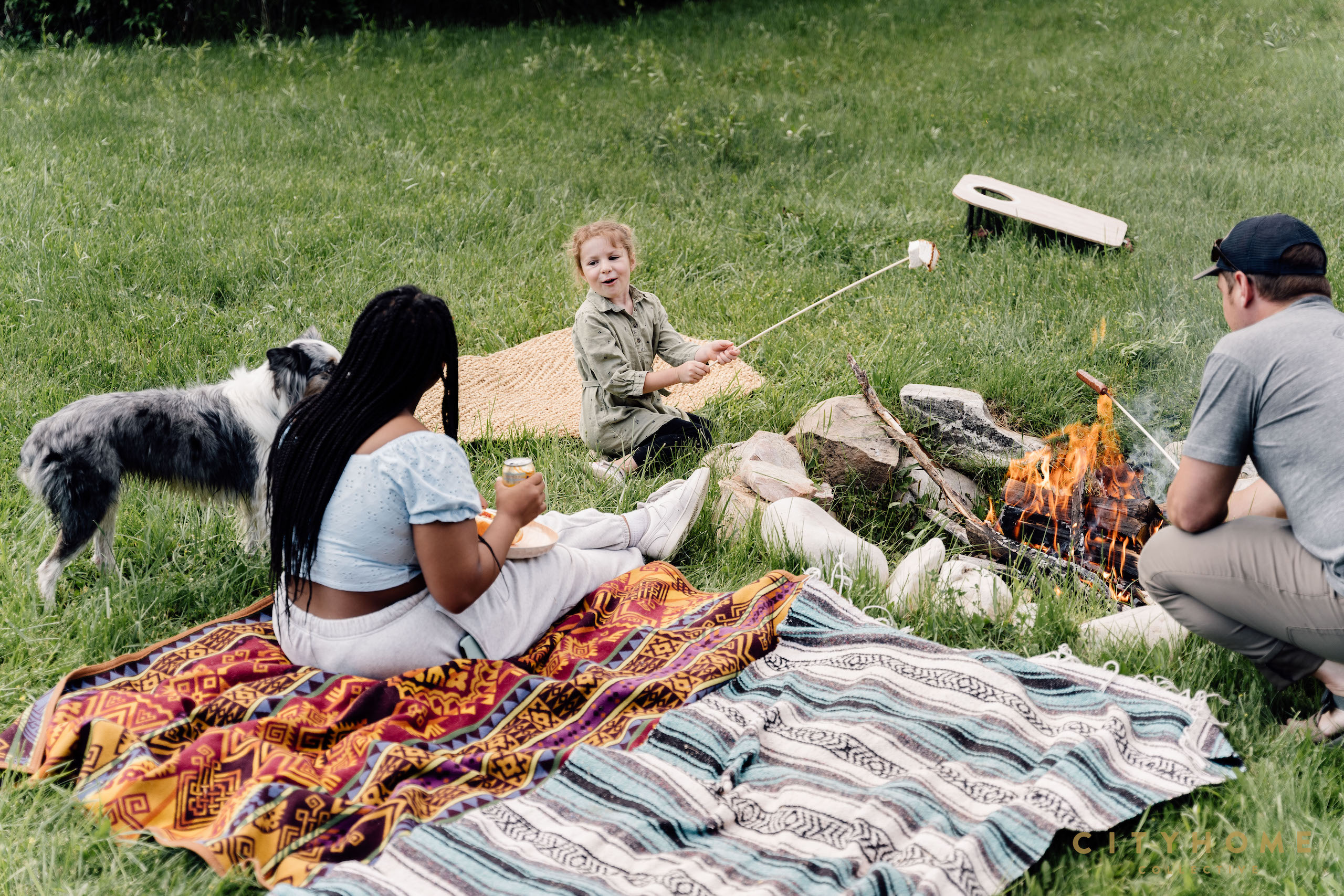
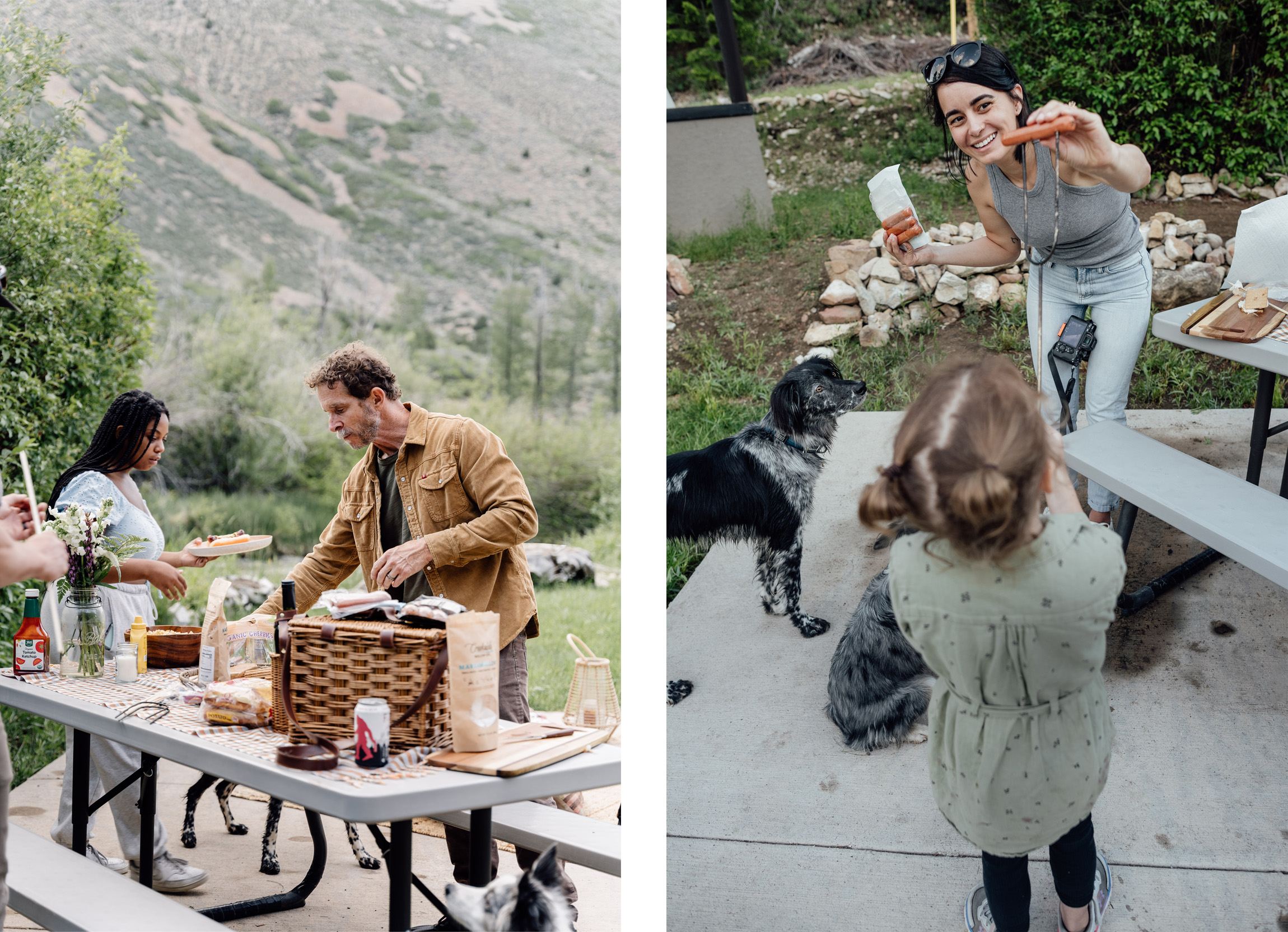
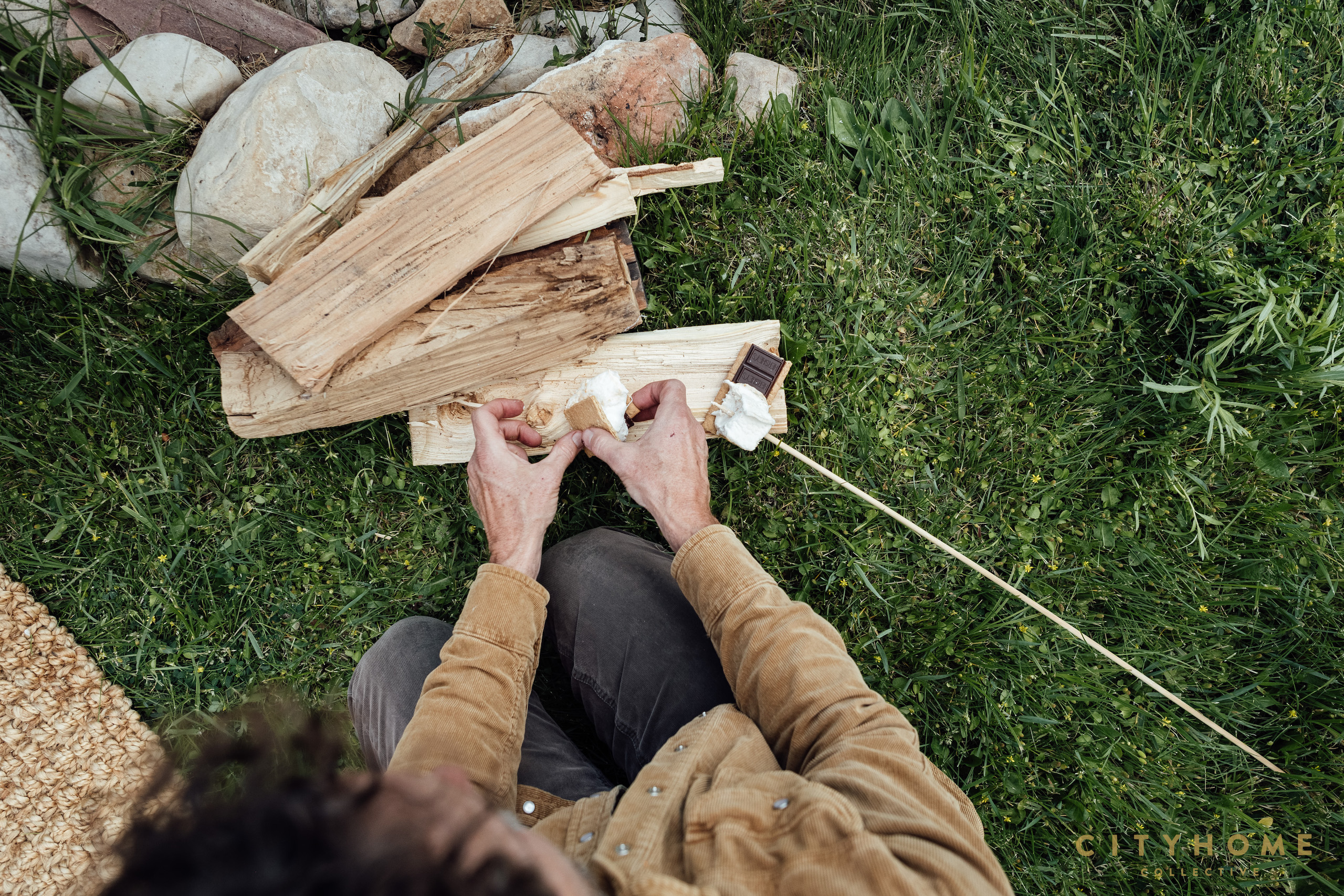
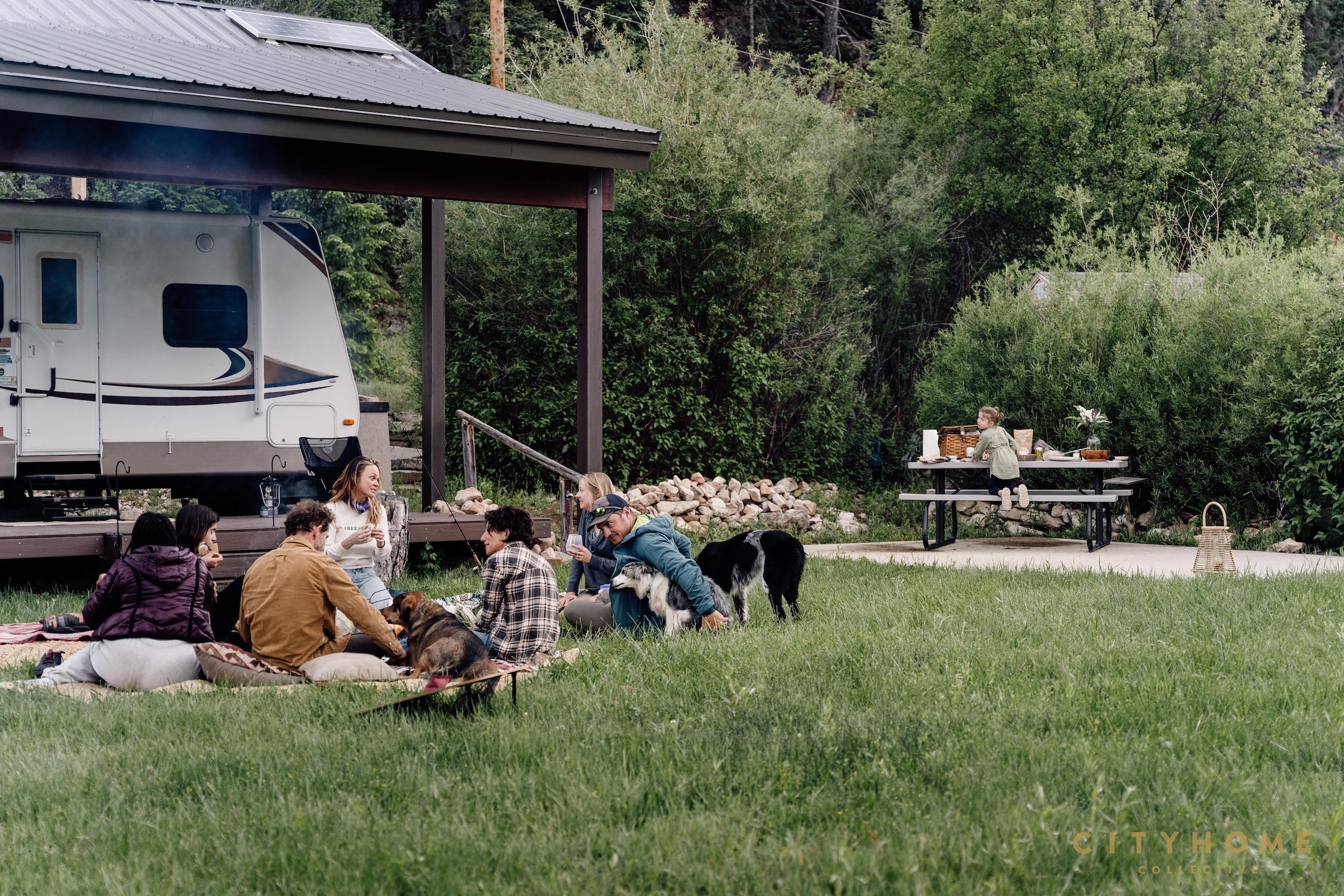
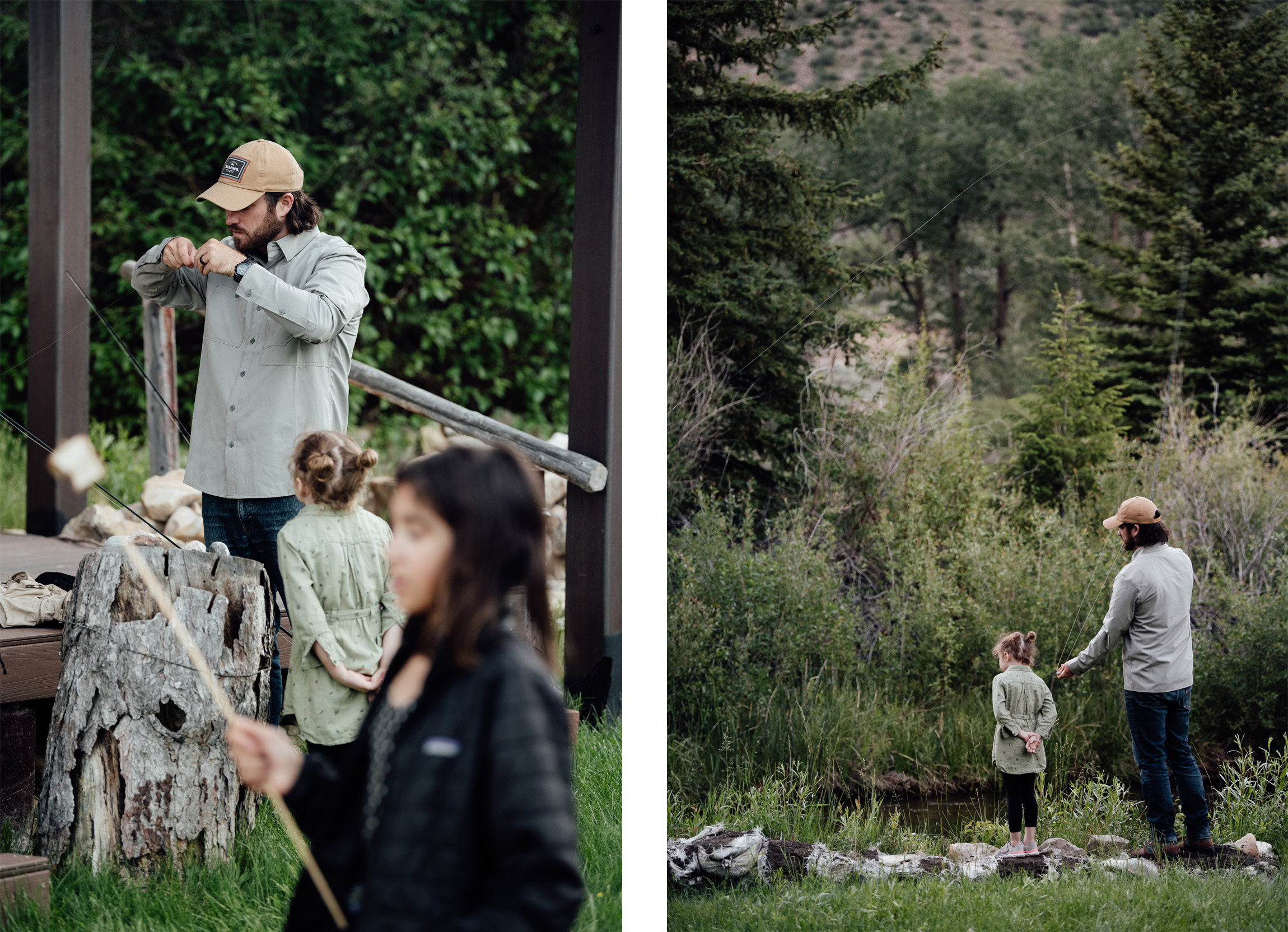
Even so, we quickly forgot about the city buzz as we toasted marshmallows over an open fire, played games, and relaxed by the Duchesne River. Local loan officer and fly-fisherman Trevor Tippetts of Direct Mortgage offered a few casting lessons to the youngest of the group, who spent the majority of the evening mastering their own skills in s’mores building and hot dog roasting. It was a welcomed respite for our crew and we’re looking forward to sharing more about this little slice of paradise.
In the meantime, we hope you find time to relax and play in the mountains this holiday weekend, finding your own much-needed moments of joy.

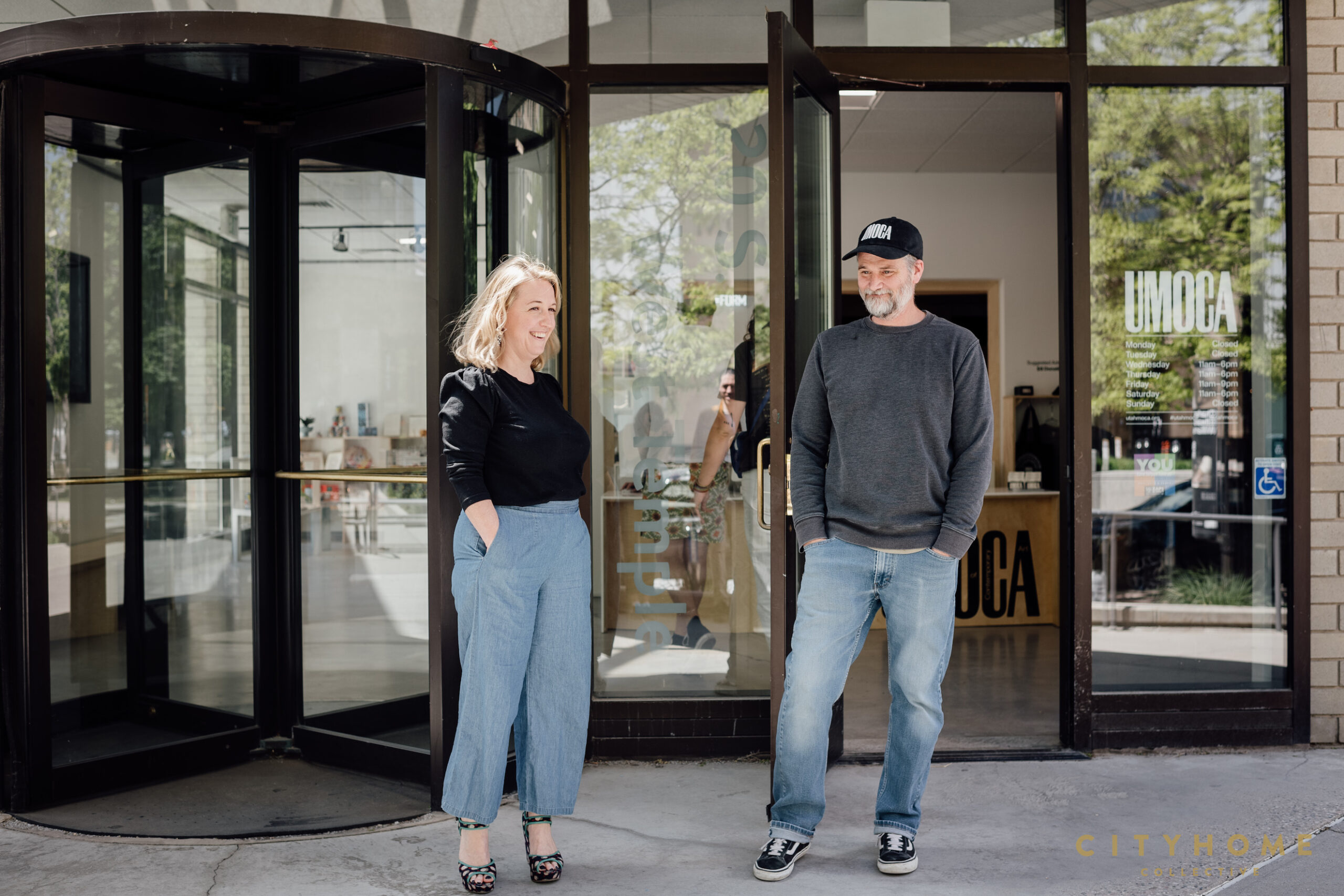
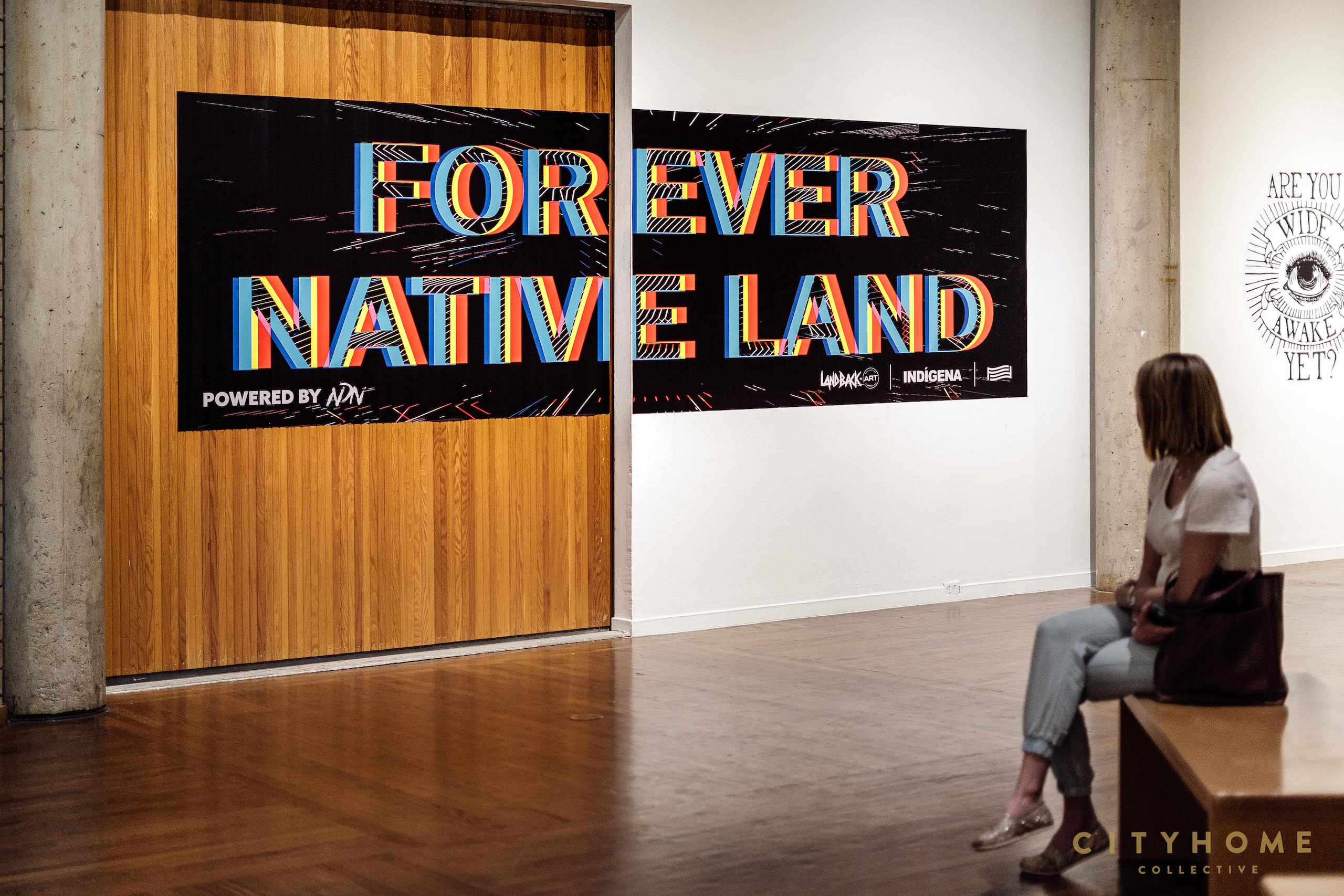
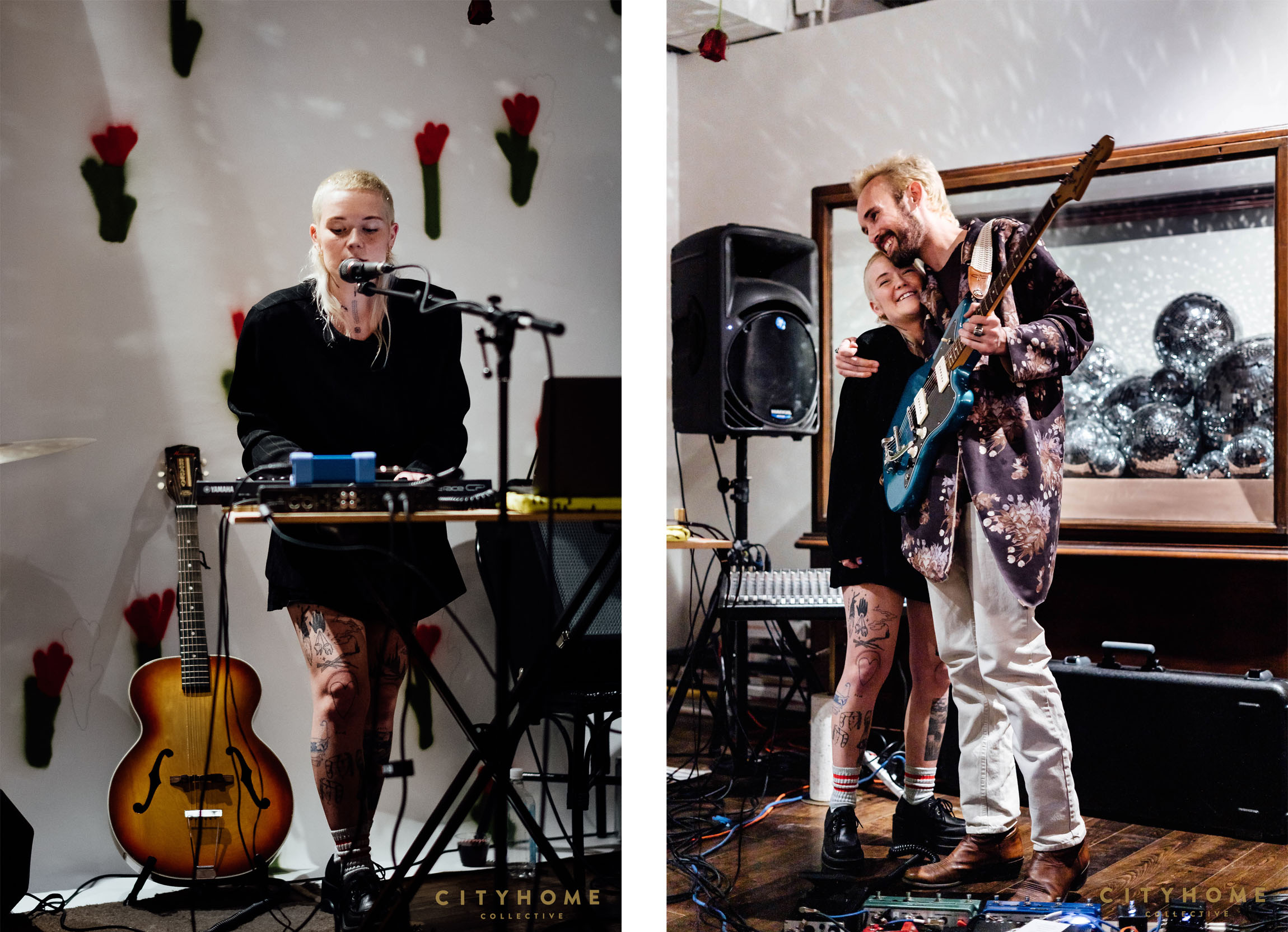 Our Wake Up Call For Freedoms is in its final weeks at UMOCA and we highly suggest you carve out time for a visit.
This powerful exhibition is a collaborative effort between the Museum and the artist-led organization, For Freedoms, who “produces artist activations, community programming, exhibitions, and nation-wide campaigns to encourage social engagement and spark civic joy.” The exhibition takes its title from the Wide Awakes movement of the 19th century, an organized youth movement that rallied against slavery through creative efforts including art and song. Drawing upon the spirit and symbols of the Wide Awakes, the exhibiting artists use contemporary art practices to initiate open conversations around the dividing issues of today, “inviting the community to gather under a new model of creative action.”
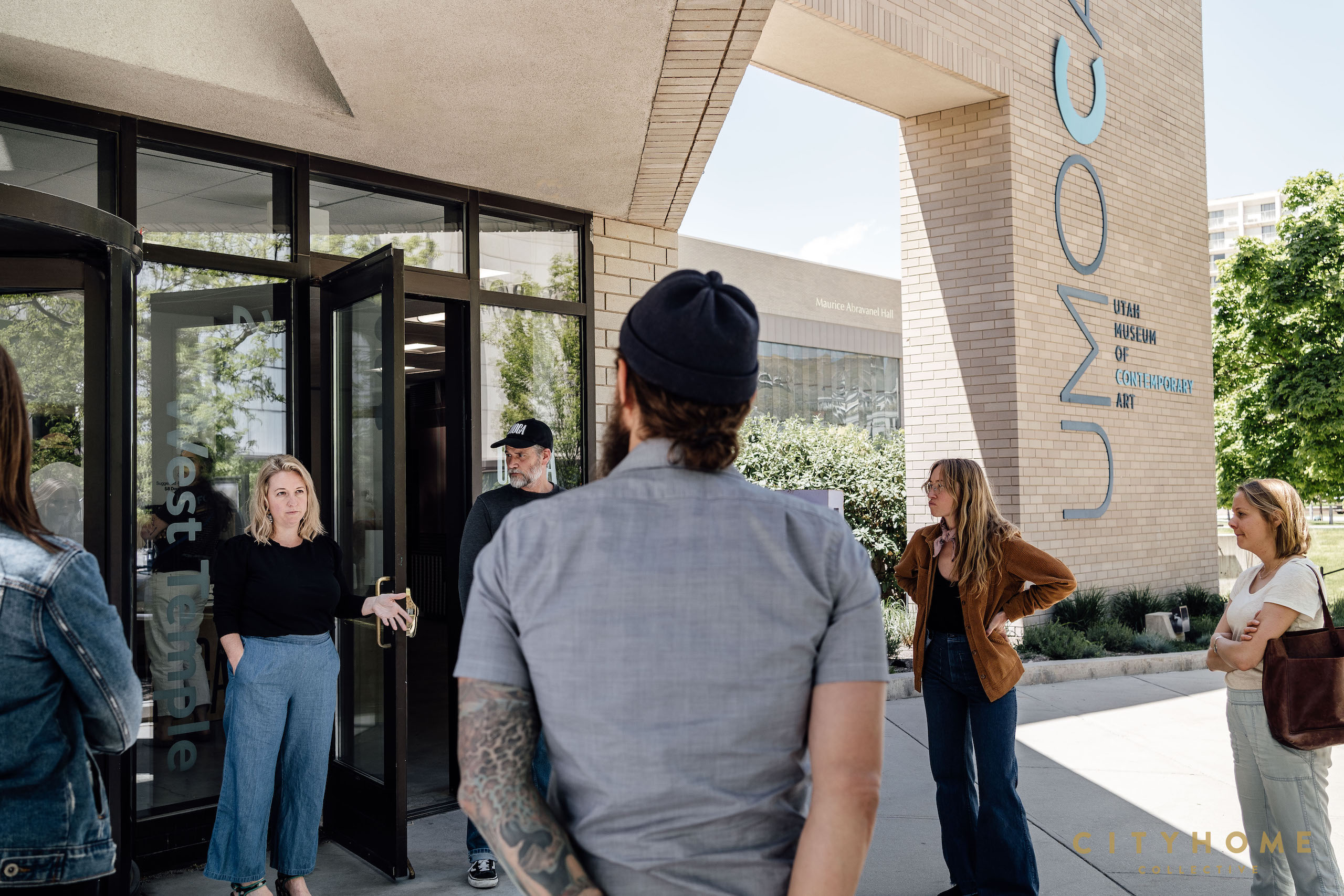
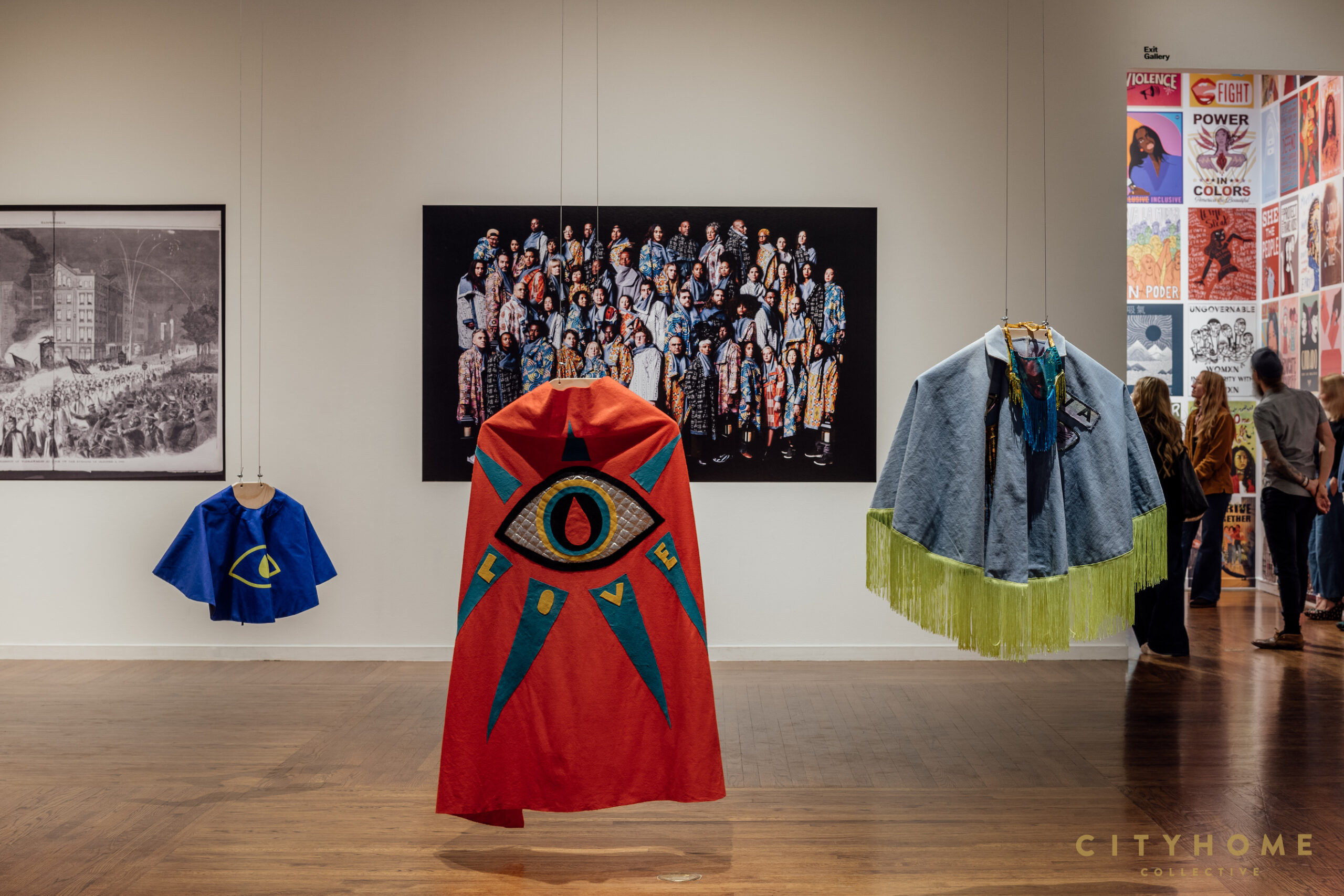
As you well know, we believe that artists and makers are pivotal voices when it comes to building and sustaining communities. So our friends at UMOCA speak right to our collective hearts with this statement about the show:
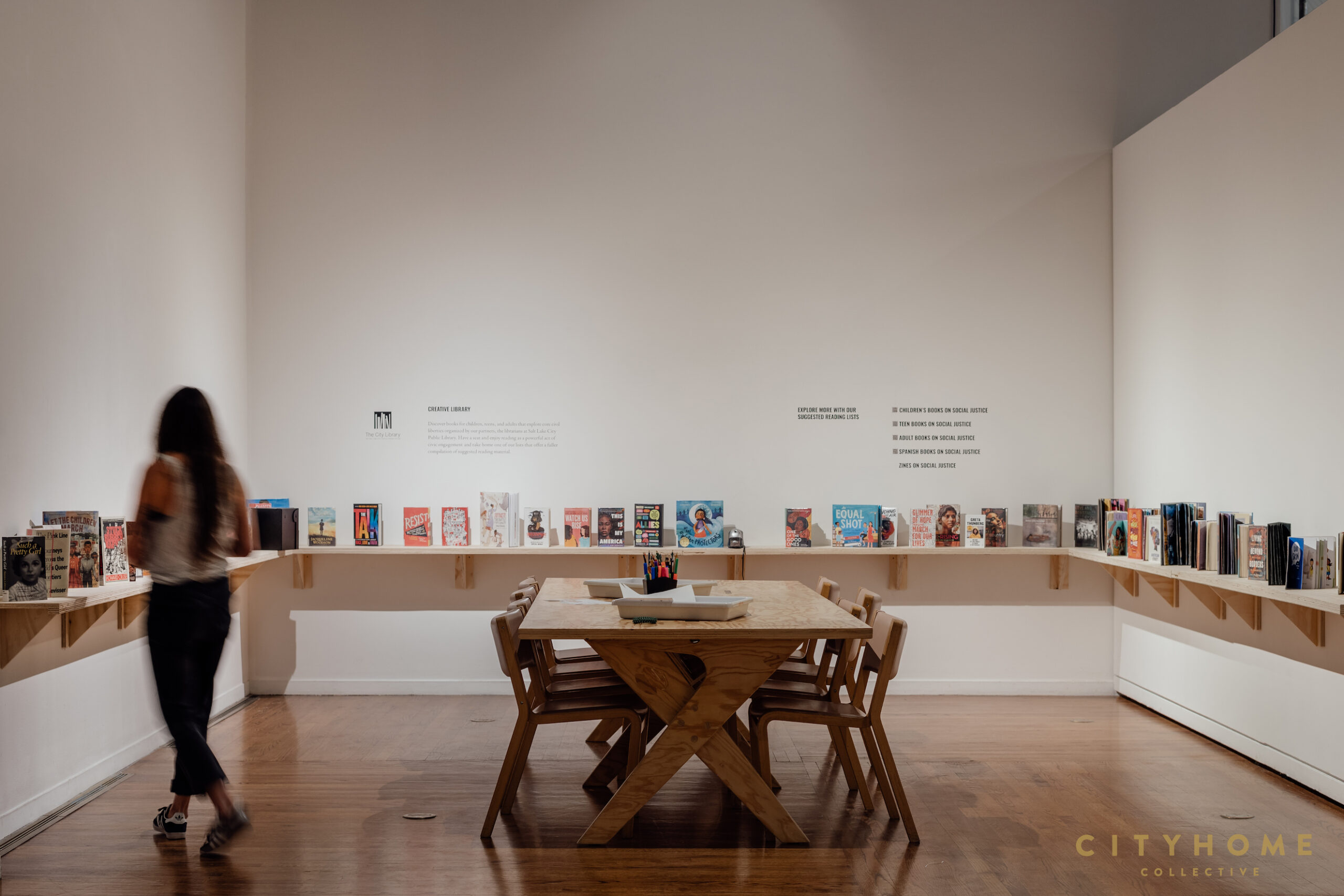
Driven by some of the most urgent social issues of our time, For Freedoms believes that if creativity is a core societal value, if artists are at every table, new ideas are more likely to take hold. Working as a collective to center the voices of artists in public discourse, For Freedoms seeks to expand what participation in a democracy looks like, to get out the vote, and to initiate a deeper conversation about the role of art in local, national, and global politics.


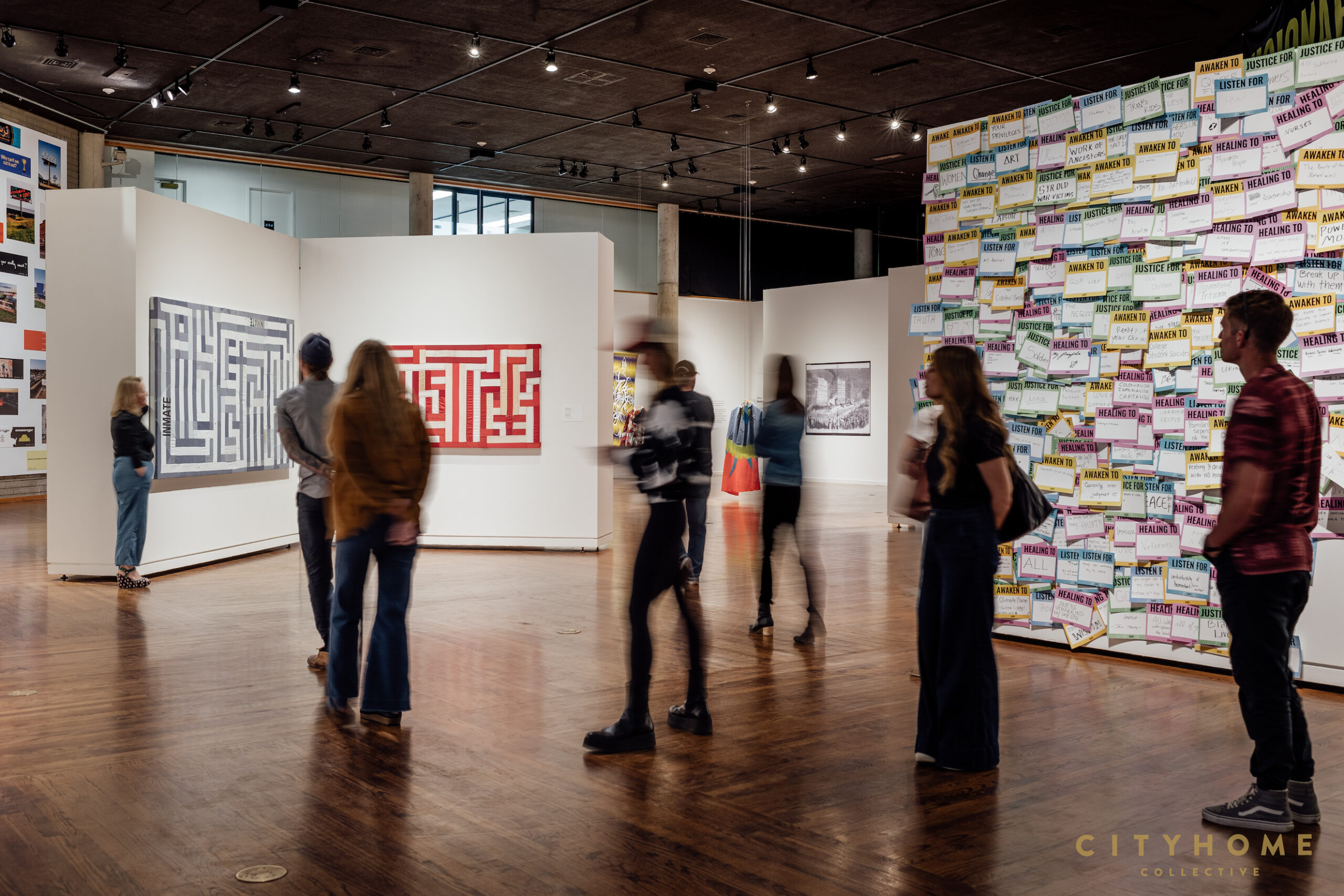
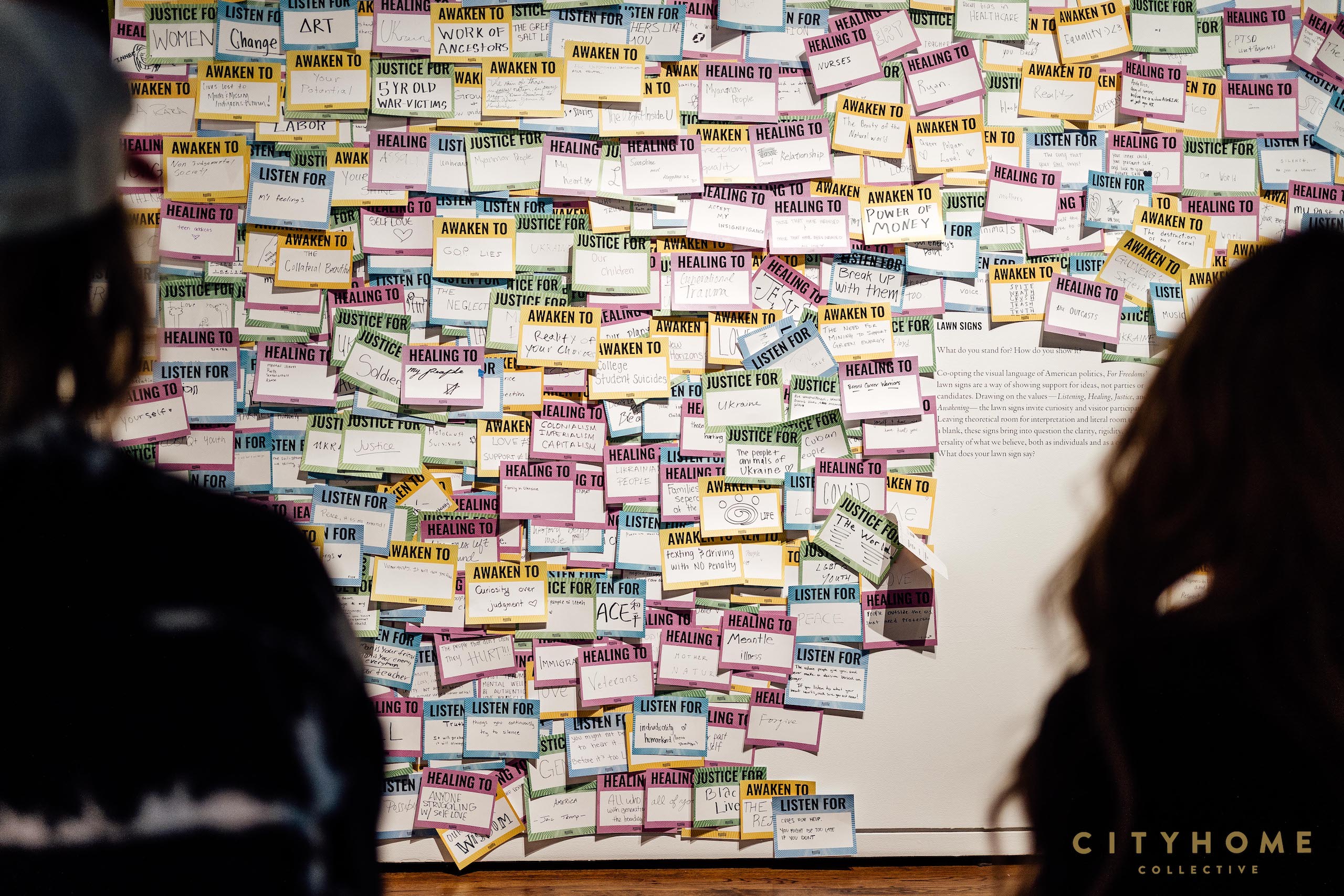
Take it from us, this is one you don’t want to miss.
Our Wake Up Call For Freedoms | Jan 21, 2022 – Jun 4, 2022
Utah Museum of Contemporary Art | 20 S. West Temple
The Art of Home blog series chronicles my visits to the homes of devoted art lovers to chat about how they live with, collect, and curate the pieces in their space. Through this pursuit of the artful home, I have found that such a notion is not necessarily synonymous with visual perfection, but instead suggests an environment packed with emotional intrigue and personal expression. It’s one that swaps the manufactured for the handmade whenever possible, and shifts the common perception of art collecting from a lofty and unattainable pastime to a fulfilling, fun, and – dare we say it – affordable endeavor.
I’ve visited with artists, educators and creative professionals whose homes have inspired us to ditch those store-bought prints for something that adds more originality and inspiration to our space, while (bonus!) supporting working artists. The series continues with my recent visit to the home of Felicia Baca, who is Director of the Salt Lake City Arts Council and arguably the leading arts and culture advocate for our city. She believes that “without artists, musicians, creatives or makers…we would be devoid of a sense of community and belonging.” (Here at cityhome, I have to say we agree.)
When it comes to her work in the community, which includes past roles at the Utah Division of Arts & Museums, UMOCA, and UMFA, Felicia is focused on contemporary art that addresses relevant social and cultural issues. But she’s the first to admit that when curating her own home, she wants to live with pieces that are, above all, aesthetically pleasing and emotionally charged.
“While the visual object is always the draw, I’m often compelled by the people, ideas, stories, or context in which I find the art.”
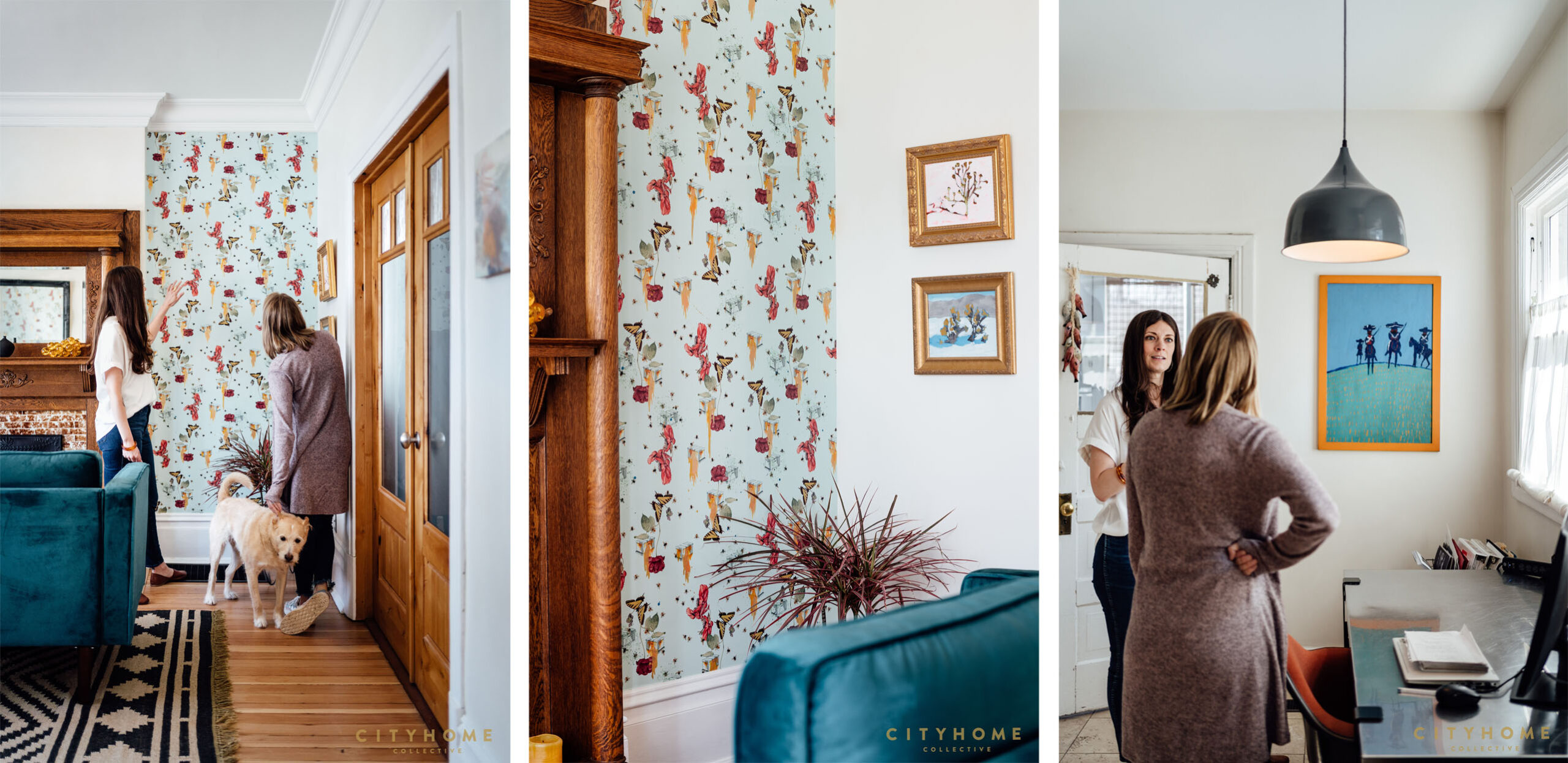
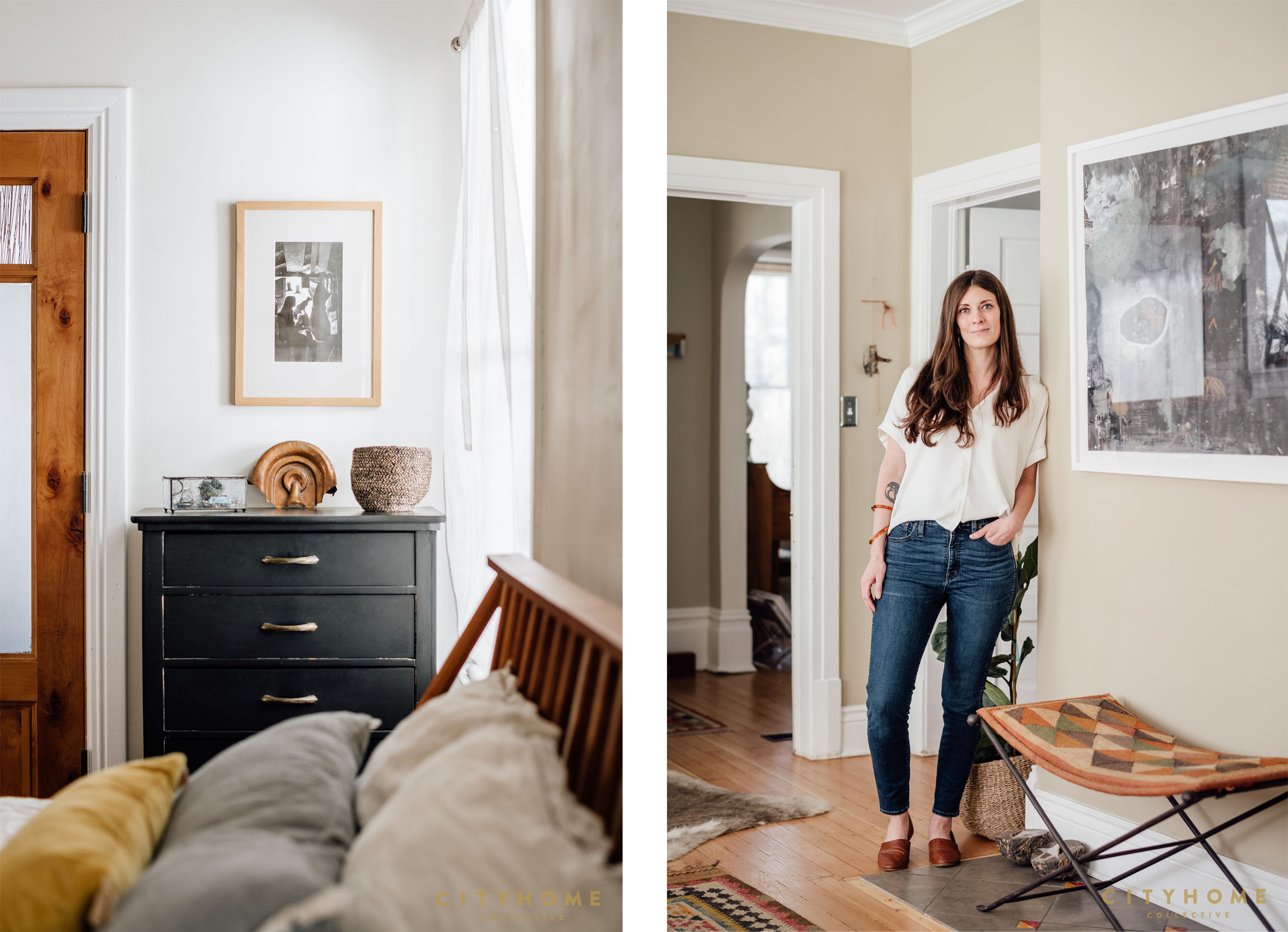
Paintings, photographs, sculpture, Native American pottery, ceramics and other natural artifacts are intentionally placed throughout her 9th & 9th bungalow; even the wallpaper was designed and hand embellished by local artist Carol Sogard.
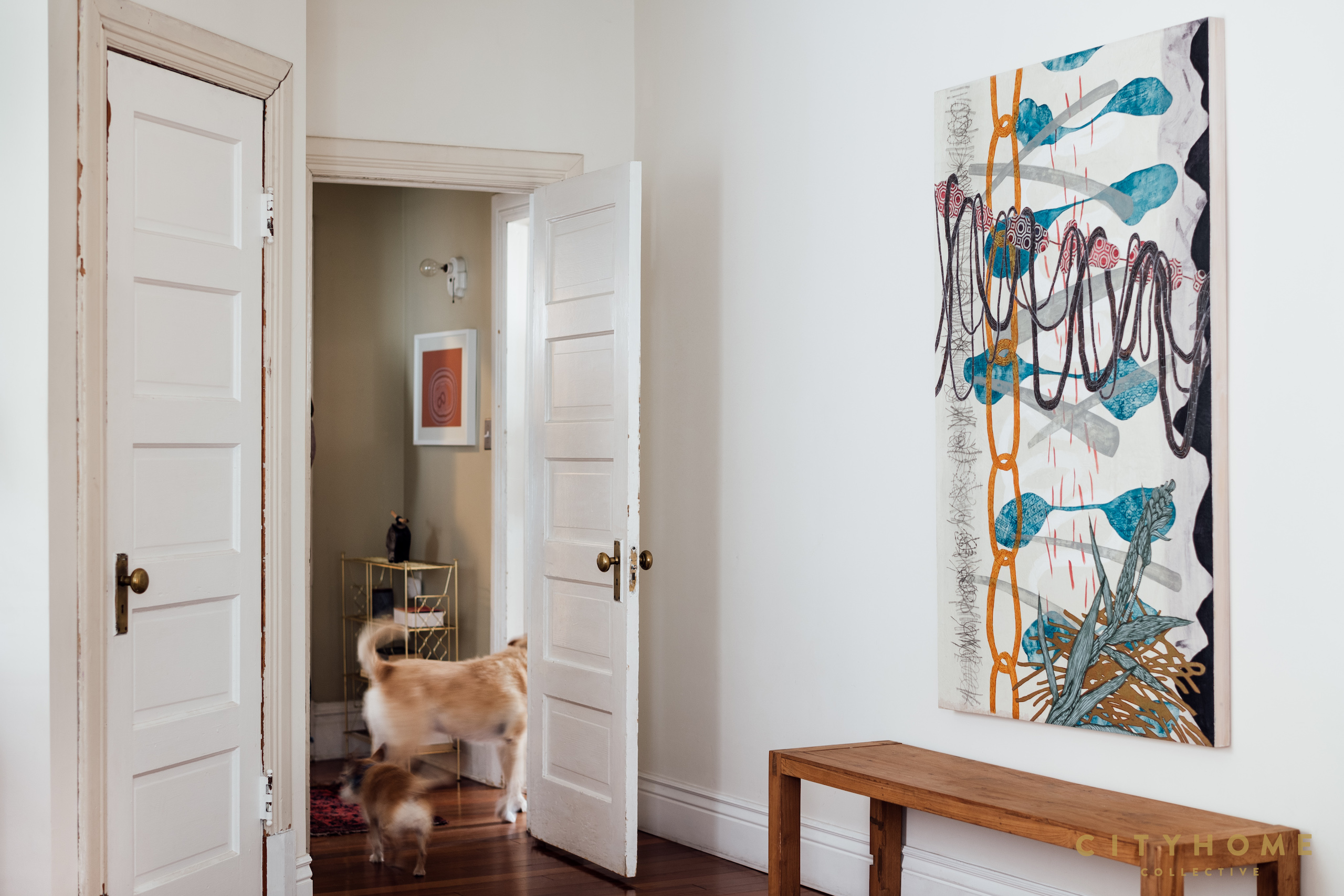
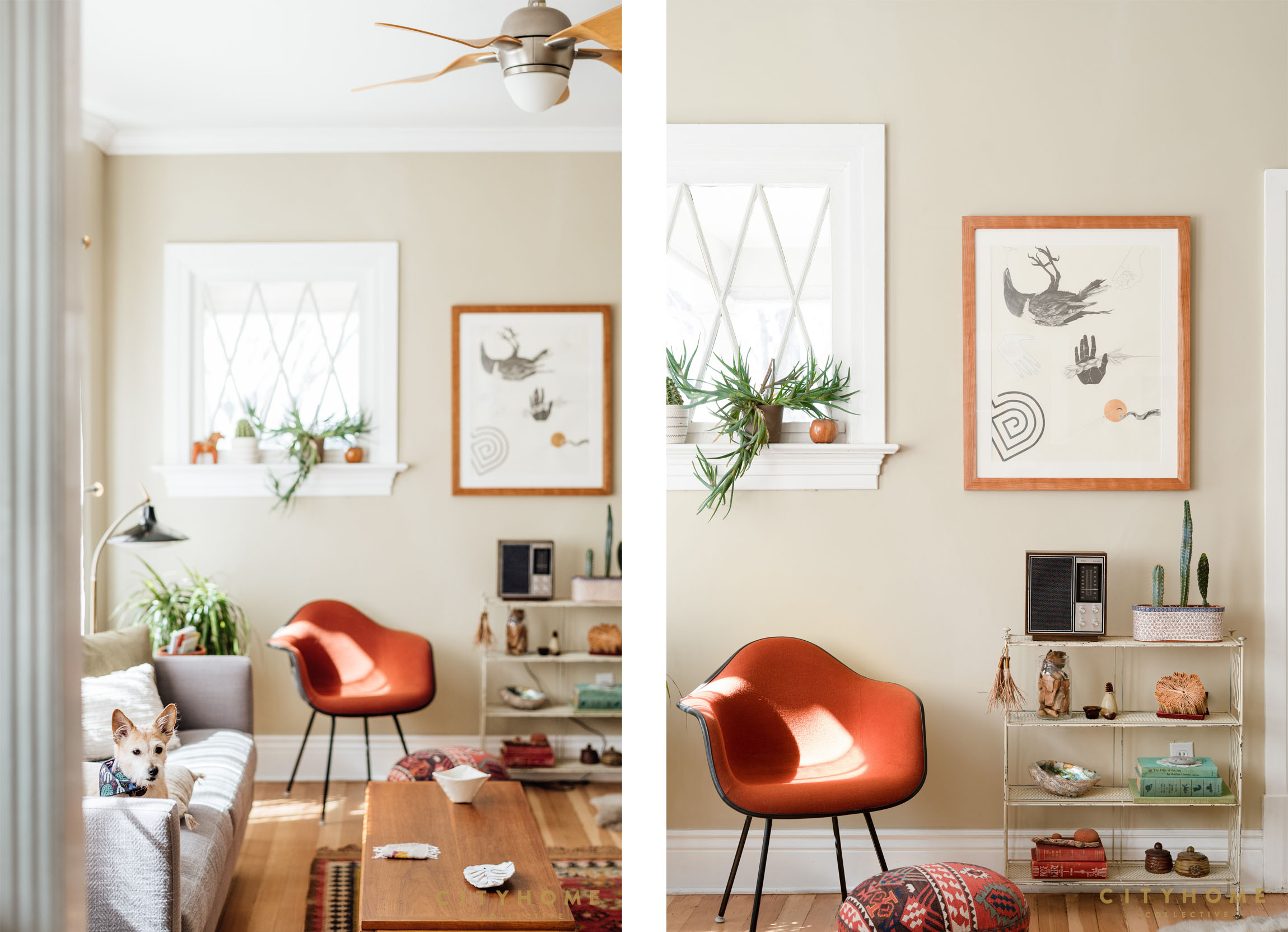
The majority of Felicia’s artworks are by Utah artists; she’s bought most pieces at exhibition openings during the Salt Lake City Art Stroll or other open studio events. Prominently featured in her living room are two centerpieces of her collection: a painting by Wren Ross (represented by Modern West) and photograph by Josh Winegar (artist and professor at Weber State University in Ogden.) Other local artists featured in her collection include Al Denyer, Liberty Blake, Levi Jackson, Sandy Brunvand, Roland Thompson, and many more.*
Sentimental pieces by family artists are also intermixed throughout her collection, and a particularly special piece hangs in the corner of the bedroom: it’s a black and white photograph of Felicia’s mother taken by Tom Waits, who was a childhood friend of her family’s. Felicia’s family has always been engaged in the arts and her own upbringing was no different. “Supporting the work of artists came with an easy intentionality and was just a manifestation of our priorities as a family,” she says. This sentiment clearly persists for Felicia today: in her life, career, and most importantly – within her own home.
Kelly Carper: Why is it important to you to live with original art? Can you share a little about your “why” when it comes to collecting?
Felicia Baca: Having original art was just part of the fabric of my family culture. We grew up engaging with visual art, music, dance, and theater. We were allowed to draw and paint on the walls in our rooms. For art in our home, we learned the stories of individual works of art; we talked about why they made you feel a certain way, learned who made them, where they came from, how they were acquired. Art made its way into our lives easily. Sometimes the works were hard earned from a local gallery, thrifted, collected from travels, or made by our family or friends. Our family lived minimally, but the space we existed in was artful, intentional, and precious. Supporting the work of artists came with an easy intentionality and was just a manifestation of our priorities as a family. I studied visual culture through much of school, and I’m sensitive to the things around me – whether it’s visually or conceptually. I also keep the house well stocked with instruments for sharing. We value artists as career professionals that are worthy of support and essential to everyday being for all.
Carper: People tend to think that art collecting is reserved for those with a sizable disposable income. How would you encourage those who are intimidated by art collecting or who feel limited by budget and space?
Baca: I live in an 1100 square foot house and have works of art from miniatures that are barely noticeable, to some that fill a wall. Sometimes I grow out of artworks and gift them to family and friends – which can be tender to part with, and a really personal thing to share. My brother recently moved into a new house and my hand-me-downs fill the walls and have encouraged his own collecting practice. Once you live with original art, you won’t want to live without it. Most of the artwork that I’ve collected is from emerging or mid-career artists and the majority of what I have has ranged from $50-800. Most friends will tell you I’m a reluctant shopper with some minimalism and thrifting mixed in. But I prioritize art as part of my spending, along with food and travel – in no particular order.

Carper: Tell us about your collection: is there a certain style, aesthetic or medium that you are drawn to when buying work for your home?
I’m mostly passionate about contemporary art, but the work I have in my home is sometimes different from what I would curate in a museum or gallery. I always think about how it will fit with the space and light – what it will be like to live with it every day. While the visual object is always the draw, I’m often compelled by the people, ideas, stories, or context in which I find the art. The artist Cassandria Parsons once gifted me a painting of sheep because I had told her a story about riding my motorcycle through a canyon when I was surprised by a flock being herded. I once bought an unfinished painting from Trent Call at a gallery stroll in the spur of the moment – I love it just the way it is. Sometimes there’s a connection with a place or symbol in the work at a point in time. Sometimes I purchase works from shows I’ve curated that have a specialness to me or the artists. I think I have a personal relationship with almost all the artists in my collection in some way. Landscapes of sorts, the earth, plants, and animals show up regularly in my collection. You’ll also find some rocks, shells, tumbleweeds, and sticks scattered throughout the house as an extension of this. I have a range of paintings, drawings, sculpture, ceramics, prints, photography, and artist books – and the challenge is always just shifting and shuffling things to fit, or making a choice to move on from a work of art.
Carper: Most of the pieces in your home are by Utah artists. Can you tell us about one or two of your favorite pieces and a little bit about the artist? Where can we find their work?
Baca: I have a mixed media work called The Blue by Wren Ross that’s a favorite. It’s dark with some scattered fragments of people and figures – there’s some despair, some magic, weather, and a busyness to it- but with an unexpected calm of maybe both the ocean and sky. I’m also just so drawn to the textures, marks, and colors in it. I continually make new interpretations and discoveries looking at it. I also have a small handmade paper puppet of my departed cat Pepita that Wren made for me. I have another photograph titled Hikers Washington by the artist Joshua Winegar from a series called The Rapture Of. It’s a photograph of a place that is unmistakably the Pacific Northwest, where some of my family lives. In this series, Winegar photographs outdoor landscapes where evidence of human intervention is present – so objects, roads, people, signs, etc. He then re-photographs the physical photograph in the studio using flashes of white light to blight out the evidence of human intervention, leaving behind an effect that looks both strangely natural and fantastical.
Carper: Your role as the executive director of the Salt Lake Arts Council revolves around supporting living artists. Why do you think it’s important to value the arts not only in our homes but also in our communities?
Baca: Artists are cultural ambassadors of sorts. Without artists, musicians, creatives, or makers I think we would be devoid of a sense of community and belonging. Art inherently exists across all economic circumstances and communities throughout history and permeates every single facet of our lives whether we’re consuming or making it. Art can do so many things – start a dialogue, stand for justice, connect people, ask questions, make comments, and act as a repository of the memory and values of people.

*Utah artists in Felicia’s collection include: Anastasia Rynders, Wren Ross, Sandy Brunvand, Roland Thompson, Jan Andrews, Josh Winegar, Rebecca Klundt, Jason Jones, Laura Sharp Wilson, Trent Call, Wren Ross, Liberty Blake, Dana Costello, Tracy Strauss, Cassandria Parsons, Janelle James, Mary Toscano, Andrew Shaw, Kevin Artopher, Tom Aaron, Al Denyer, Steven Larson, Jean Ricahrdson, Danielle Susi, Jared Clark, Jean Richardson, Jenny Ostraff, Joseph Ostraff, Leia Bell, Suzanne Simpson, Claire Taylor, Paul Heath, Jim Williams, John Bell, Phoenix Osterman, Jonathan Frioux, Levi Jackson, Vicki Acoba, Russel Albert Daniels and others.
Ogden Contemporary Arts Center is a non-profit, community art space offering some stellar contemporary art exhibitions that are well worth the drive north. The organization’s vision is to…
“inspire local and regional artists through active involvement with the international contemporary art community”
– and their diverse programming seems to be doing just that. Recent exhibitions range from quirky installation art like the King’s Mouth by Wayne Coyne of the Flaming Lips, to culturally significant exhibitions like Vida, Muerte, Justicia: Life, Death, Justice, which featured Latin American and Latinx artists whose work responds to global themes of social and racial injustice.
The current exhibition at OCA is curated by yours truly – Kelly Carper, whose work as a real estate agent is coupled with creative projects in our local art community. The exhibition is LAND BODY, featuring eleven female artists who explore connections between the human body and the landscape. The artists specifically look at metaphorical and physical relationships between desert landscapes and womens’ bodies, often integrating their own bodies with the land in order to create. As a whole, the exhibition reminds us of the interconnectedness between humans and the natural world…
..while calling us to live more consciously aligned with nature – an idea we can definitely get behind.
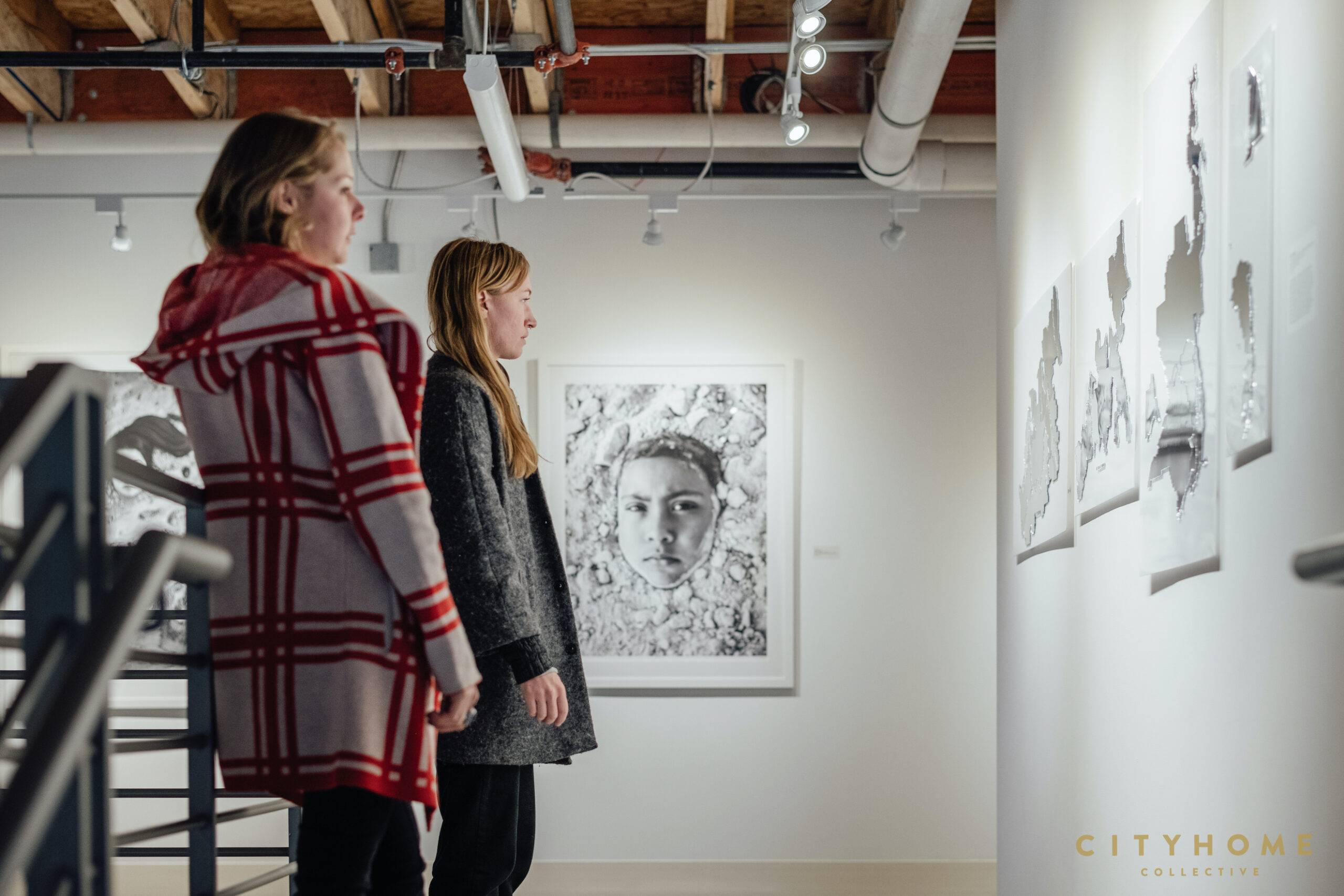
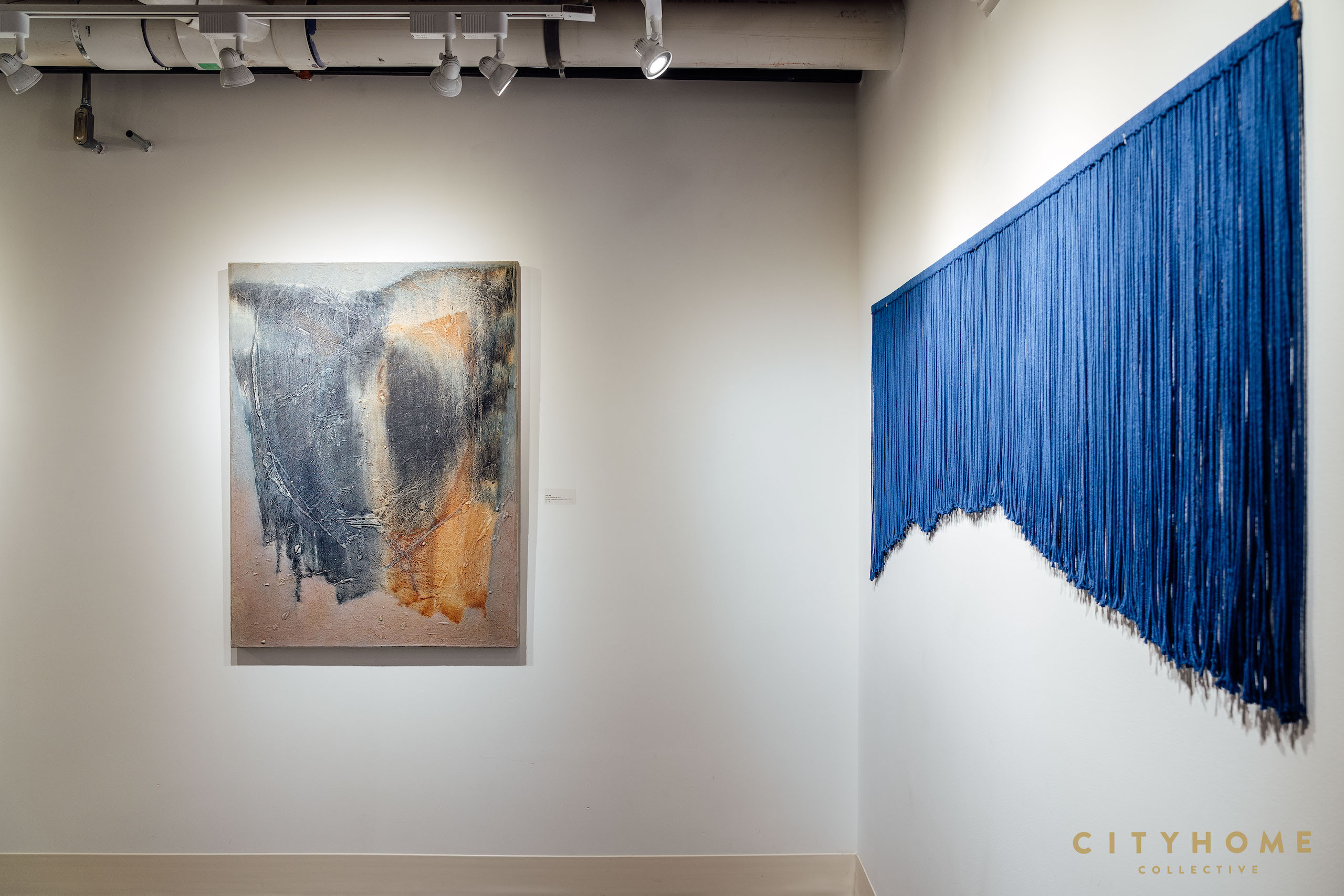
The diverse exhibiting artists include Utah artists Wendy Wischer, Jaclyn Wright, Al Denyer, Josie Bell and the Also Sisters (Sonia and Miriam Albert-Sobrino), as well as regional artists Cara Romero, Chelsea Call, Jill O’Bryan, Nikesha Breeze (all from New Mexico) and Sama Alshaibi (from Arizona). Below are a few highlights from the exhibition that we’re especially keen on…
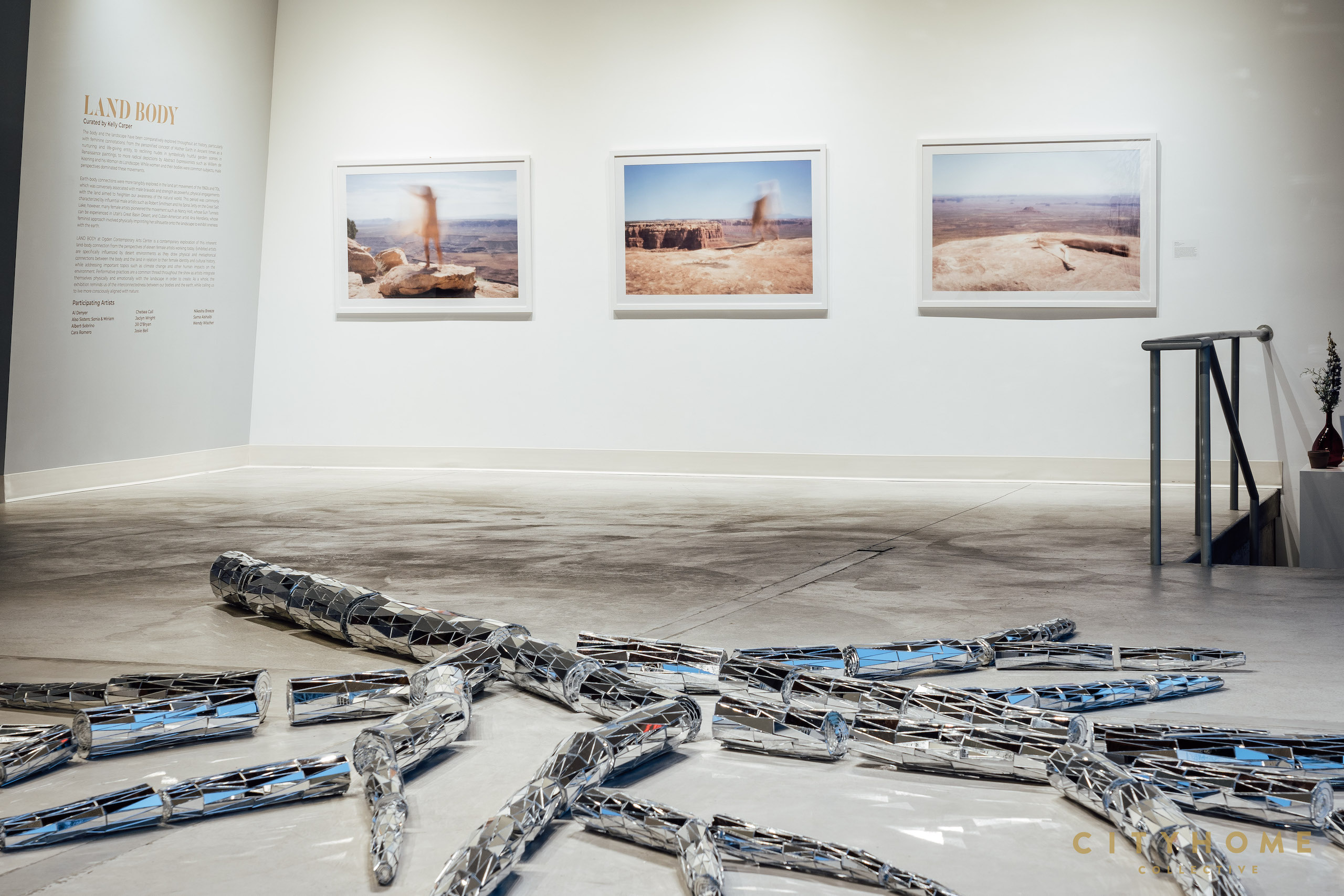
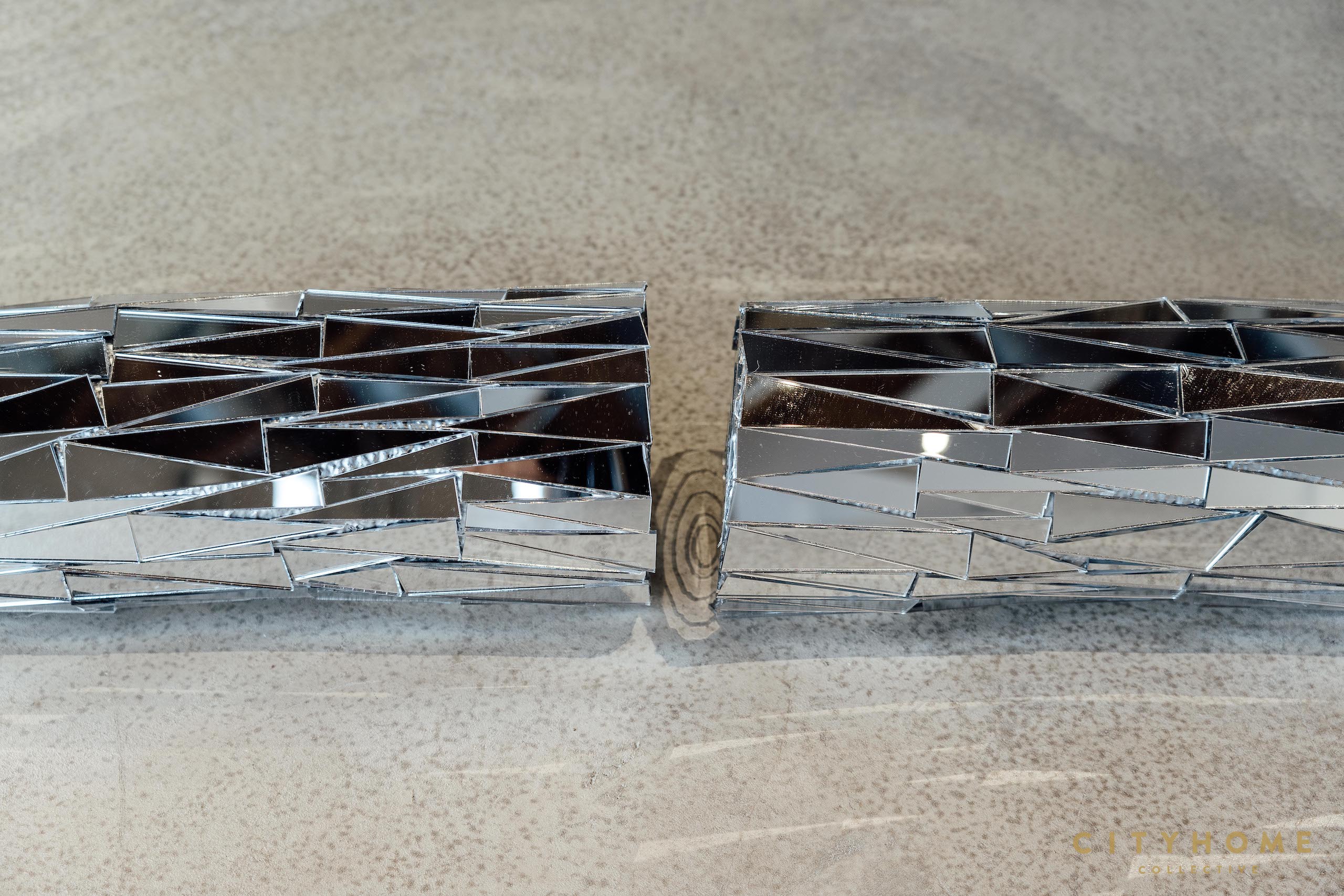
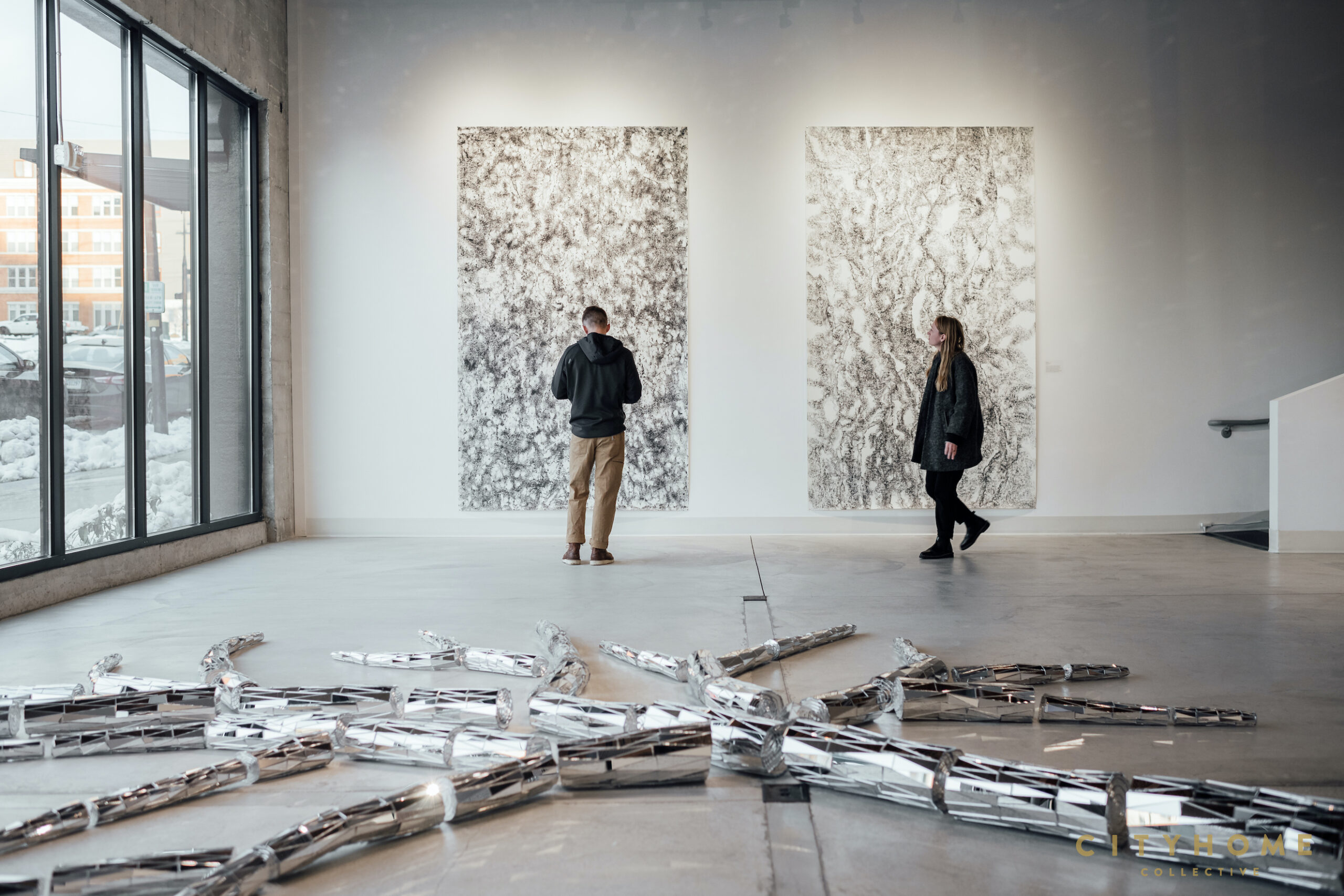
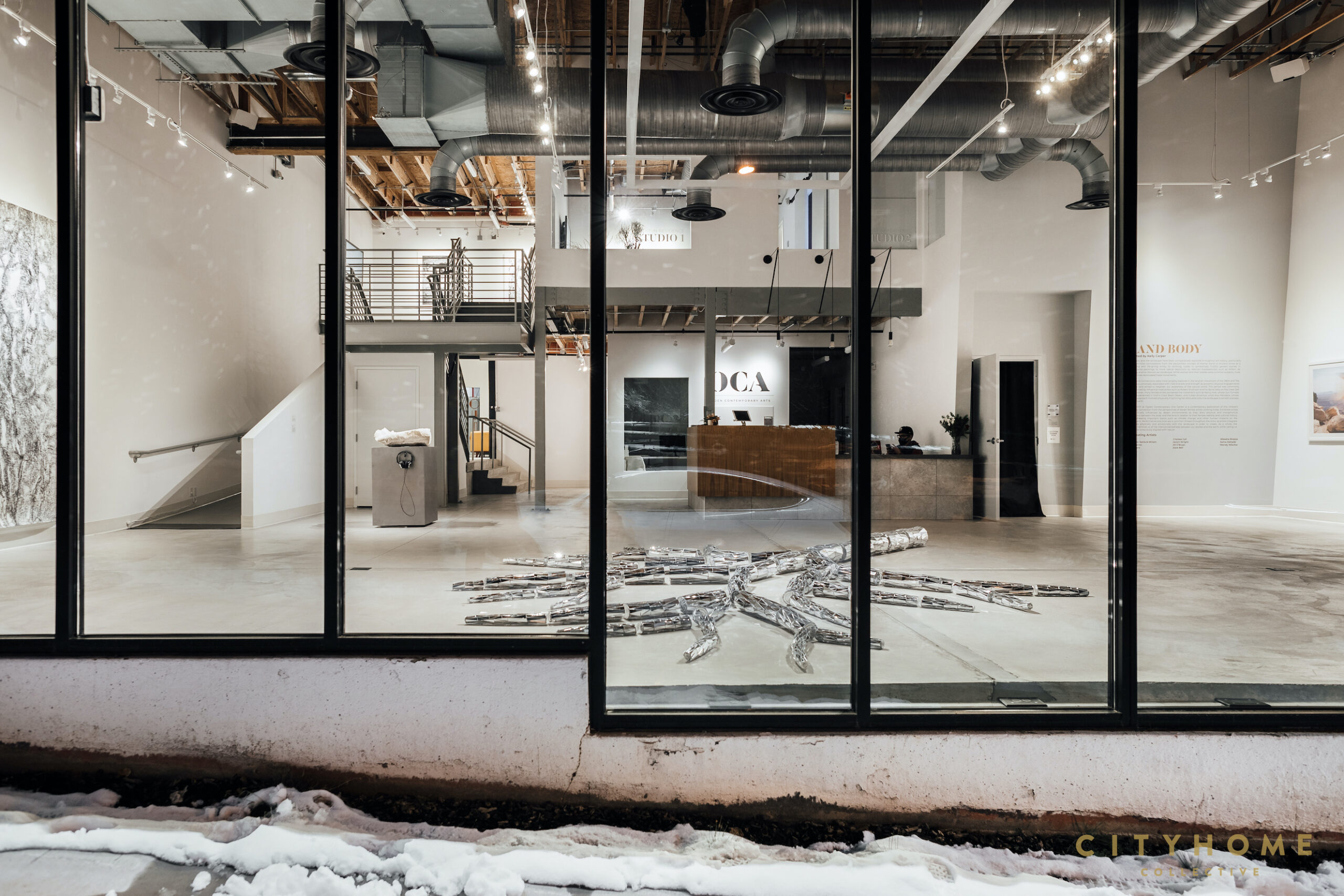
Wendy Wischer’s Shattered is a tree-shaped floor sculpture with a mirrored surface.
We see our reflection in its fragmented branches, which signifies the fragility of the natural world and our place within it. Wendy is a Salt Lake City artist and professor at the University of Utah.

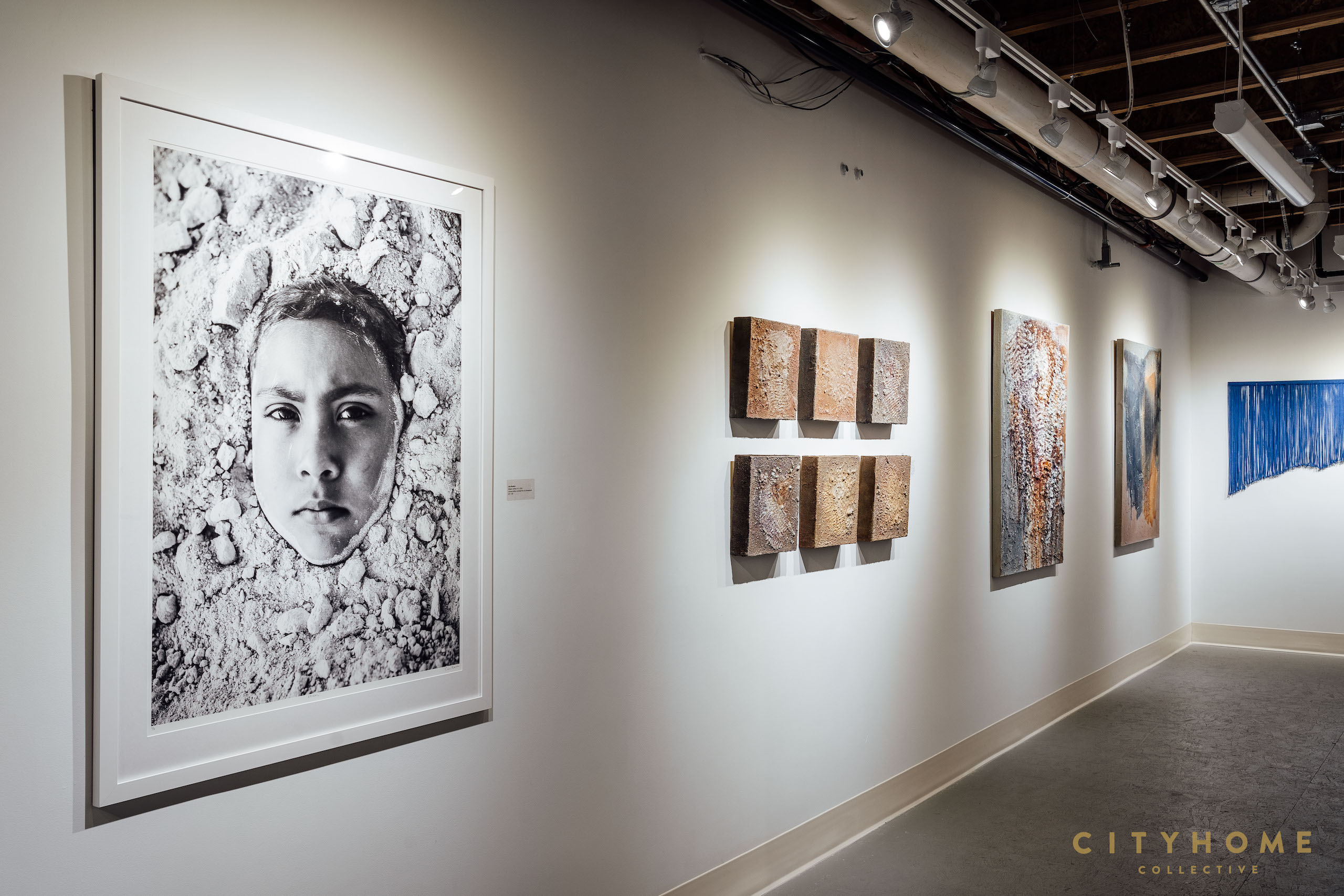
Cara Romero is a contemporary Native American photographer based in Santa Fe, New Mexico, who exhibits two powerful images of an indigenous woman and girl emerging from the earth. The photos are inspired by the artist’s connection to her ancestral homeland in the Mojave Desert, and her Chemehuevi tribe’s origin stories…
…in which the land is born from the body of a woman Creator.
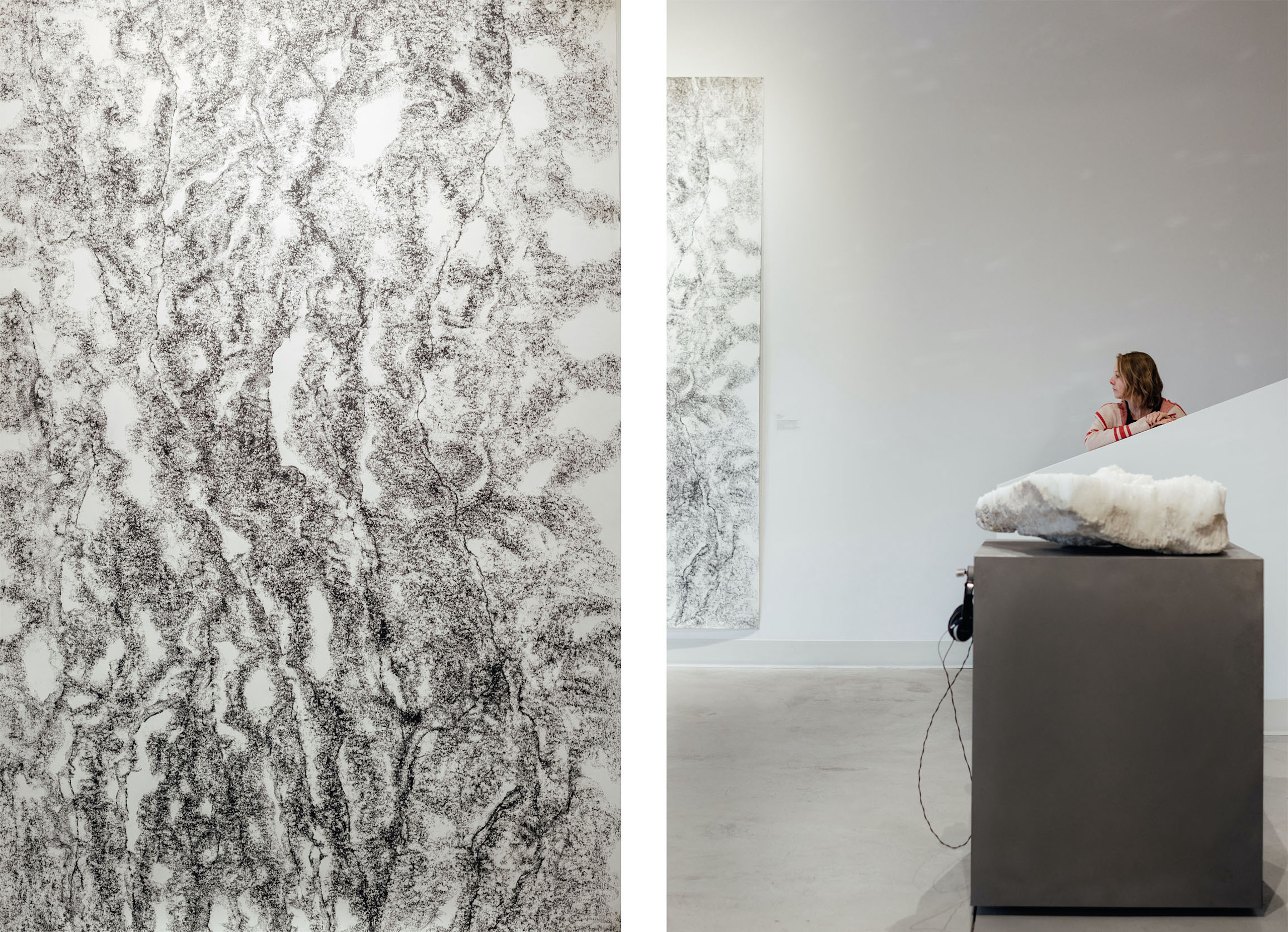
New Mexico artist Jill O’Bryan created the two 10 x 6 foot drawings in the main gallery.
These Desert Frottage drawings record her body’s interactions with the desert; she lies down on large pieces of paper and rubs them with graphite to reveal the desert earth below.

Completing the exhibition in OCA’s second floor galleries is an immersive digital installation by Galician filmmakers Sonia and Miriam Albert-Sobrino, together known as the Also Sisters. An adaptation of their recent project, On the Margins of Metaxy, this piece draws viewers into a more liminal land-body experience using dreamy and disorienting imagery of the female body moving through shifting landscapes.
LAND BODY is on display at OCA through MARCH 13th.
Check out ogdencontemporaryarts.org for open hours and events, or email [email protected] for more details!
At cityhomeCOLLECTIVE, celebrating the beauty of our environment, both constructed and natural, is a core value; and since our inception, we’ve worked damn hard to lift up those local artists and artisans who’ve given so much blood, sweat and tears to our community. Our cozy, little spot on South Temple has long served as a place to showcase the work of this town’s talented artists, and we are thrilled to announce a few additions from our friends over at Modern West. Take a moment to read about these fascinating humans, and then come on down and see for yourself why we curated these particular pieces of art.
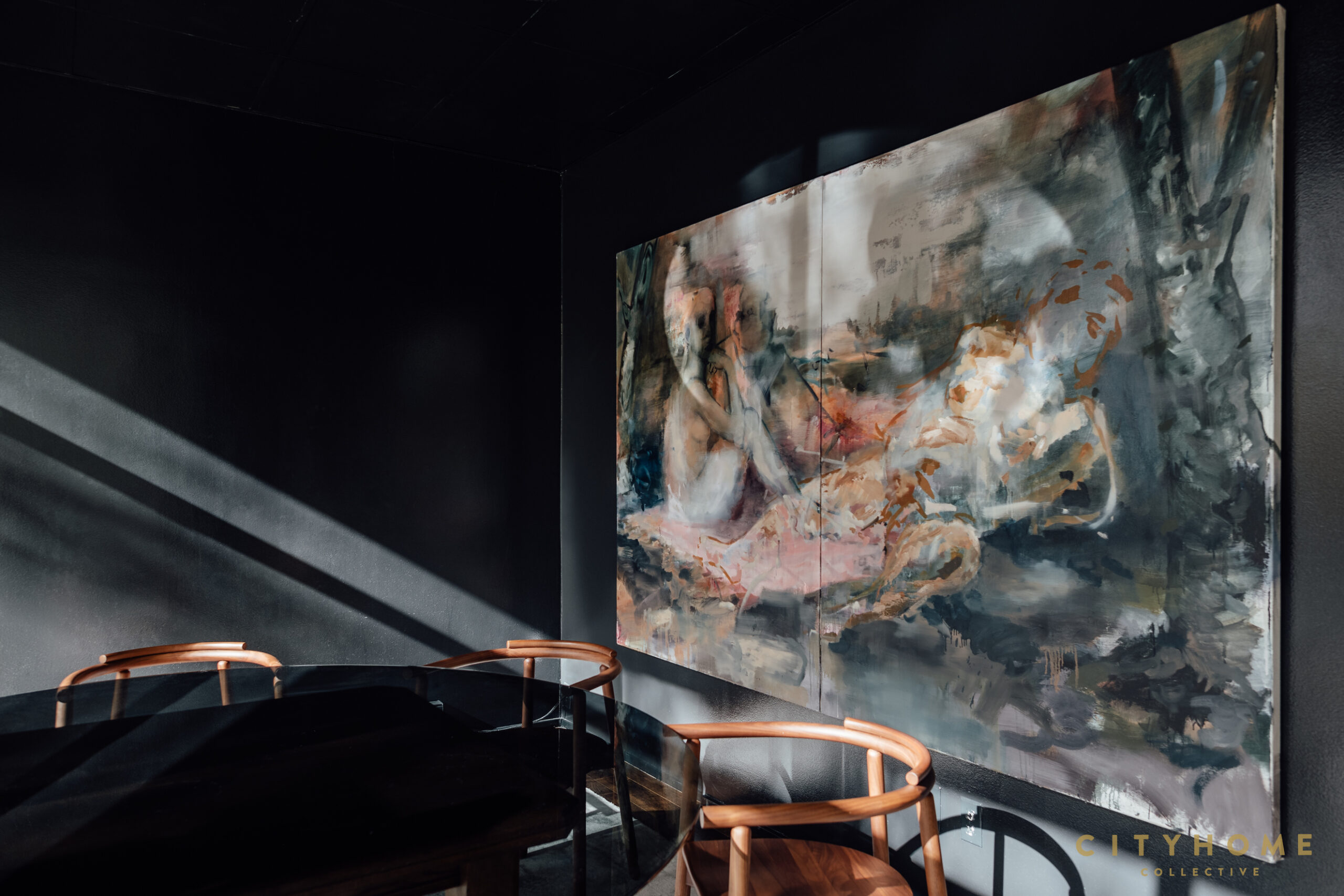
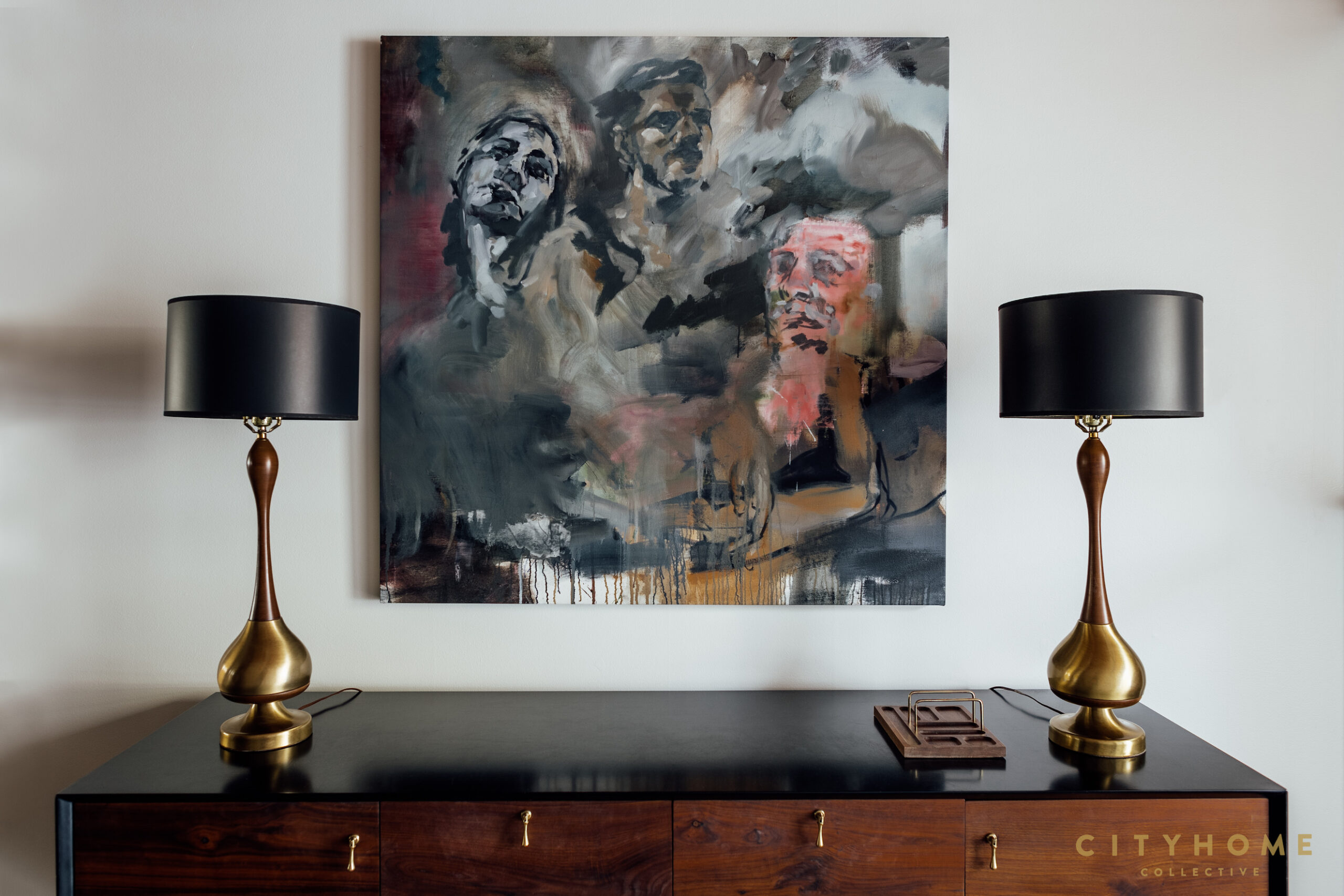
exploring themes of queer identity, masculinity, idealism…
ANDREW MONCRIEF Now living in Berlin, Andrew Moncrief is a long time friend of our Collective. His work is figurative, focusing on depictions of the body, exploring themes of queer identity, masculinity, idealism as well as investigating subjectivities and queerness.
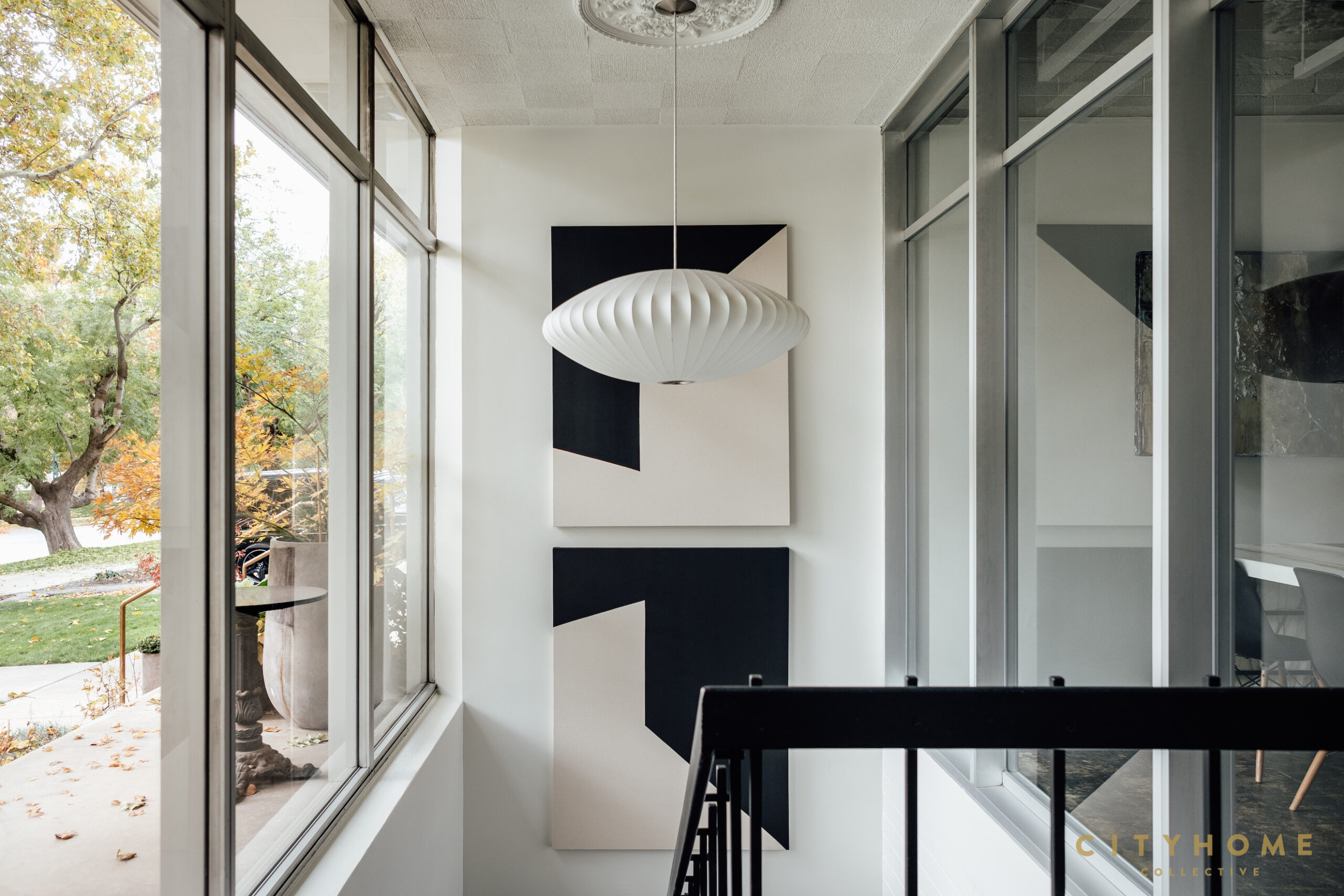
“I am drawn to the tension that exists in the in-between.”
SHALEE COOPER Shalee Cooper’s work is an exploration of form and balance. She builds her compositions through the use of positive and negative space, leaving out as much as she adds to explore the juxtaposition between intention and possibility. “I am drawn to the tension that exists in the in-between. What is not there within my compositions holds the same importance as what is,” she says. Shalee’s painting, “Phoenix,” which can be seen through the front windows of our office, is currently available for sale! Reach out to Modern West directly or to [email protected] with inquiries.
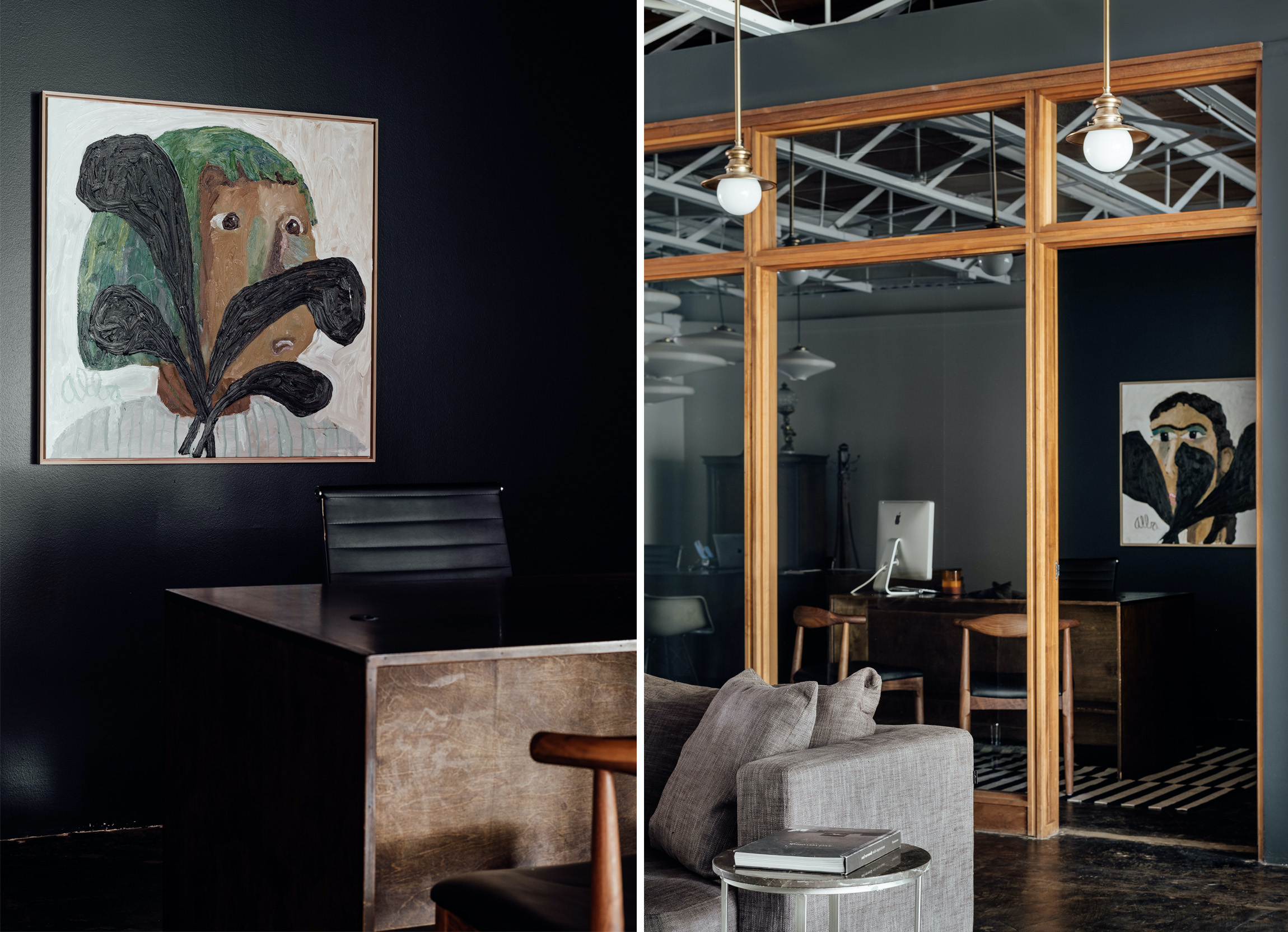
“…commentary on contemporary politics and society.”
ANDREW ALBA A self-taught artist and descendant of Mexican migrant workers, Andrew Alba creates large scale paintings and drawings that evoke an emotional response while offering relevant commentary on contemporary politics and society. We’re thrilled to have his vibrant portraits punctuating our real estate offices. See his available work at Modern West.
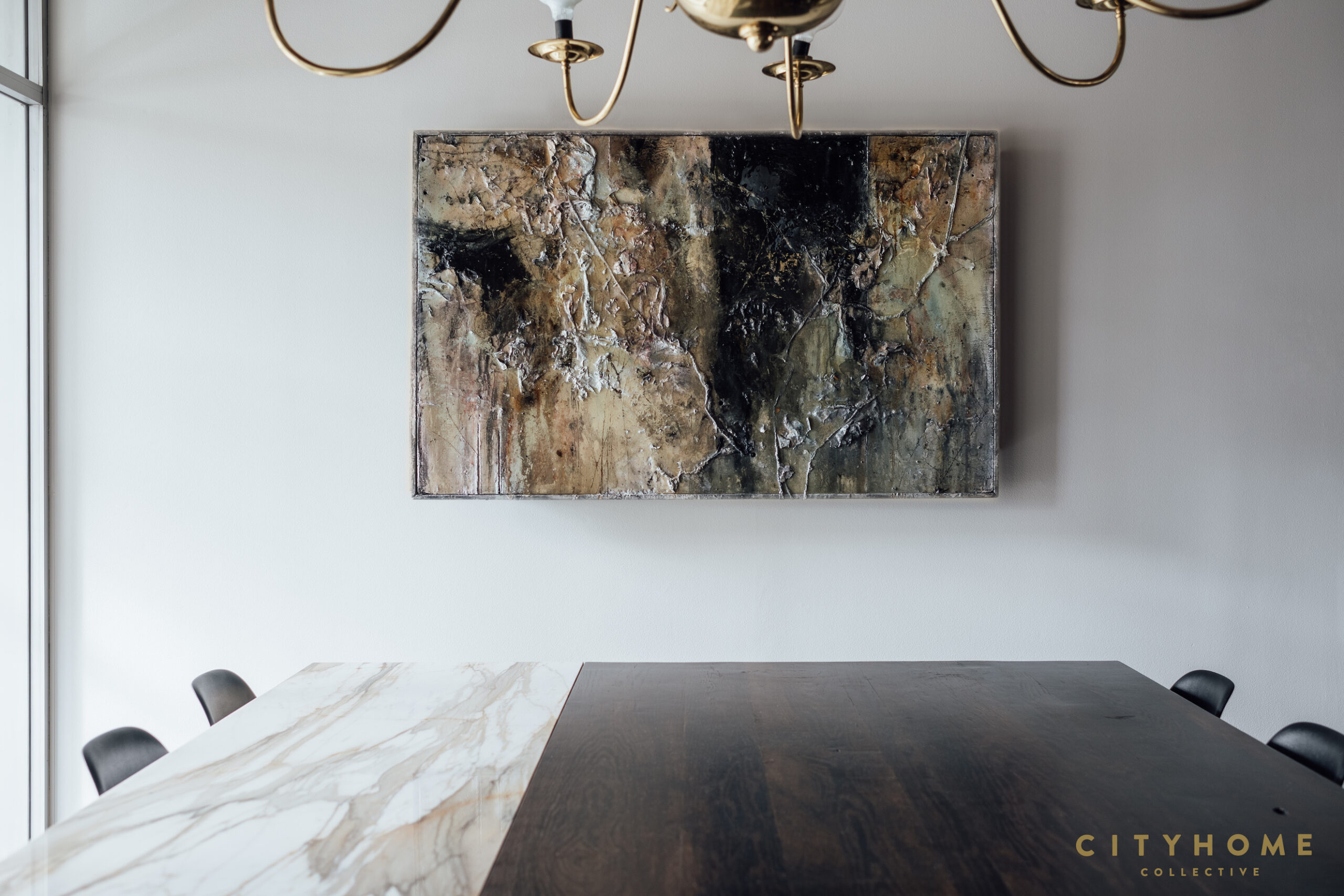
“…through the suffering and degradation of both mind and material”
MARK SEELY In addition to being one of our OG real estate agents, Mark Seely is a talented multi-media artist, photographer and abstract painter whose work we are proud to prominently display. “Painting is my attempt to convey true purity through the suffering and degradation of both mind and material,” he says. Check out his art here.
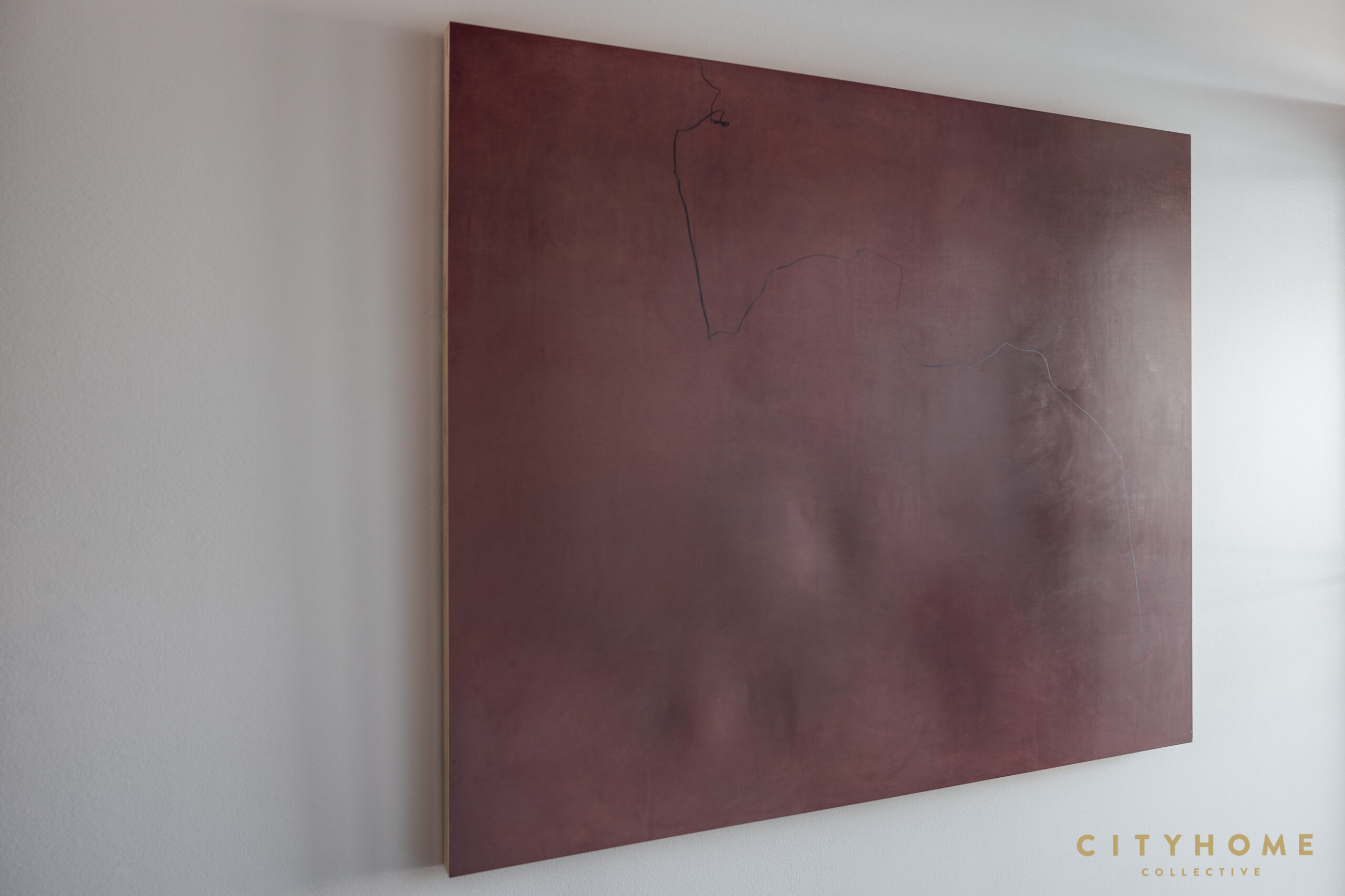
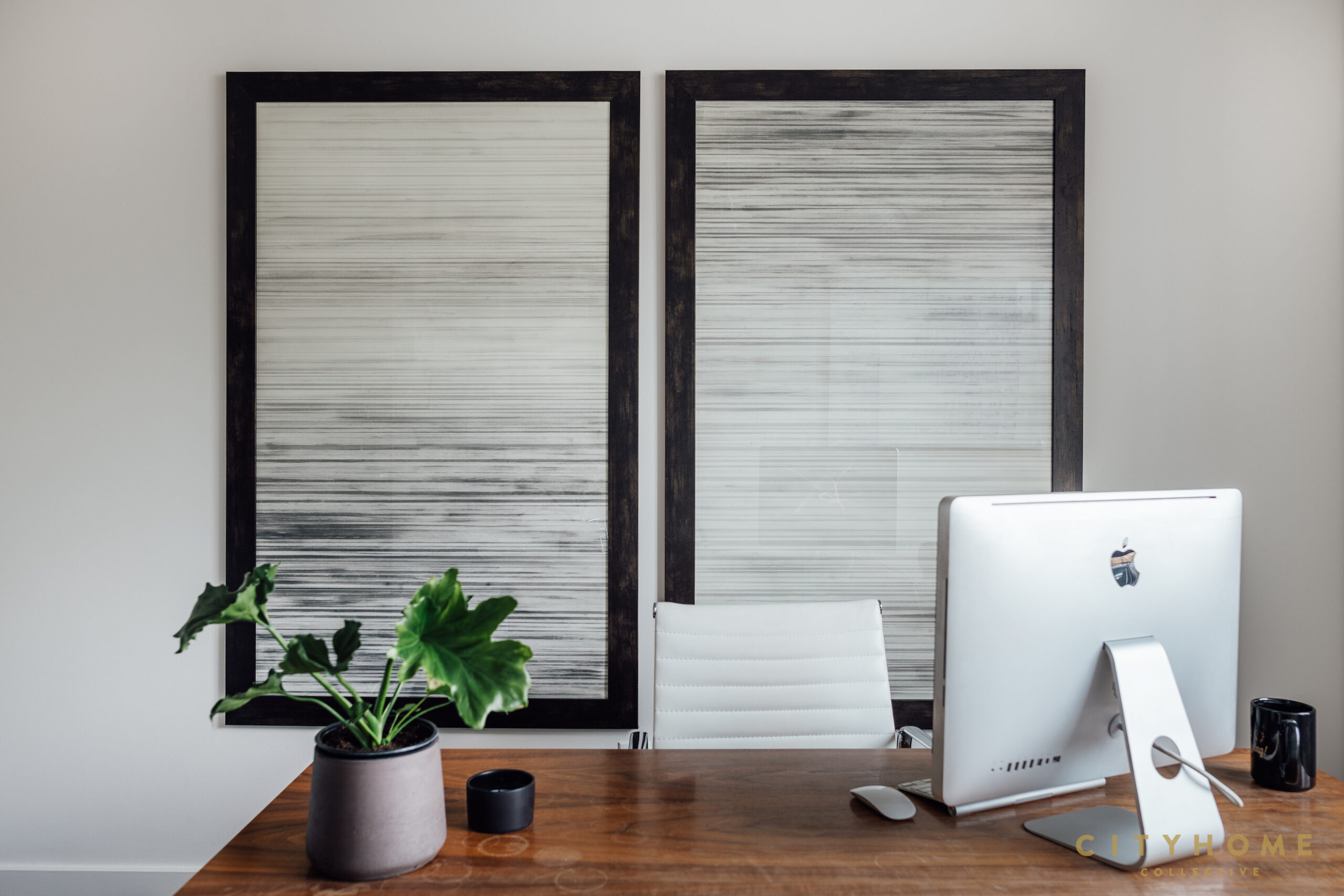
“a visual record of movement…”
PAUL REYNOLDS We acquired one of Paul Reynold’s line paintings to set a soothing tone for our interior design office. His minimal compositions start with oil glazes over raw birch-wood and are finished with a visual record of movement, created without looking at the painting. (You may have also spotted his work hanging in one of our recent listings.) Browse more of his art at Modern West.
Need inspiration for collecting and living with art? Check out The Art of Home blog series where we visit collectors and art lovers in their space with our art curator-turned-realtor, Kelly Carper.
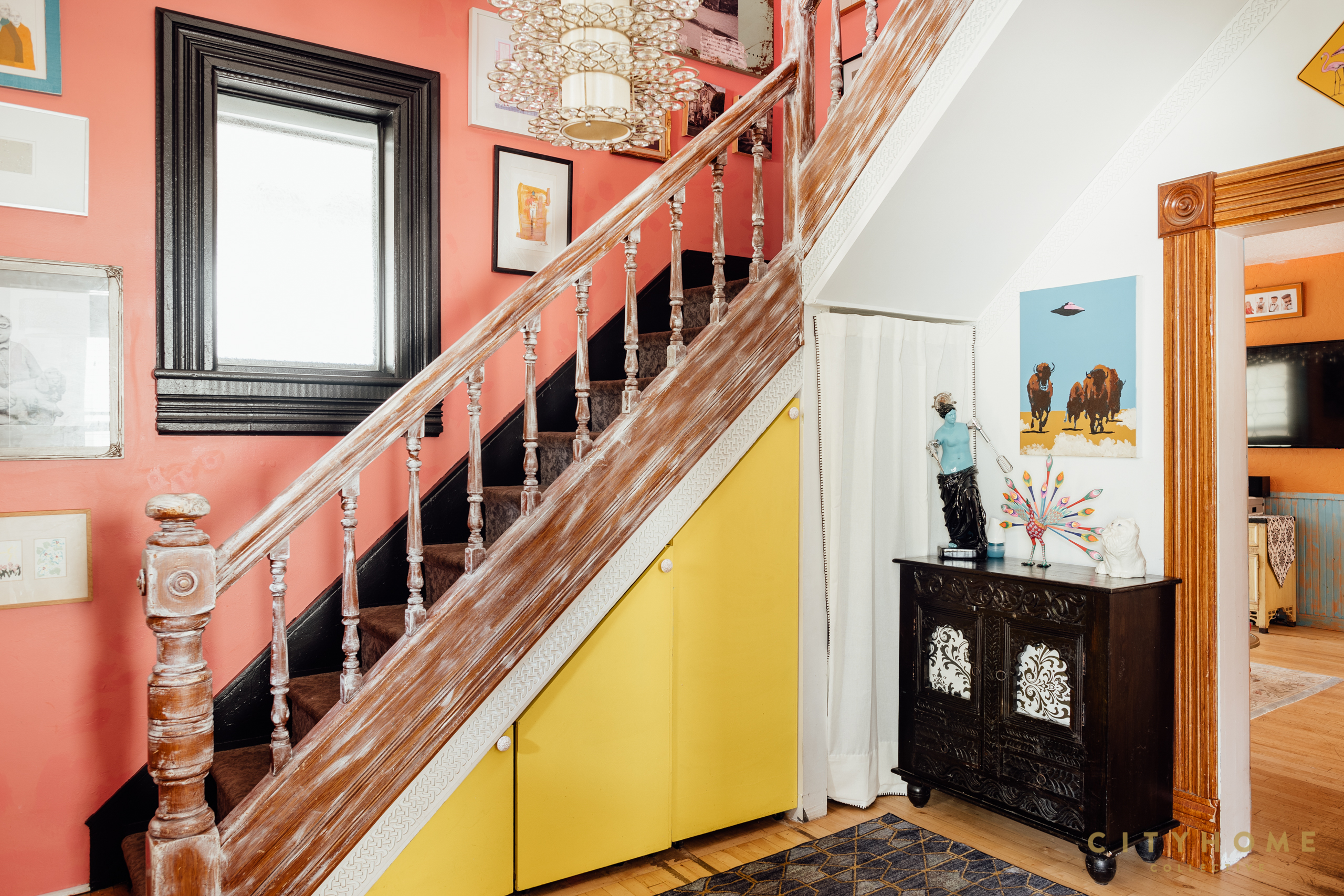
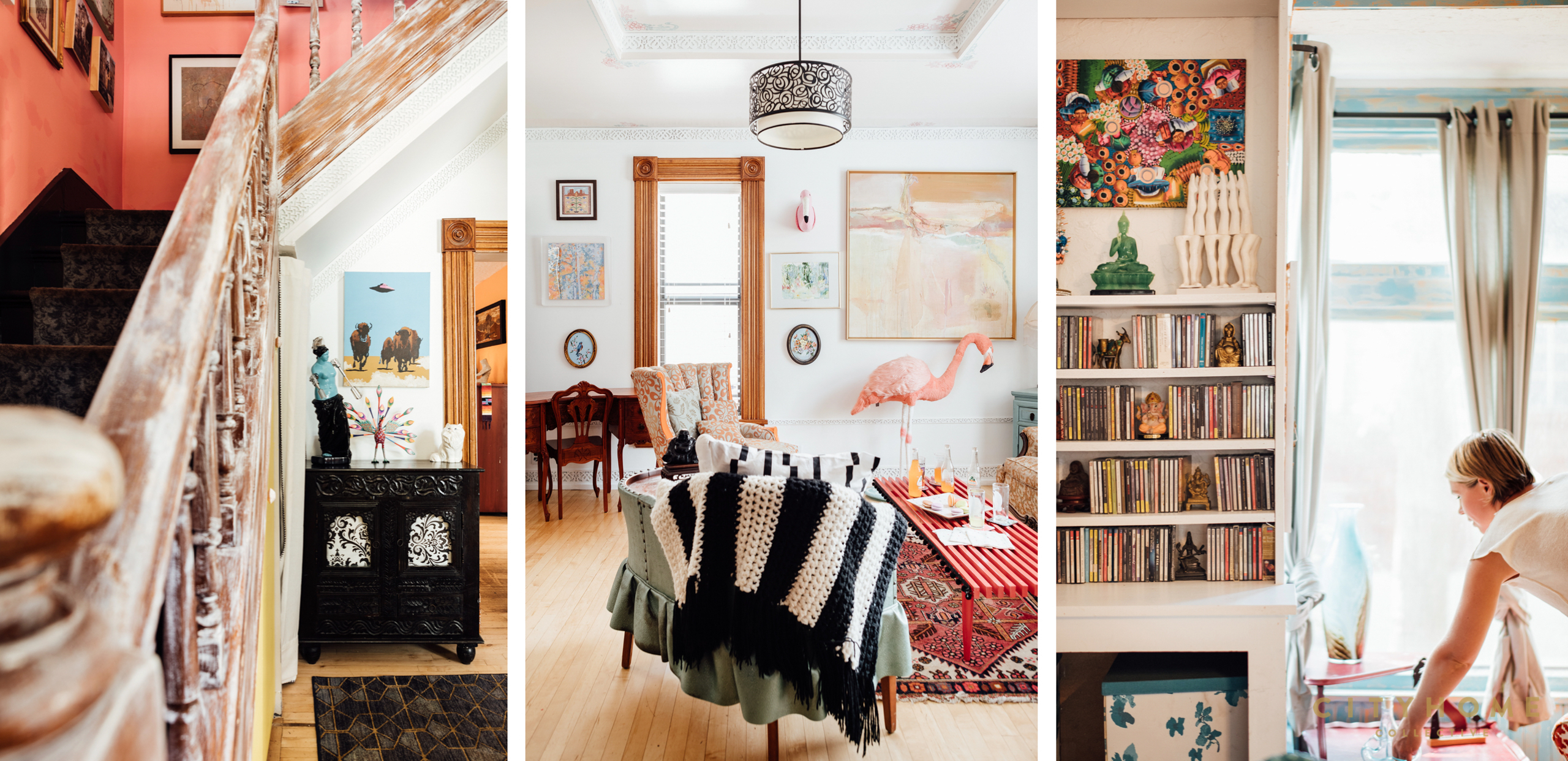
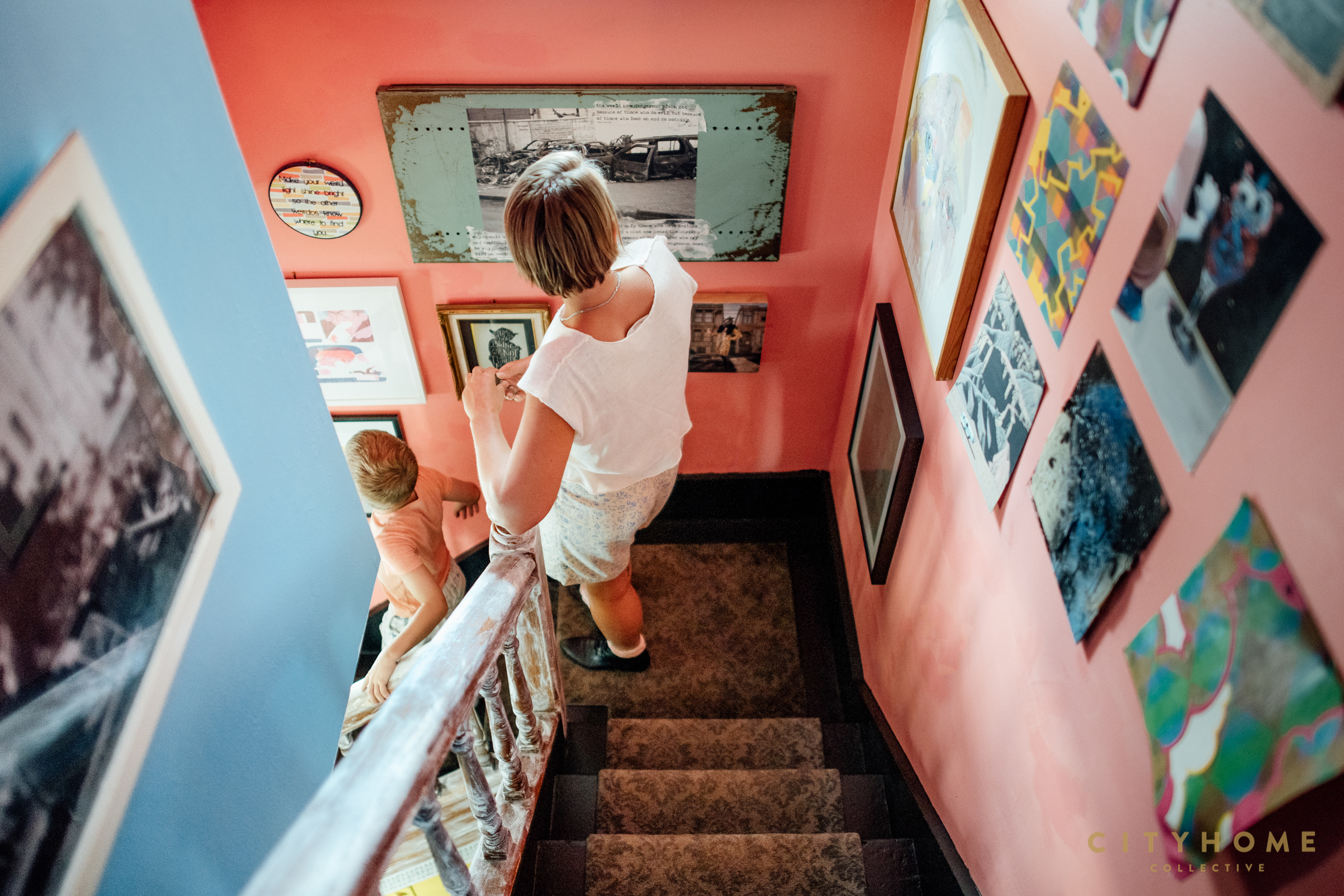
Situated between Sugarhouse and 9th & 9th, the home of Crystal Young and Joel Otterstrom is surely one of a kind. You’ve seen it here before–arresting Victorian architecture, bold interior design choices and floor-to-ceiling art curation. It’s a highly personalized space and inspiring environment for their creative family, who values art of all forms.
Crystal is the Executive Director of the Utah Cultural Alliance and long-time lobbyist for the arts in our state, while Joel is a creative thinker and entrepreneur/CEO at a tech support company. They both come from artistic families: Crystal’s mother and grandmother were painters, and Crystal is a talented vocalist with degrees in music theory and composition. Joel experienced a similarly artistic upbringing with parents who were also adamant collectors, his mother a singer and his father a poet.
“for me, collecting is more about comfort and connection to the piece itself than it is about the intention of the artist.”
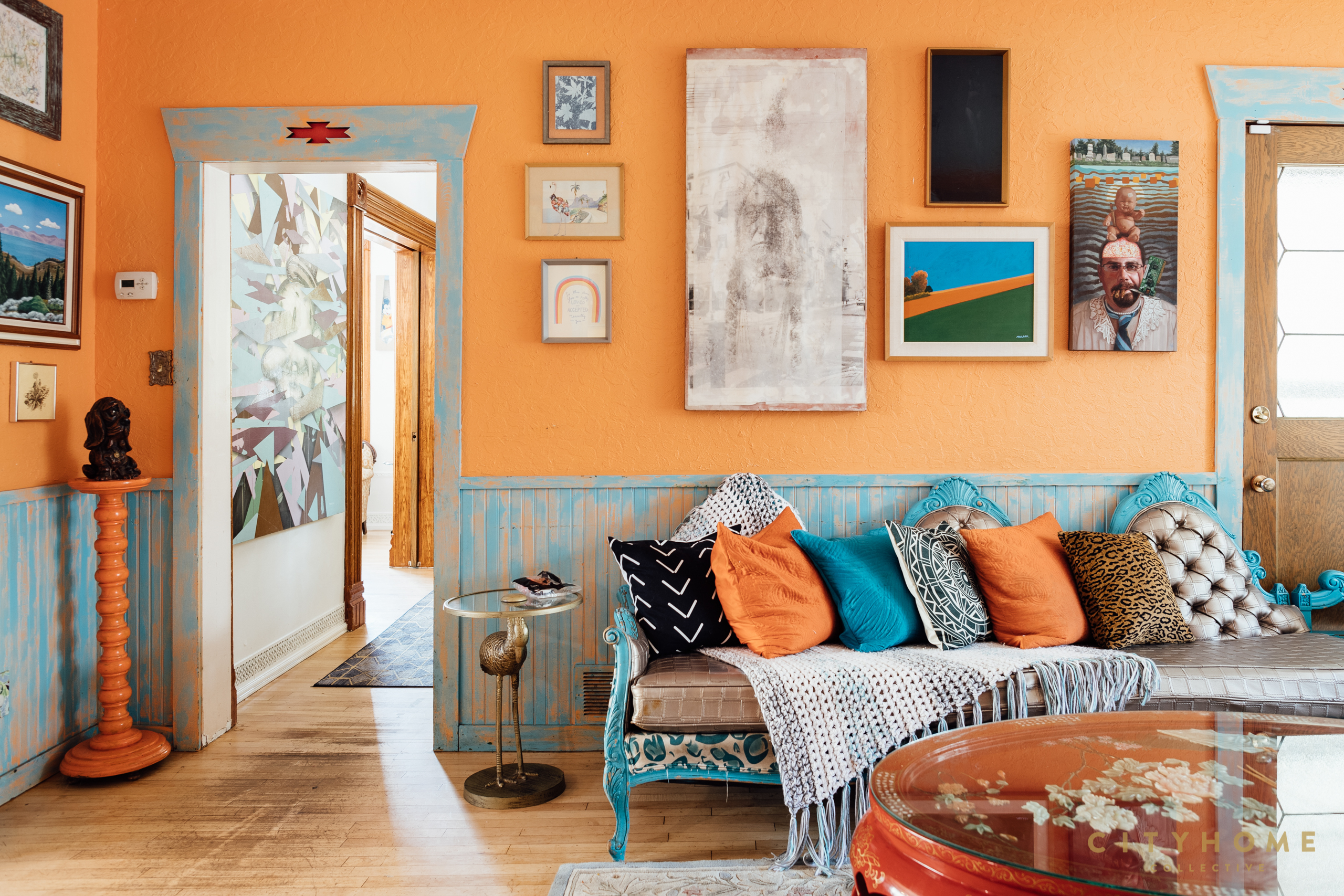
“We had a lot of art in our house growing up,” says Joel, who can recall certain pieces in the family home that brought him comfort. “For me, collecting is more about comfort and connection to the piece itself than it is about the intention of the artist.” Crystal agrees that it’s all subjective. She’s drawn to pieces that “say something, that move me, and that every time I look at them I notice new things.”
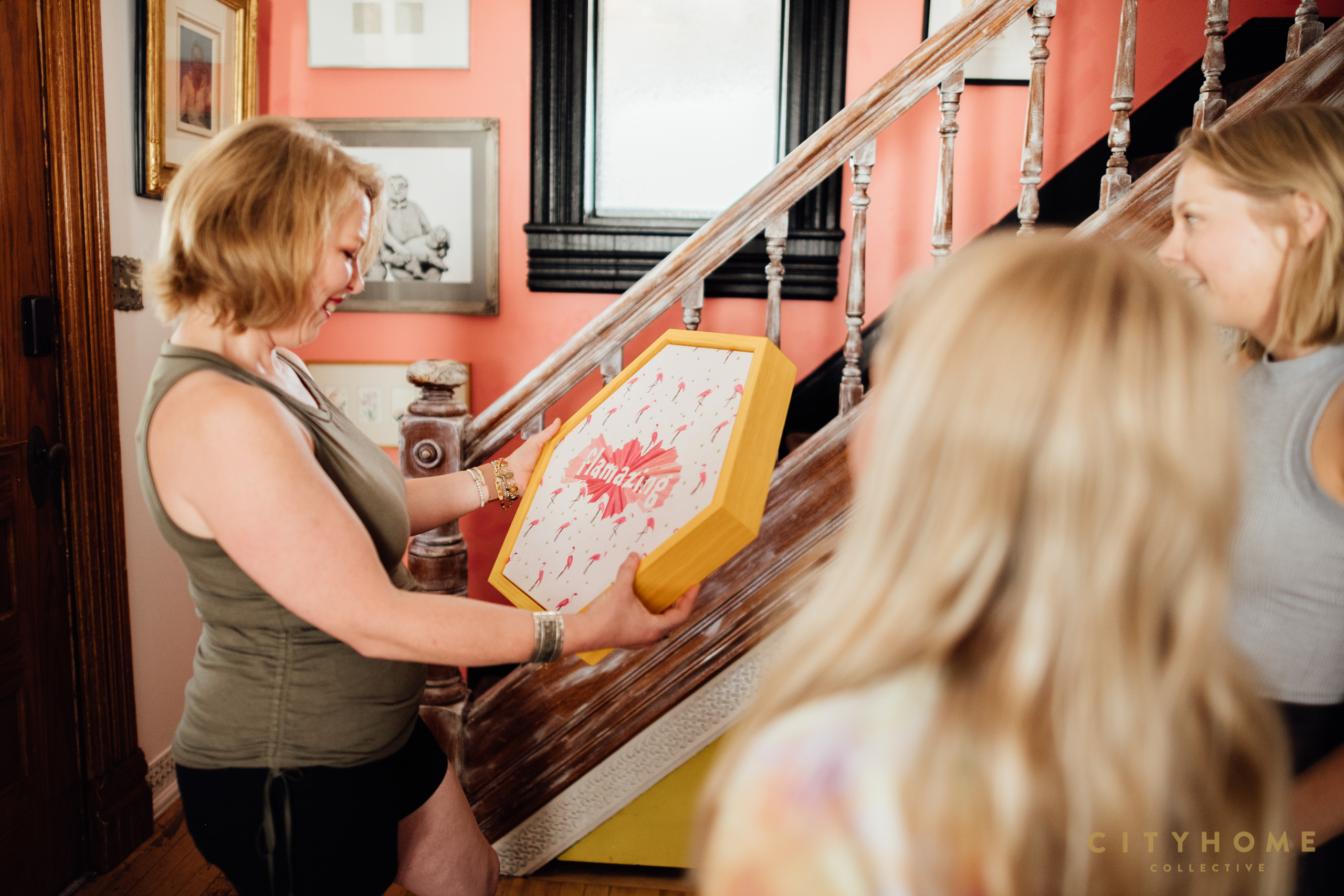
The two of them have built quite a collection on this criteria, bringing everything from landscape paintings to assemblage sculpture into their creative home. The majority is by Utah artists, with prominent pieces by Nathan Florence, Janelle James, James Rees, Phoenix Ostermann, Trent Call, Aïsha Lehmann and many others. They also own pieces by early Utah artist Florence Ware and British-American pop artist Jann Haworth, who is known for co-creating album cover art for The Beatles and for her efforts advocating for women in the art world. These are intermixed with paintings by Crystal’s mother and grandmother, their two kids, and Crystal’s extensive pink flamingo collection for a fun and personal flair.
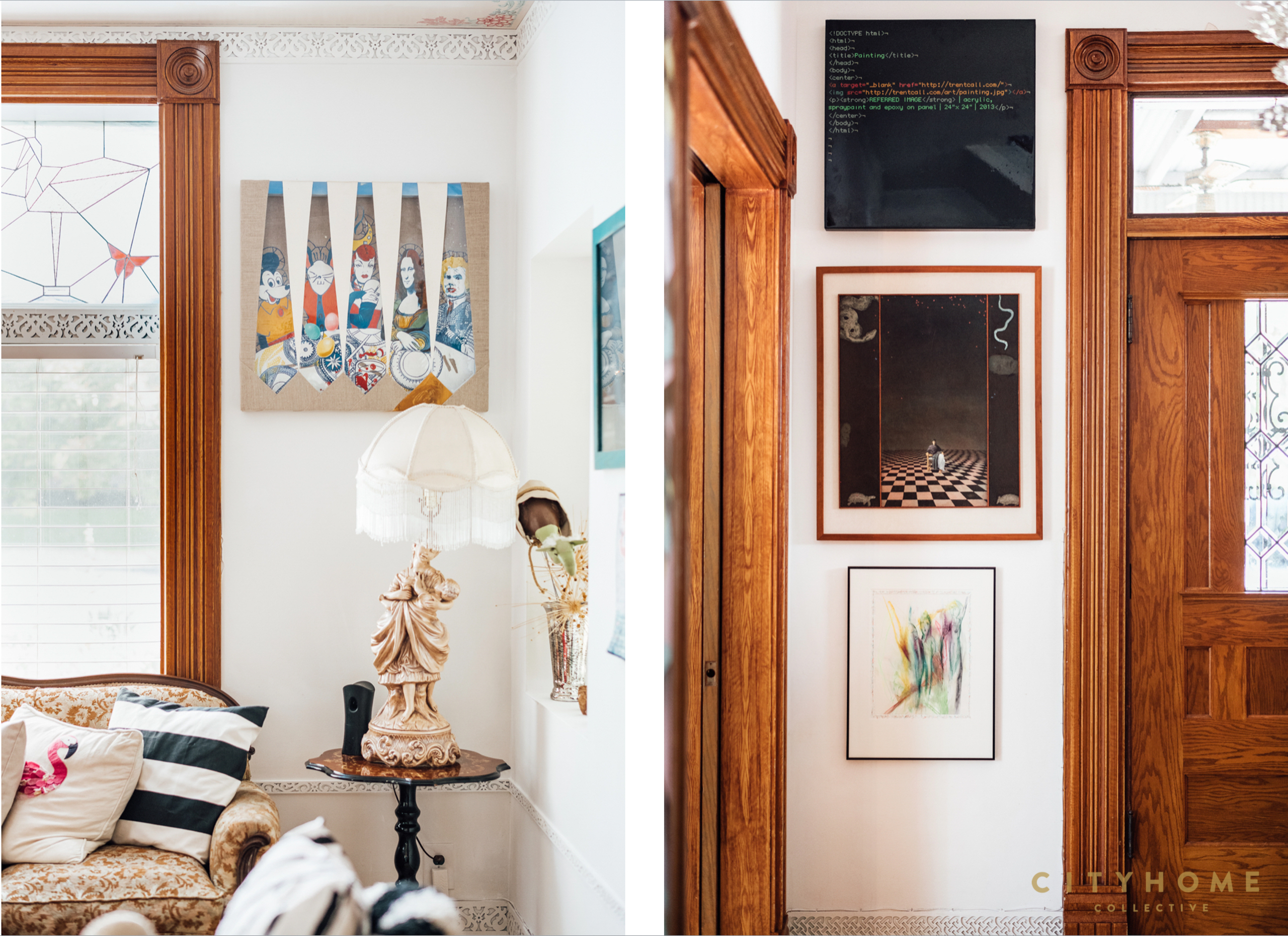
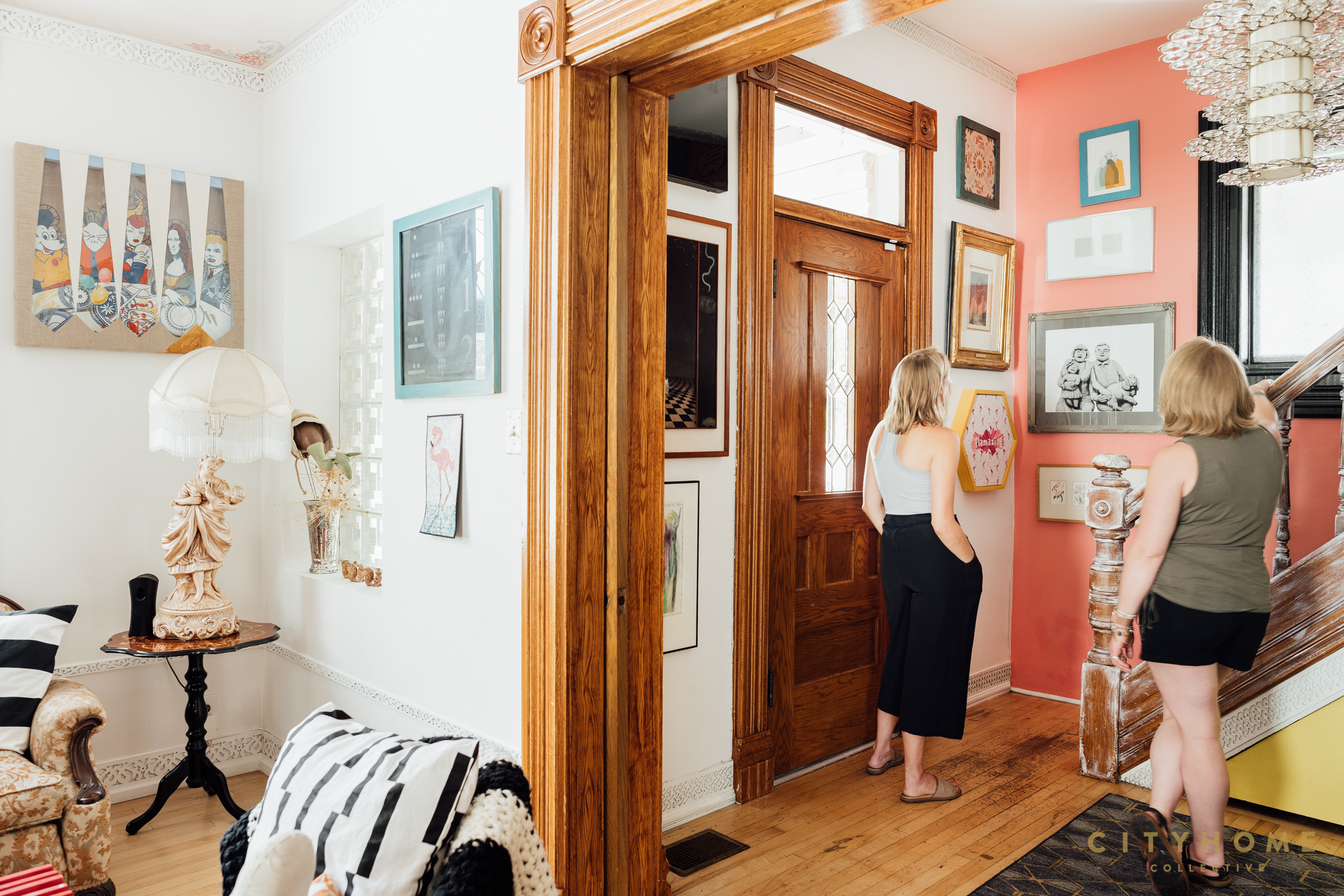
As a passionate advocate for the cultural industry, Crystal will be the first to tell you that art should be valued not just in our homes but also in our communities. Her work with UCA has been imperative in supporting our creative sector through difficult times and we, for one, are grateful for her efforts not only in her own home, but also in ours. Learn more about this important organization at www.utahculturalalliance.org.
In a bittersweet end to this chapter of home, the Otterstrom’s Victorian is currently on the market.
Contact CHC listing agent, Rachael Leprey, to schedule a showing and make this lovely home yours.