 Maker’s Series is a collection of conversations I’ll be authoring that looks beyond the finished piece and into the hands, minds, and lives of the people who create it. As an interior designer, I often collaborate with artists
 and I find myself continually drawn not only to what they create, but to the deeper currents behind it: the how and why of their practice, the processes they refine, the perspectives they hold, and the personal narratives that quietly shape the work. This series brings those layers into focus: a closer look at the creatives behind the work, offering glimpses into their making process, behind the scenes moments, and the human experiences that inform their craft.
The inaugural conversation features Emily Thurman, a designer and furniture maker whose practice is as materially rich as it is deeply personal. With the 2025 debut of her studio’s first collection, Hundō, Thurman introduces a body of work that feels both assured and intimate; realized in collaboration with a close circle of friends and international fabricators. Crafted in bronze, onyx, ebonized cherry, and cast glass, the collection has been exhibited internationally and unfolds as a cohesive exploration of form, weight, and materiality. There is a quiet gravity to her work, a tactile sensitivity that reveals itself not only in the finished pieces, but in the way they come into being. What follows is a conversation with Emily on process, material, and the quiet intentions that shape her work.
I’m struck by how your pieces feel less like furniture and more like presences… What draws you to this sense of contained tension?
I love the word presence. When I begin a piece, I’m less interested in designing an object and more interested in creating something that can hold a room with its presence. Furniture is something we live around for years, it becomes part of the architecture of daily life, so I want it to carry a kind of stillness and gravity. The actual weight of my pieces is significant. I joke that I really need to learn how to make pieces that are easier to move around- haha. I am attracted to materials with a weight that can hold their own. Literally and metaphorically. We have enough flimsy objects in this modern day. Its nice to make something that can dominate a space with its weight and presence. Beyond just designing a piece, I’m trying to create something that feels both ancient and newly formed. Like you can’t quite pinpoint when it was made. There is a certain presence about that too.
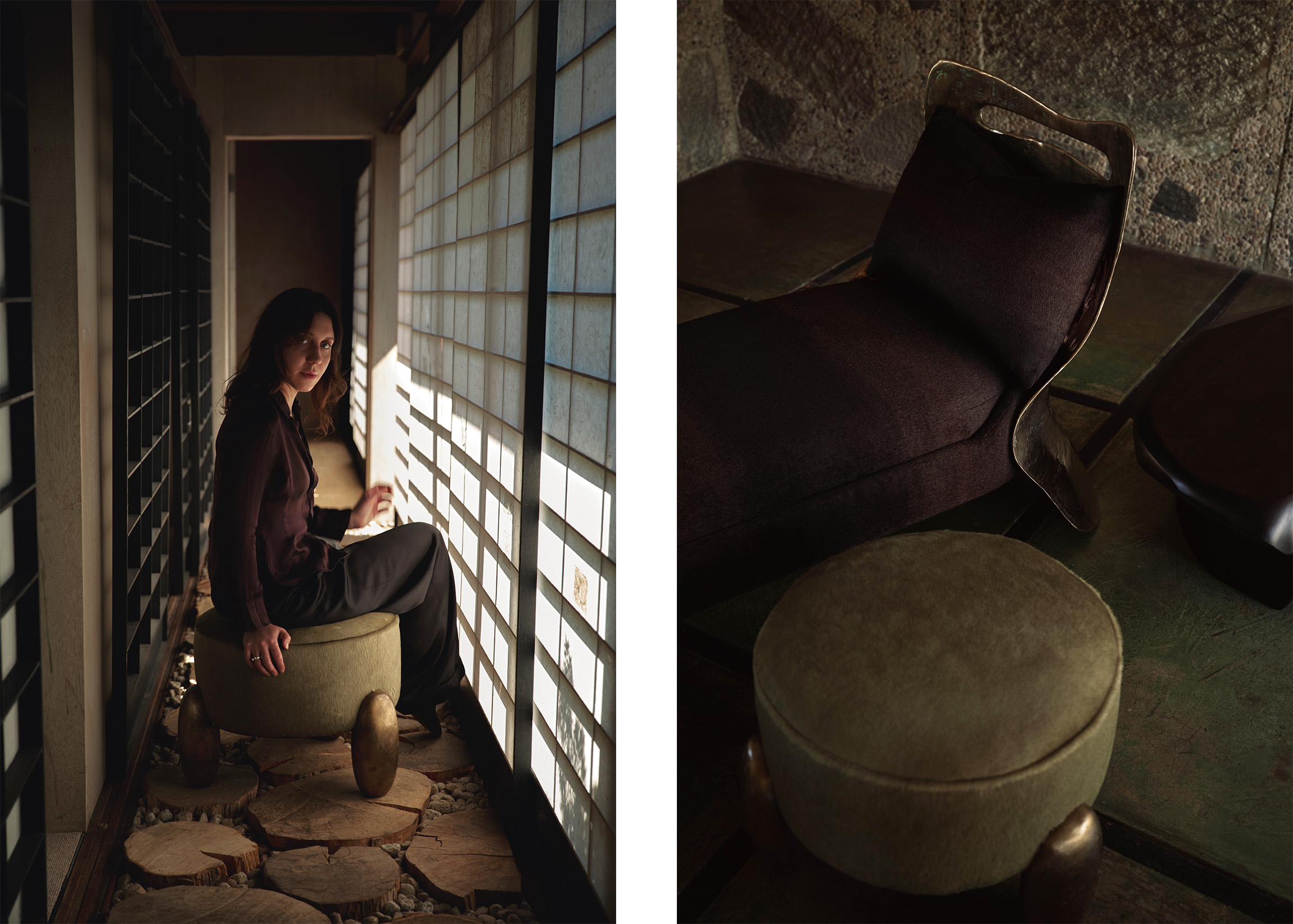
Photographer: Connor Rancan
The title of the collection, Hundō—“to pour out”—feels deeply intentional. What does it mean to you personally?
The word Hundō resonated with me immediately because it holds several layers of meaning. Hundō is the porto-italic word for fondre “to melt” and later fonderie the French origin of the word foundry. On a literal level, much of the work involves pouring; molten bronze in lost-wax casting, molten glass, even the shaping of plaster molds. There’s this elemental act of transformation where something is sacrificed in order for something else to emerge. In these cases the material has to heat to transform. But metaphorically, it also speaks to release. The collection was my first body of work that was truly my own voice after years of designing within other studios. In that sense, it felt like pouring something out that had been quietly forming for a long time. Lost-wax casting embodies that idea beautifully. The wax disappears entirely, but its memory remains in the final form. I find that poetic. The process itself becomes philosophy.
There is a noticeable reverence for the hand in your work. How do you approach the dialogue between head and hand?
For me, the design process only really becomes alive once the hands are involved. Sketching and thinking are important, of course, but the moment a material enters the conversation everything shifts. Bronze behaves differently than you imagined, glass has an unpredictability that requires a lot of control, wood pushes back against a cut and constantly wants to expand and shift. I try to stay open to those moments. I think of it as a conversation: the mind proposes something, the material responds, and the hand mediates between the two. Through observation you learn the restraints and also when to surrender to what comes naturally. Small irregularities and evidence of the hand is what makes an object feel human.
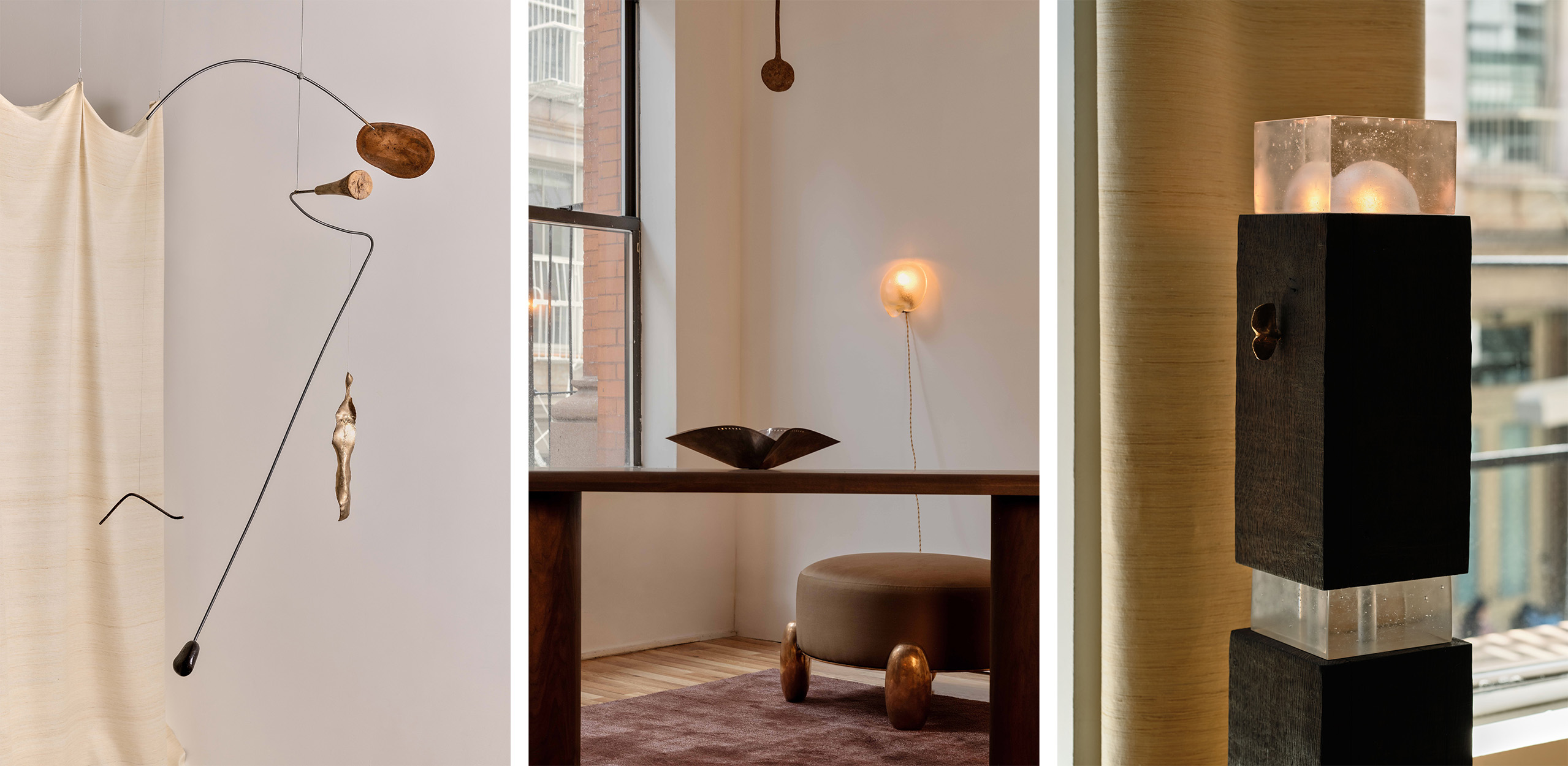
Photographer: Marco galloway
When you move between materials—bronze, cast glass, porcelain, onyx—how does your posture as a maker shift?
Bronze feels almost geological to me. From the earth. It carries weight, permanence, and a certain authority. When working with bronze, the process feels slow and takes so much labor to transform the material. With glass, the work becomes about calculated design before it is cast. And praying it makes it out of the kiln without breaking. Patience. Wood is the easiest in terms of having more flexibility is sculpting and shaping. But messing up any of the finishing stages sucks, so I pass that to the expert- Sam Dwyer. The unpredictability of material is one of the most difficult parts of making. One time the Judo table self destructed out of nowhere. It was just bad wood. And I had to surrender to that. Hands in the air. Another time one of my cast glass pieces got a hairline crack that expanded and made the whole piece crumble. That was devastating. I guess its all a lesson in detachment and impermanence.
Your cast glass pieces glow from within. What interests you about internal illumination?
Light has always felt like a material to me. With pieces like the Stacks Smoking Table or the Toteme Standing Lamp, I was interested in the idea of light being held or contained rather than projected outward. When illumination comes from inside a form, it feels quieter and more intimate. It creates a kind of atmosphere rather than simply lighting a space. I’m drawn to that subtle glow, the way it reveals the small movements in the casting. Swirls and bubbles.
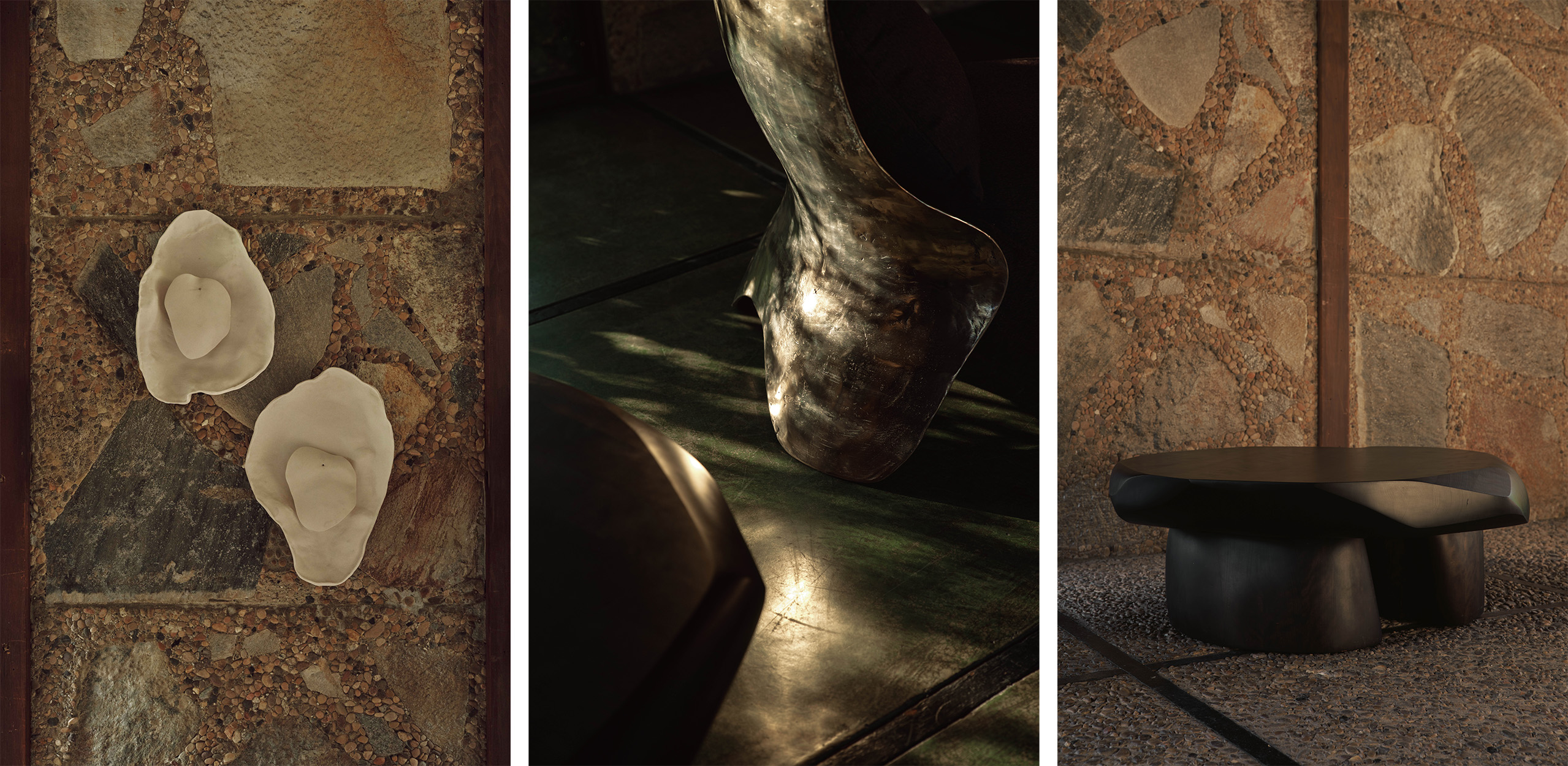
Photographer: Connor Rancan
Your bronze works are cast in Milan and Utah, porcelain with Hero Ceramics, stone with StudioDanielK. How do you maintain authorship while embracing collaboration?
Collaboration is central to how I work. I think authorship in design is often misunderstood. It doesn’t mean doing everything alone. It means holding the vision while inviting others to shape it with you. And making sure everyone gets credit where credit is due. The Convivium Center Table, for example, was developed with StudioDanielK and incorporates stone he collects in Napoli. I designed the top that joins to the base. And together we were able to make something we didn’t think of individually as would two mediums come together. I have such a curiosity for so many different materials that there is no way I could learn to craft them all on my own. But I hold a very clear vision of what I want to create and bring many people along to help me see it through. Being as hands on as I possibly can, but also trusting others hands and craft. Collaboration has become on of the most fulfilling and transformative parts of my practice.
When you work with foundries or ateliers, what do you look for in a partner?
Patience. Technical mastery is essential, of course, but what matters most is a shared curiosity. I want to work with people who are willing to explore the unknown territory of a piece. Many of these objects couldn’t be fully predicted before making them. The best collaborators understand that the process itself will reveal something.
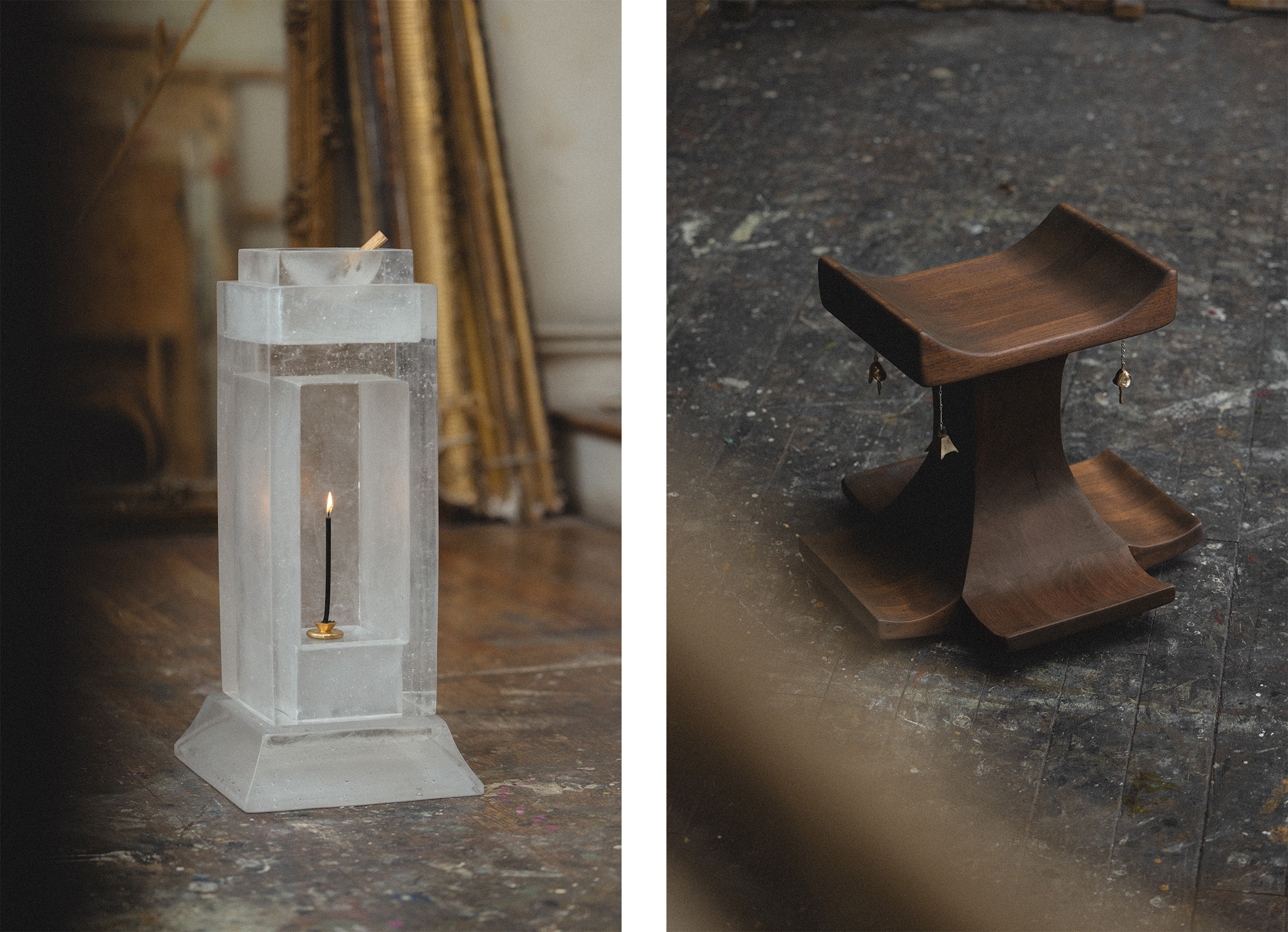
Photographer: Kate Devine
Craft today often oscillates between preservation and reinvention. How do you see your practice participating in that evolution?
I’m deeply interested in classical processes. Lost-wax casting, glass casting, etc. What excites me is taking those ancient techniques and letting them speak in a contemporary language. Craft has always evolved. The tools change, the context changes, but the core impulse to shape material with intention and intuition remains the same.
Where is your studio, and what kind of atmosphere do you cultivate there?
My studio is in Utah, and the landscape here definitely influences the work. The desert has this significant scale and stillness that I think finds its way into the pieces. Depending on what I am crafting I just between different workshops to make things with my collaborators. It makes a much more dynamic work life, which I love.
Many of your pieces feel archetypal—tables like altars, lamps like totems. Is that intentional?
It’s mostly intuitive. I’m drawn to objects that feel familiar in a deep way. Forms that echo things humans have been making for thousands of years. Stools, vessels, monoliths, pillars. Those archetypes carry a kind of collective memory. Sometimes I think we recognize those shapes before we understand why. I suppose that’s what happened to me.
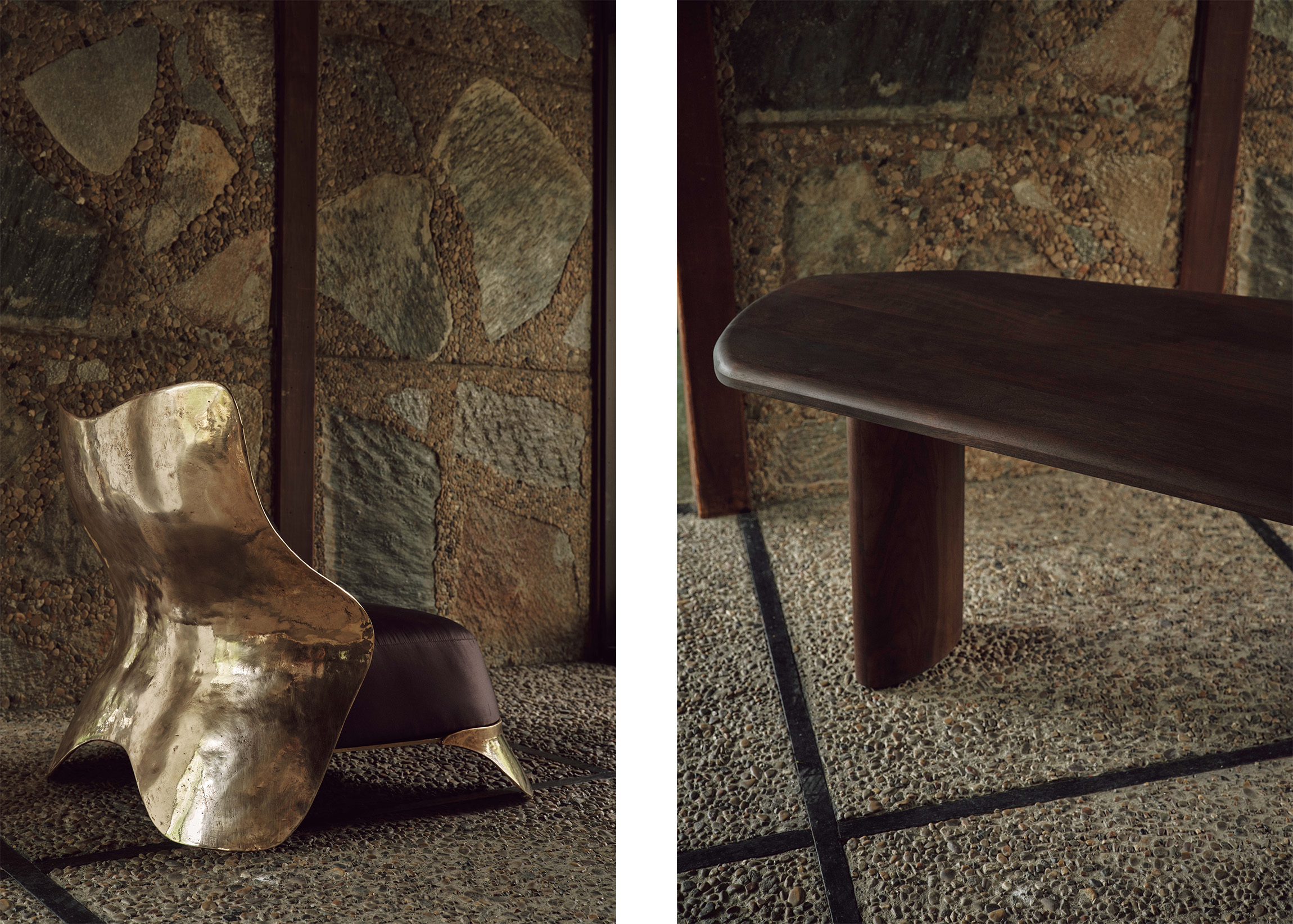
Photographer: Connor Rancan
Can you speak about the journey of developing the Toteme Lamp or a Hundō bronze chair?
The process is rarely linear. With the bronze seating pieces, I began by sculpting plaster forms that would eventually become molds for lost-wax casting. That process alone involves cycles of layering plaster and sanding. With the Hundō chair once the legs were cast in bronze they looked so wrong. So I had to completely start over on the form. Which was on a very tight timeline and I was stressed! It’s good to leave room for things you cannot predict. I usually know a piece is finished when it reaches a kind of stillness. When nothing feels like it needs to be added or removed. But often items I keep revisiting a piece and reworking it.
For the Toteme lamp that was my first really meaningful collaboration with artist Alexis Mazin. He is a Brussels (now French) based artist. I admired his work from afar, and asked him if he wanted to design a lamp together. We sketched and FaceTimed to develop the initial form. It was quite literally a totem that had to fit together by stacking like a giant puzzle. This made for a difficult piece to make together in separate continents. But once I flew to him in Belgium we were able to bring it all together quite seamlessly. It’s final construction was in New York. And when it was finished we both cried. We were so proud and actually surprised by this piece we created together.
Bronze, stone, and glass carry permanence, yet the candle flame inside the Stacks table introduces fragility.
That contrast is very intentional. But introducing something ephemeral like a flame reminds us that permanence is always relative. The object endures, but the moment within it is fleeting. The flame also draws you in- we are just little bugs haha.
Beyond design history, what influences your work?
Some of my earliest sensory memories come from my grandmother’s home, touching materials, seeing art, feeling the atmosphere of spaces. That experience shaped how I think about interiors and objects today. Landscape is also a major influence. The American West, deserts, ancient architecture, geological formations.
Is there a place that feels like your refuge? What does true luxury mean to you?
For me, luxury is time and presence. Time to work slowly. Time to collaborate with people who care deeply about their craft. Time to let materials reveal themselves. A refuge can be a physical place, a quiet studio, a desert landscape. But it can also be a moment in the process where everything becomes still and focused.