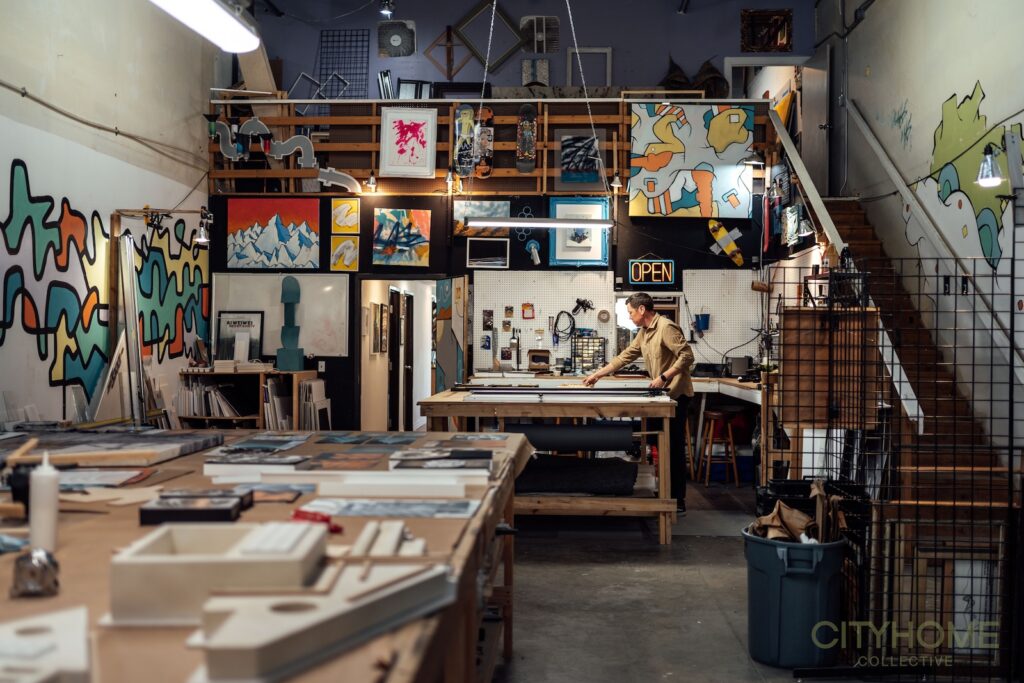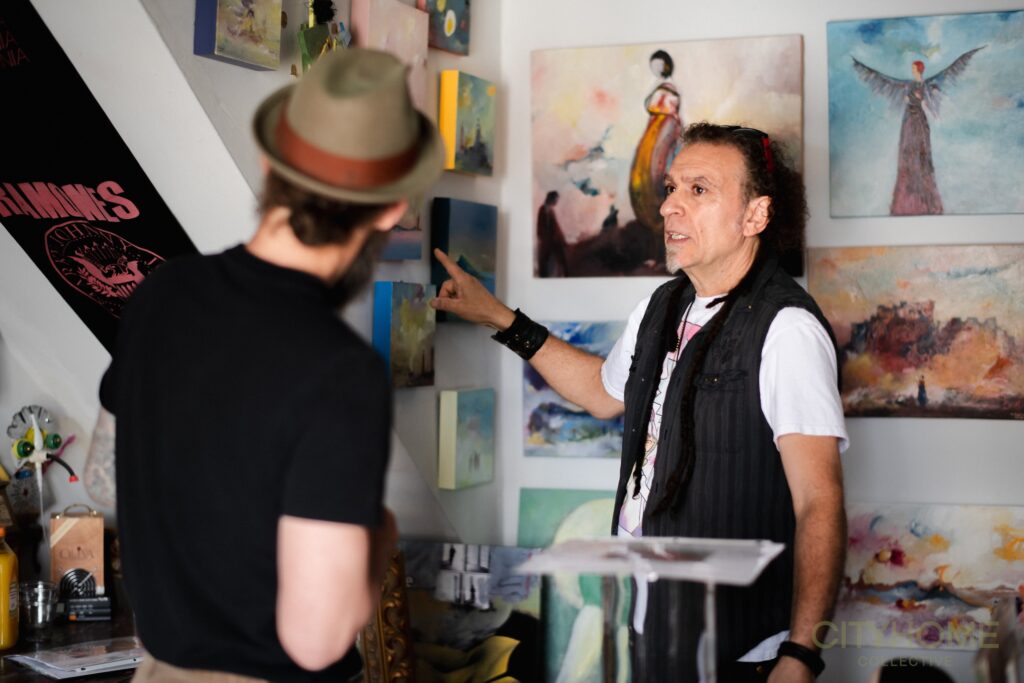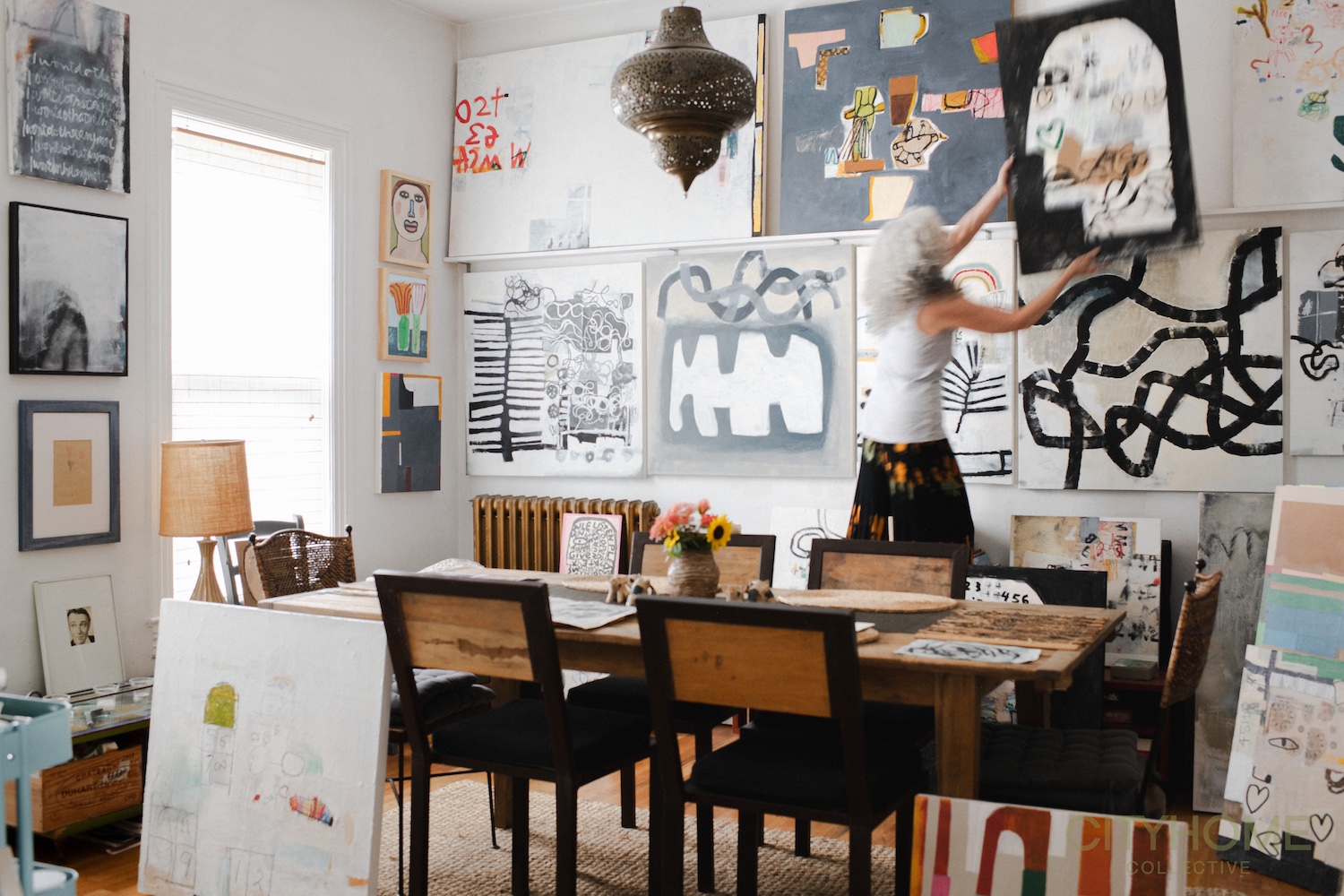
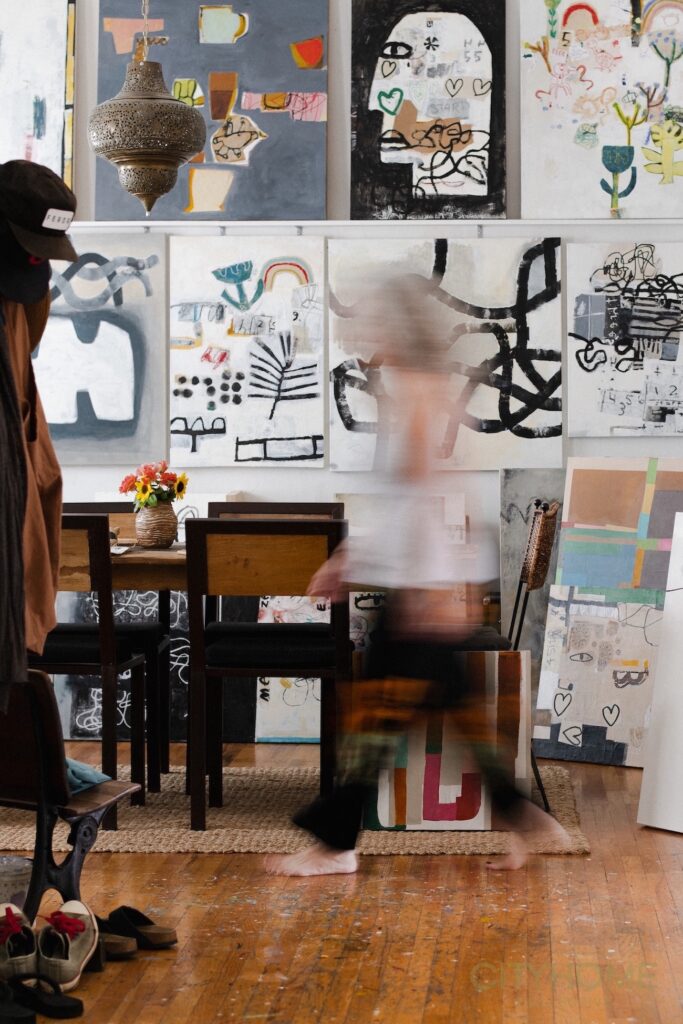
Mixed media artist Randee Levine will be in conversation with us here at cityhome Friday, September 25th at 6:30 PM in conjunction with an evening showcasing her original works. To be in dialogue with Randee is to be alive, and to have that aliveness noticed and engaged with. She doesn’t do surface. Thank God. The show will be open 6-9:00. If you plan to attend the chat with the artist please arrive a bit before 6:30 to grab a beverage and a seat.
One guy’s opinion. As a person who pays Randee money for insight and guidance on all things life, come soak in her world for free. And if you would like to dip your toe in the waters beforehand, please feel into the answers to our dialogue below. I dare you to read them fully and slowly. And then, well, we will see you at the show.
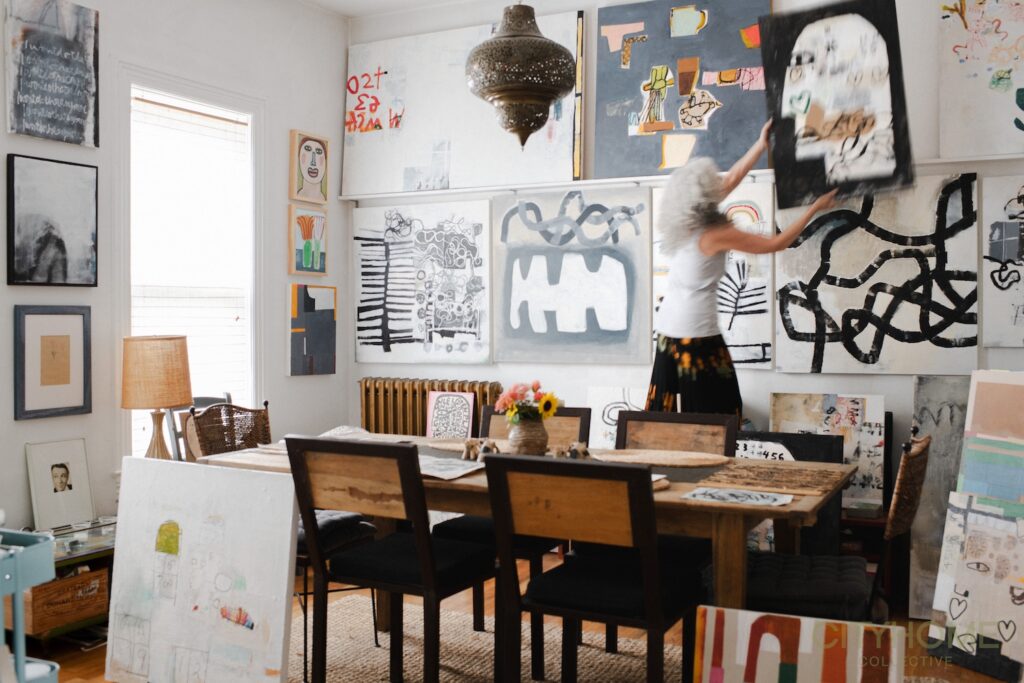
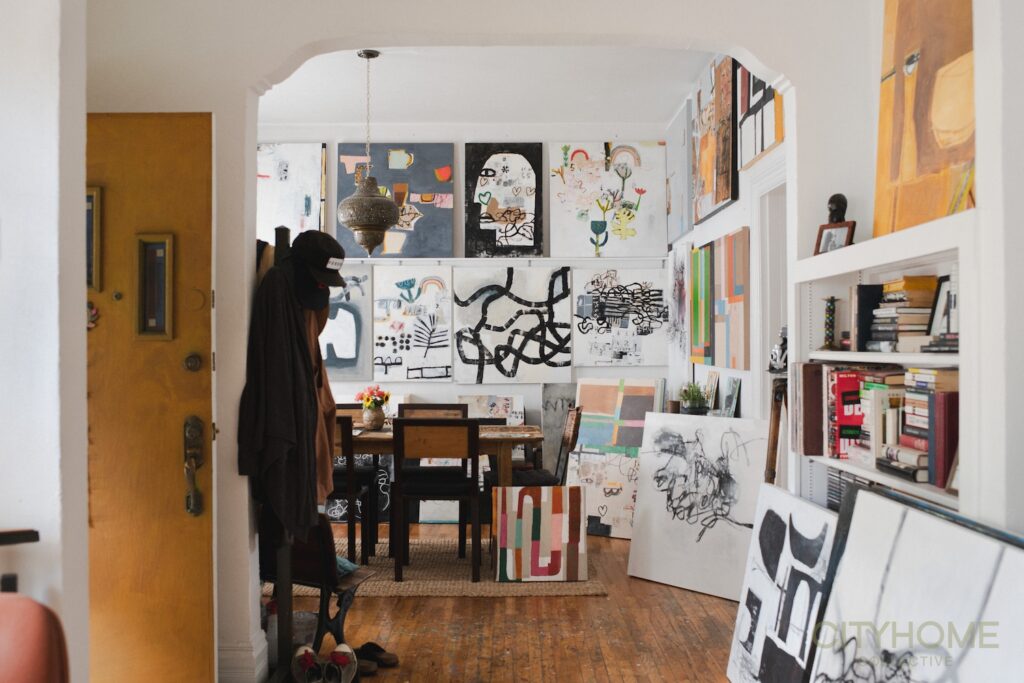
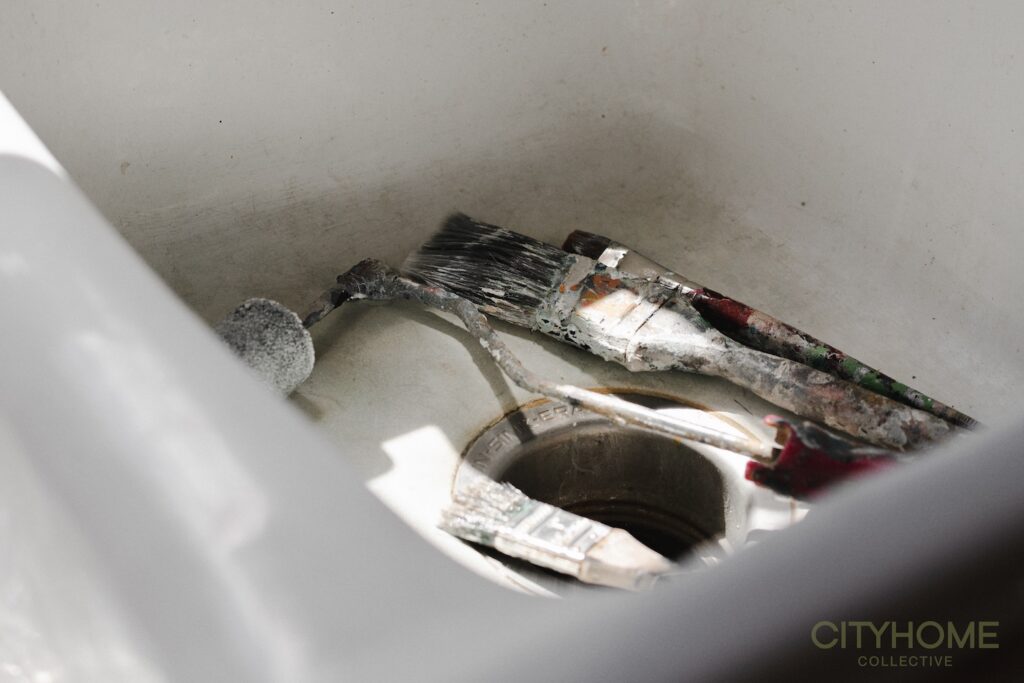
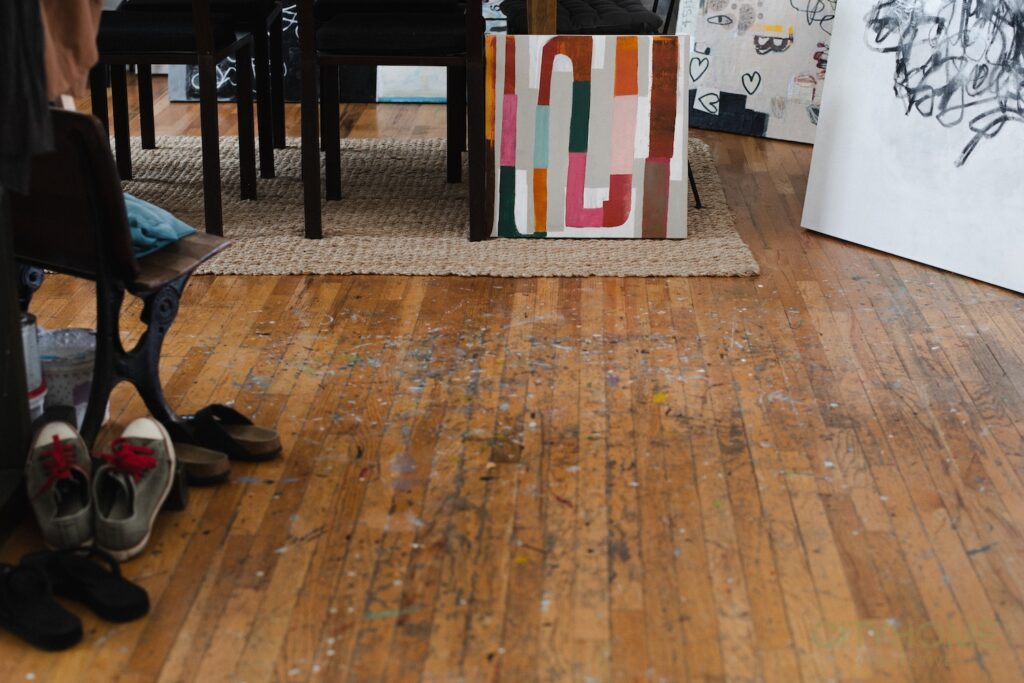
Randee graduated with her Bachelor of Fine Arts from SUNY Purchase in 1981. Her works may include acrylic and oil paints, charcoal, pencil, crayon, and found paper, among other media. Interaction represents a variety of influences – kids, outsider art, folk art, as well as collaboration with the cityhome space itself.
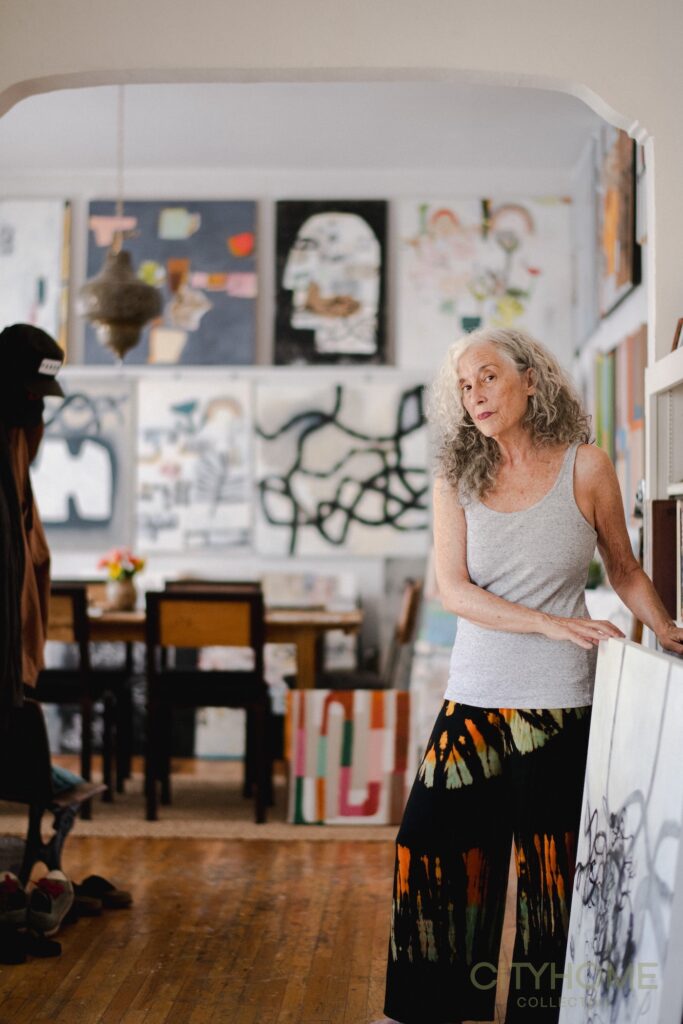
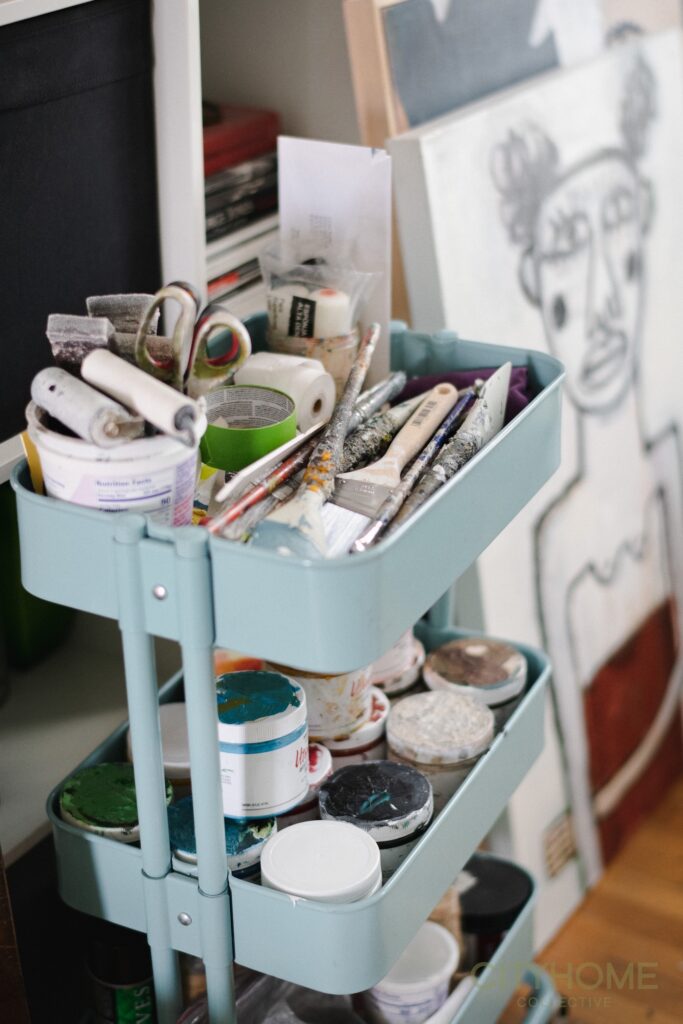
So, let’s get into it. You are an artist. At your core. Tell us why the show is titled “Interaction.” ‘Interaction’ with us, with you, with itself?
I was introduced to Josef Alber’s book “Interaction of Color” when I was in my late teens. It had a huge impact on me and changed…or maybe made me aware of… the way I see, not only color, but everything. Albers shows how color is not static, but is relative, dynamic and fluid – how colors change depending on their surroundings and relationships with other colors. Green can appear to be blue when it’s relating with yellow and that same green appears to be yellow when it’s relating with blue. Every color impacts others and together they create something new that is unique to that particular relationship. So, it’s about relationship, interaction, transformation, alchemy
– having a direct experience of the ‘magic’ that happens when colors, and all things, interact with each other – rather than having fixed ideas about what they are. That excites me.
So, INTERACTION is about my relationship with cityhome the people and the space, with you/Cody – our collaboration and what it brings out in me and the art it created. INTERACTION also identifies something central to my creative process – relating and working with all of the unexpected, unintentional, mysterious things that are happening on the canvas – all the things I am not consciously making. And INTERACTION also speaks to the relationship between the viewer and the finished work. My hope is that people will relate to the work, not necessarily resonate or agree with it, but let it affect them and notice and value what the work brings up for them…whatever that happens to be. Lastly, INTERACTION is about community, noticing how we affect each other and what is being created through our relationships.
You are also a coach, (working with many of us here at cityhome) supporting folks in something called Process Work. What is that and how does it inform your art?
It’s been so great and special working with you and other wonderful people at cityhome…so much heart, wisdom, depth and creativity on the team and in the community.
Meeting Arnold Mindell and Process Work profoundly shifted my perspective on life and what I do in the world. What drew me to Albers as an artist is similar to what drew me to Mindell as a spiritual seeker and a facilitator – seeing things as they are and how they interact – in process – relative, dynamic and fluid. Process Work is an awareness practice that is based on the concept of nature and change – that when we follow the organic changes of our experiences we transform difficulties, find more ease and live more fully. As a facilitator, I help people notice and value the changes that are occurring within them, but are operating on the edges of their awareness. This shift in perspective allows people to discover meaning, purpose and connect with their own creativity in their inner lives and outer relationships.
You are not afraid of conflict. Not in community or interpersonal relationships. Not in your work or your conversations. What does bravery have to do with making a body of artwork?
I wouldn’t say I’m not afraid of conflict…but, I would say that I’ve always been drawn to it – from a young age I have been driven by a strong sense of justice and have been acutely aware of who and what is being marginalized. As a facilitator, my experience has shown me that conflict; inner conflicts, relationship and community conflicts are opportunities for creativity, learning, growth and change. So my bravery comes from my highest dreams for an inclusive world and from knowing that when we approach and facilitate conflict, we can transform things, deepen understanding, live more fully and find creative ways forward.
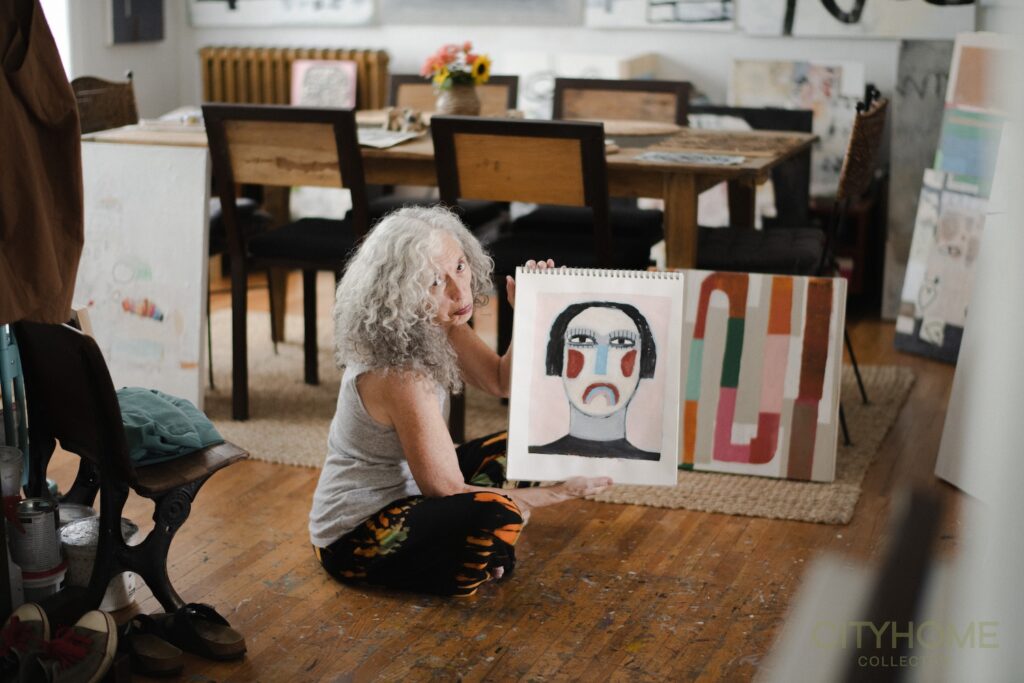
In terms of making art, bravery is useful in the face of inner and outer critics. But, as I’ve gotten older, I care less about critics and more about enjoying myself. I’m not everyone’s cup of tea. If you could say a thing or two to other creatives, makers, artists what would it be?
This is always difficult for me because everyone is so unique in their process. So I guess the first thing I would say is to trust your own way.
Some of the things that are meaningful and helpful for me are…To pay attention not only to what you are trying to make happen, but also to what is happening outside of your control and intentions – that’s where magic happens.
Respect your limitations – they may be helping you recognize your greatest gifts and truest voice. While it’s useful to push beyond obstacles and to learn new things, it’s also useful to consider if the limitation is helping you be more authentic.
I have so many thoughts…if people are interested, we could open a conversation about this at the opening and see where it goes.
Is Salt Lake in some kind of particular transformative process right now? Through the lens of your work as a coach and community ally, and with the heart of an artist, say what you see and what we need.
Yes, I think Salt Lake, the United States and the World are in a huge transformative process. It’s hard to talk about local and current events without recognizing history and all of the pain and suffering that so many people have experienced and continue to experience throughout time. I don’t believe we can eliminate pain and suffering, but I do believe we can reduce the ways in which we inflict it on ourselves and each other. From my perspective, we need everyone to bring their abilities in whatever capacities and forms to speak and act against abuses of power and facilitate a conversation that helps grow compassion, empathy and greater awareness of our own and each other’s humanity.
Where are we getting it right?
Any final thoughts?
So many, but for another time. Thanks for the interesting and evocative questions.